Comparisons
Laser hair removal vs electrolysis: which one suits your hair?
We offer laser and we do not offer electrolysis, so here is the case for each, including the situations where you should book electrolysis somewhere else.
 Alex Dinovich, FNP-PHCClinically reviewed
| Aspect | Laser | Electrolysis |
|---|---|---|
| How it works | Light absorbed by pigment in the hair | A probe destroys one follicle at a time |
| Hair colour | Decides whether it works at all | Does not matter |
| Best for | Large areas of dark hair | Small areas, or pale, white and grey hair |
| Sessions | Several, because of the hair growth cycle | Several, for the same reason |
| Honest promise | Permanent hair reduction, not removal | Permanent removal of the follicles treated |
| If hormones drive it | New hair can keep being stimulated over time | New hair can keep being stimulated over time |
Laser hair removal targets the pigment in the hair, so it works well on dark hair and poorly on hair that has little pigment. Electrolysis destroys each follicle individually with an electric current delivered through a fine probe, so it works on any hair colour but treats one hair at a time. That single difference decides most cases before anything else is considered.
We offer laser hair removal at our Bradford clinic and we do not offer electrolysis. We are telling you that up front so you can read the rest knowing where our interest lies.
Laser works by pigment, which is why hair colour decides whether it will work
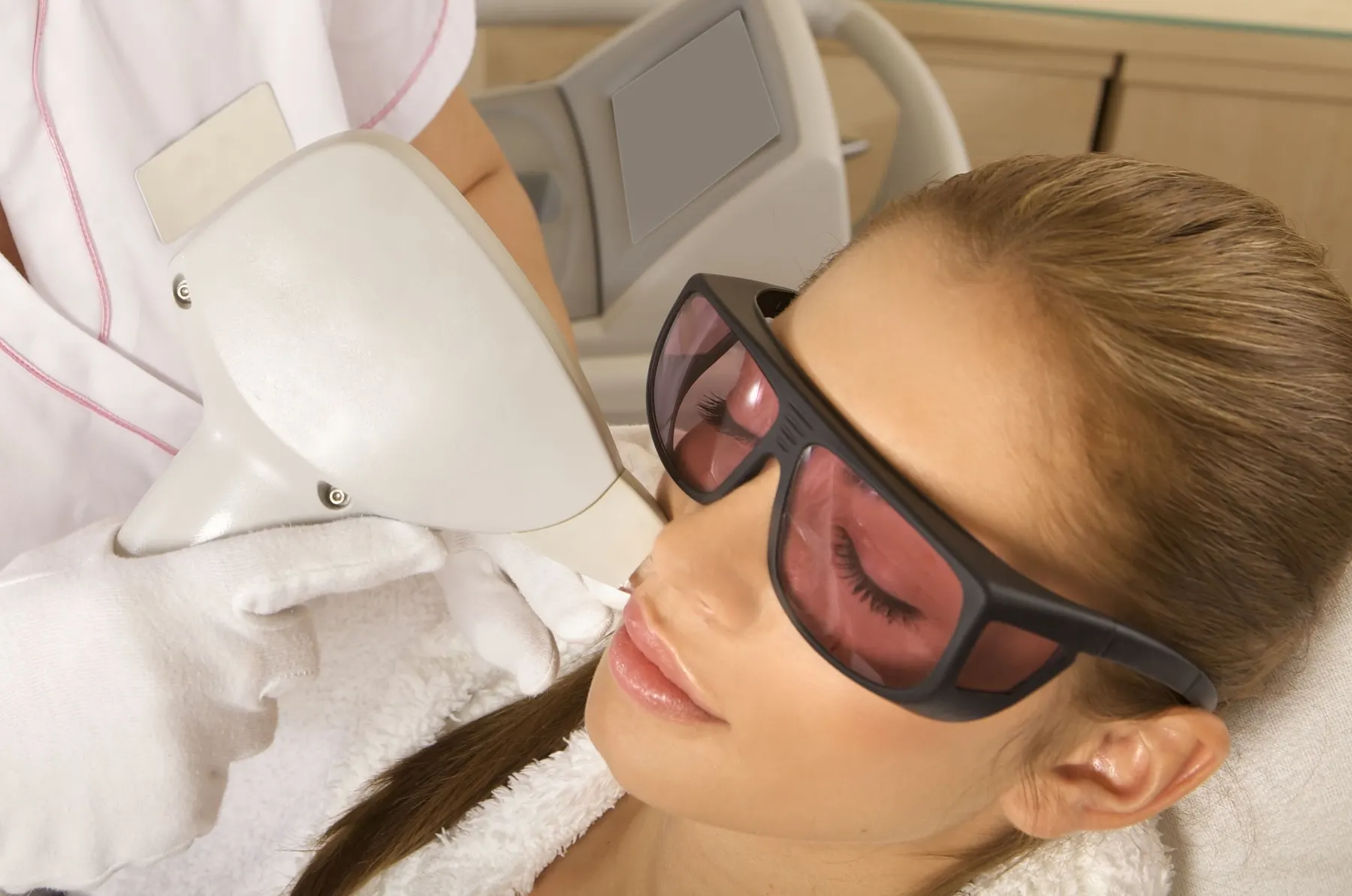
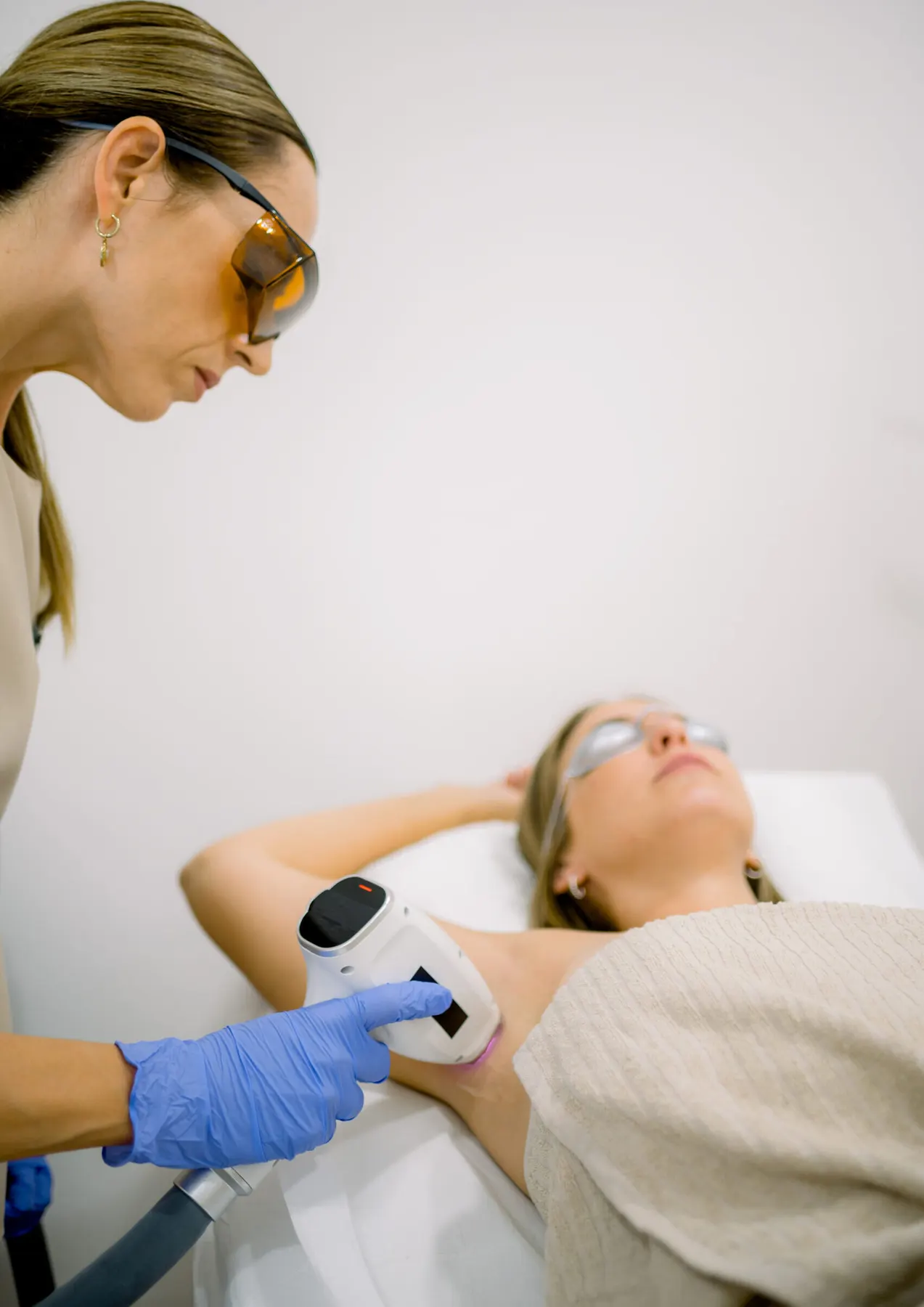
Laser hair removal delivers a wavelength of light that is absorbed by melanin in the hair shaft and follicle, converting to heat and damaging the structures responsible for regrowth. Because the process depends entirely on pigment, dark coarse hair on lighter skin is the easiest case and white, grey, red or very blonde hair is close to the hardest. Modern devices with appropriate wavelengths and cooling can treat a wide range of skin tones safely, so skin colour is far less of a barrier than it was; hair colour, however, is not something technology has solved. If your hair has no pigment, there is nothing for the laser to target, and no device setting fixes that.
Electrolysis destroys follicles one at a time and does not care about colour
Electrolysis inserts a very fine probe into an individual follicle and passes a current that destroys the tissue responsible for producing that hair. Because it does not rely on pigment, it works on white, grey, red and blonde hair, and it is the method recognised as permanent hair removal rather than permanent reduction. The cost of that thoroughness is time: a technician is treating individual hairs, so a small area such as an upper lip or a few stray chin hairs is realistic while a full back or full legs is not a sensible use of anyone’s afternoon or money.
Both require multiple sessions, and the reason is the hair growth cycle
Hair grows in cycles, and only hair that is in the active growing phase responds to treatment, which is why neither method works in a single visit. At any given moment, only a proportion of the hairs in an area are in that phase, so sessions are spaced out to catch different hairs as they cycle into it. Anyone promising you permanent results from one appointment, with either method, is either misinformed or misleading you.
Choose laser for large areas of dark hair, electrolysis for small areas or pale hair
For legs, underarms, back, chest, bikini and other large areas of dark hair, laser is the sensible choice because a single pulse treats many follicles at once. For a small number of individual hairs, for very precise work, or for hair that has lost its pigment, electrolysis is the sensible choice and often the only one that will work. There is also a middle path that clinics rarely mention: many people use laser to clear the bulk of dark hair from an area and then use electrolysis to deal with the remaining pale or stubborn hairs afterwards. That is a perfectly rational plan and we will happily say so.
Hormonal drivers change the expectation, and this is where people feel misled
If your hair growth is driven by a hormonal condition such as polycystic ovary syndrome, expect that new hair can continue to be stimulated over time regardless of which method you use, which means maintenance rather than a finish line. This is not a failure of the treatment and it is not something a clinic can make disappear. It is, however, something you deserve to be told before you buy a package, and it is a reason to have the underlying condition assessed by a physician or nurse practitioner alongside the cosmetic treatment.
What laser will and will not promise you
Laser hair removal produces permanent hair reduction, not permanent hair removal, and the distinction is meaningful rather than a legal technicality. Realistically, expect a large and lasting decrease in density, with the hair that does return being finer and lighter, and expect occasional maintenance. If you are quoted “permanent removal” from a laser, that is a claim the treatment cannot support. Under Ontario advertising standards for regulated health professionals, claims need to be accurate and verifiable, which is another reason we phrase this the way we do.
Practical things that make either treatment work better
Shave the area before a laser session and do not pluck, wax or epilate between sessions, because both methods need something to target and waxing removes it. Avoid sun exposure and self-tanner before treatment. Tell your clinician about any medication that increases light sensitivity, including some antibiotics and acne medications, and about any history of cold sores if the treatment area is around the mouth. None of this is optional detail; it is the difference between a session that works and a session that has to be repeated.
Our position, stated plainly
If your hair is dark and the area is large, book laser, and we would be glad for it to be with us. If your hair is white, grey or very fair, or you need a handful of individual hairs gone permanently, book electrolysis with a qualified electrologist, because we do not offer it and would rather you spend your money on the treatment that will actually work. Laser hair removal at our clinic is quoted per area at consultation, since area size and the number of sessions vary too much for a single honest figure.
Written at Bradford Skin Clinic & Medical Spa, 444 Holland St W, Unit #2, Bradford, Ontario. We provide laser hair removal and do not provide electrolysis. Clinically reviewed by Alex Dinovich, FNP-PHC, Nurse Practitioner and Medical Director.

03 · Accountability
Written here.
Checked here.
This guide was written by Bradford Skin Clinic and clinically reviewed by Alex Dinovich, FNP-PHC before it was published.
- Published
- Last updated
- Category
- Comparisons
A guide is general and your face is not. Nothing here replaces an assessment in the room, which is free and happens before anything is booked.

04 · From reading to the treatment room
What this looks
like in practice.
Published prices are starting prices, confirmed at your consultation. Where nothing is published, the dose and the plan decide the price rather than a menu.
- Laser hair removal from $30
Every injectable here is placed by a licensed nurse, and every plan is signed off by our Medical Director. The consultation is free and comes before anything is booked.

05 · Who performs these treatments
The people behind
the writing.
Nobody here injects without a nursing licence. The guides on this site are written by the same people who carry out the treatments they describe.







06 · Asked and answered
The questions
that follow.
Is electrolysis better than laser?
Electrolysis is the better choice for white, grey, red and very blonde hair, and for small precise areas where individual hairs need to be removed permanently. Laser is the better choice for large areas of dark hair, because it treats many follicles per pulse instead of one at a time.
Does laser hair removal work on grey or blonde hair?
Not reliably. Laser hair removal works by targeting the pigment in the hair, so hair with little or no pigment gives the laser nothing to absorb. If your hair is white, grey or very fair, electrolysis is the appropriate option and we will tell you that rather than sell you a package.
Is laser hair removal permanent?
Laser produces permanent hair reduction rather than permanent removal. Expect a significant, lasting decrease in the amount and coarseness of hair, with some maintenance sessions over time, particularly if there is a hormonal driver.
Why does either method need multiple sessions?
Because hair grows in cycles and only actively growing hairs respond to treatment. At any one moment only a portion of the hair in an area is in that phase, which is why sessions are spaced out and repeated.
Which one hurts more?
Both are uncomfortable rather than painful for most people, and the sensations differ: laser is often described as a hot snap, electrolysis as a brief sting per hair. Because electrolysis treats one hair at a time, a large area takes far longer, which changes how tolerable it feels.
Do you offer electrolysis?
No. Bradford Skin Clinic offers laser hair removal and does not offer electrolysis. If electrolysis is the right treatment for your hair, we will say so at consultation.
Can I shave between sessions?
Yes, shaving is fine and is usually required before a laser session. What you must avoid is plucking, waxing or epilating, because those remove the hair root the laser needs to target.