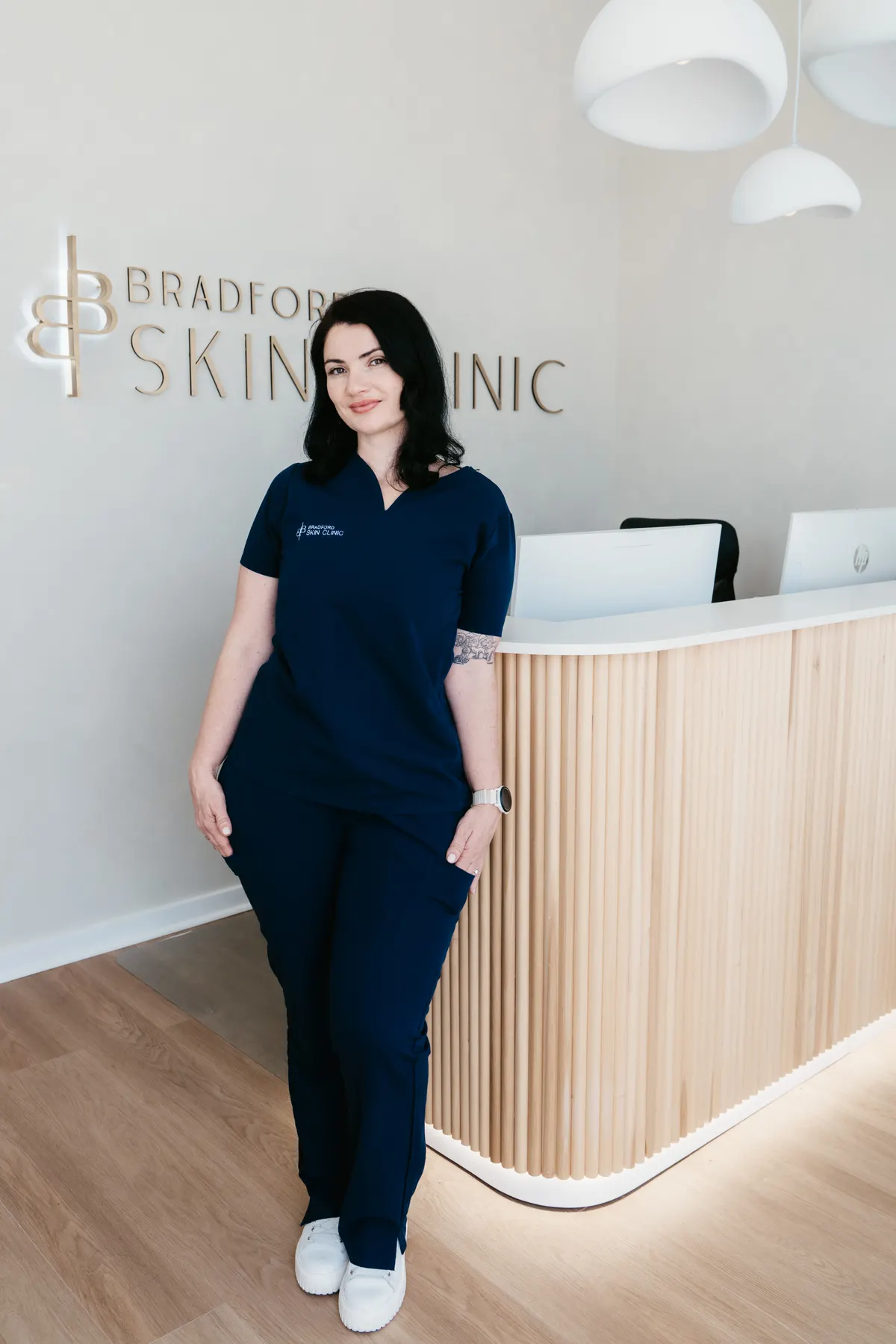
Bradford Skin Clinic and Medical Spa, in Bradford, Ontario, does not publish a fixed price for medical directorship. Alex Dinovich, Nurse Practitioner and Medical Director, quotes each nurse individually, because the cost is driven by the scope of the directives, the number of nurses covered, and how much ongoing case review and document maintenance the arrangement needs.
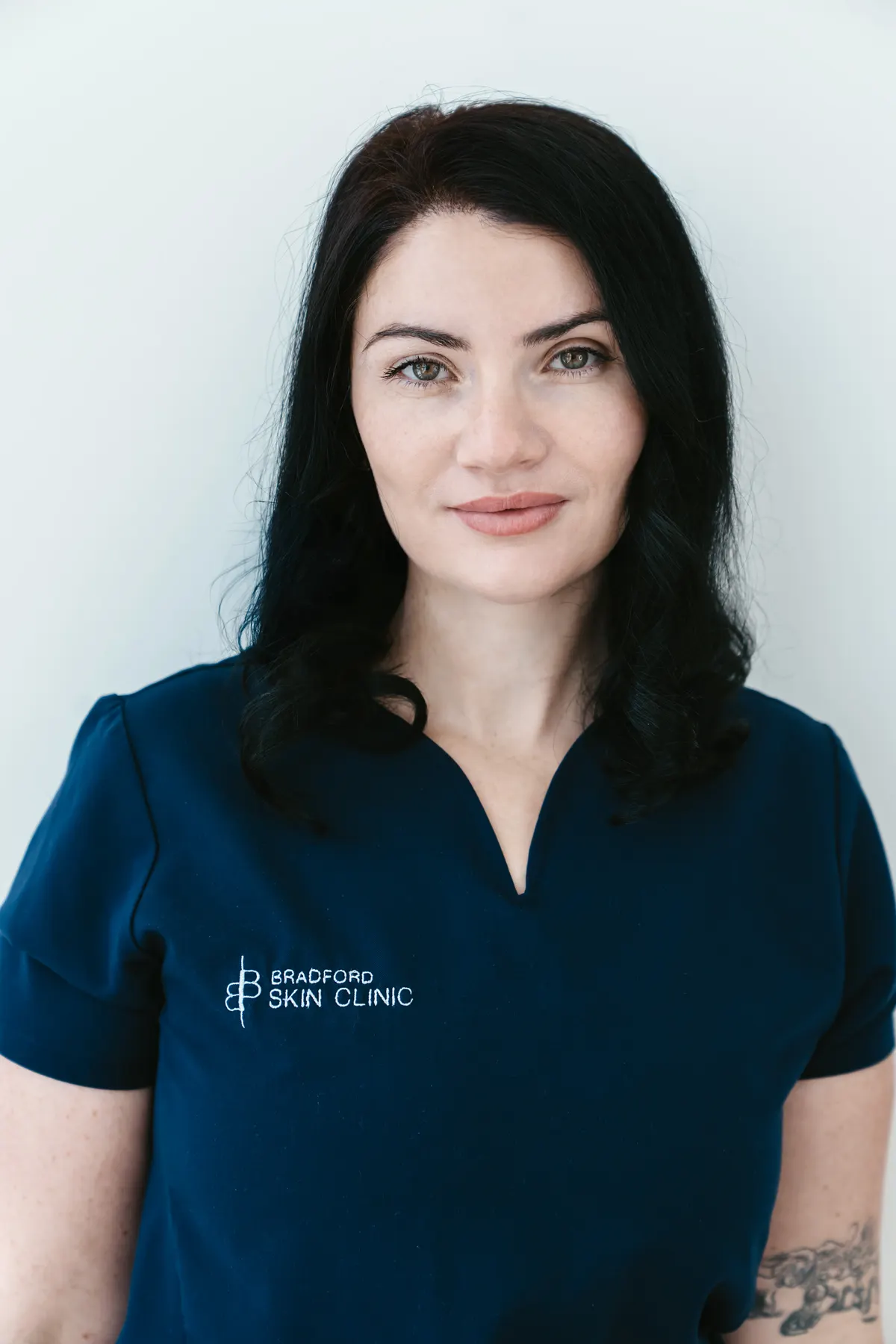
Written and reviewed by Alex Dinovich, NP, Nurse Practitioner and Medical Director at Bradford Skin Clinic & Medical Spa.
College of Nurses of Ontario registration 13564840, verifiable on the
public Find a Nurse register.
Last reviewed .
At a glance
The short version.
InvestmentNo published rate. The figure is set against your scope and confirmed in conversation
Who you would be working with
A person, not a signature.
Directorship is a professional relationship rather than a
location. You are choosing the person who authors your mechanism, reviews it as
your practice changes, and picks up when a client does not fit it.
Alex Dinovich is Nurse Practitioner and Medical Director here. She is registered with the College
of Nurses of Ontario as 13564840, verifiable on the
public register.
What a directive gives you
Authority to perform the controlled act it names.
A written mechanism you can show.
A named provider accountable for authoring it.
What it does not cover
Anything the directive does not say.
Competence, which comes from training and practice.
Your own accountability to the College for your own decisions.
A directive covers what it says it covers.
Accountability under an authorizing mechanism is specific and bounded.
You remain accountable to the College of Nurses of Ontario for your own practice.
Alex Dinovich, NP. The authorising provider, not a name on a certificate.
We are not going to invent a number
There is no published market rate for medical directorship in Ontario, and we have not set a headline price for ours.
That is an unusual thing for a page called “cost” to say, so here is the reasoning. The work behind a directorship arrangement varies by an order of magnitude depending on what you actually do. Writing one directive for one nurse performing one intervention at one site is a different job from authoring and maintaining a document set for four nurses across two locations with weekly case review. A single advertised figure would be either wrong or meaningless.
What we can do, and what the rest of this page does, is set out exactly what moves the number. If you understand that, you can read any quote you are given, including ours, and tell whether it is proportionate.
What actually drives the cost
Six things, roughly in order of how much they move the figure.
Scope of the directives
The broadest single driver. A directive has to name the intervention, the client group, the conditions that must be satisfied, the circumstances in which it applies, and the points at which the nurse must stop and consult. Every additional intervention you want covered is more anticipation, more drafting and more risk analysis. A neuromodulator directive and a filler directive are separate pieces of work with different failure modes.
How many nurses are covered
Each nurse under a mechanism is an individual whose competence has to be established and reconfirmed. Adding a second nurse is not half the work of the first, but it is not free either, and any arrangement priced as though nurses are interchangeable is not looking at competence properly.
How much oversight and case review
This is the part people underestimate. A directive covers the clients who fit it. The clients who do not fit it are the reason you need somebody reachable. If your practice sees a lot of complex presentations, prior work from elsewhere, or clients on medications that complicate things, you will consult more, and the arrangement has to be priced to make that consultation genuinely available rather than technically permitted.
Complication cover
Agreeing in advance what happens when something goes wrong, who manages what, what gets escalated and how, is work that has to be done before you need it. Arrangements that leave this vague are cheaper because the work has not been done.
Document authorship and maintenance
Directives are not written once. The College of Nurses of Ontario published a new Aesthetic Services practice guideline dated 3 July 2026 and has said it continues to review how authorizing mechanisms, including directives and delegation, are used in aesthetic practice. Requirements may change. Somebody has to notice, reread your documents against the change, and reissue them. A fee with no maintenance component is buying you a snapshot.
Whether you work from our site or your own
A nurse practising at their own premises needs more written into the document, because fewer things can be resolved by walking down the corridor. That usually means broader drafting and more structured review.
How arrangements are usually structured
You will encounter three shapes in Ontario, sometimes combined.
A recurring retainer. A monthly or annual fee for live directives plus a defined level of availability. Suits an active practice.
Per nurse or per site. Common in clinics with several injectors. Ask whether the per-nurse figure includes that nurse’s competence review or only adds their name to an existing document.
Authorship separated from maintenance. A one-time fee to build the document set, then a smaller ongoing fee to keep it current. Clean, provided the ongoing part genuinely exists.
None of these is inherently better. What matters is whether the fee matches the work, and whether the work matches your practice.
What to ask any prospective medical director
Ask these before you discuss money, because the answers determine whether the money means anything.
Are you registered, and with which College? What is your registration number?
Will you author directives specific to my practice, or issue me a template?
Who revises the documents when the guideline changes, and how quickly?
Is case review included, and what is the realistic route to reach you?
What is the arrangement for complications? What do I manage and what do I escalate?
What happens to my booked clients if you withdraw? What notice do I get?
Is prescribing for neuromodulators inside this arrangement or separate?
What exactly is excluded?
If a prospective director cannot answer those quickly and specifically, the fee is not the problem.
What cost does not buy
It does not buy authority in the abstract. It buys a specific mechanism covering specific interventions for specific clients under specific conditions, and your practice has to stay inside it.
It does not buy competence. No fee makes you safe to inject something you have not been trained to inject, and no director can take that on for you.
It does not buy blanket responsibility for your practice. Accountability under an authorizing mechanism is bounded. You remain accountable to the College of Nurses of Ontario for what you do.
Getting a figure
Tell us what you inject, where, for whom, and what you are competent to manage. We will tell you what the directives need to cover and what that costs. If the answer is that you do not need this yet, we will say that instead of quoting you.
Call 647-333-6805. Bradford Skin Clinic and Medical Spa, 444 Holland Street West, Unit 2, Bradford, Ontario.
Asked by nurses
Asked and answered.
How much does a medical director cost in Ontario?
There is no standard rate, and anyone quoting you one without asking about your scope is guessing. Fees in Ontario are set per arrangement and vary widely, because a single directive for one nurse doing one intervention is not comparable work to a full document set for a multi-nurse clinic with regular case review. We do not publish a figure because publishing one would be inventing it.
Why will you not put a price on this page?
Because we do not have one to put. Every honest number here would be a range so wide it would tell you nothing, and a precise number would be fiction. What we can publish is the structure of the cost, which is on this page, and the specific figure for your situation once we know what your practice involves.
Is it usually charged monthly or per treatment?
Both structures exist in Ontario, and they suit different practices. A recurring retainer is common where the director is holding live directives and available for case review. Per-nurse or per-site pricing appears in multi-nurse clinics. Some arrangements separate a one-time document authorship fee from an ongoing maintenance fee. Ask which structure you are being offered and what it includes, because the label matters less than the scope.
Is the cheapest medical director a false economy?
Often, and the reason is specific rather than rhetorical. A low fee usually buys a generic directive written once and never revisited, with nobody actually reachable when a client falls outside it. You carry the consequences of that, not the director. The College holds you accountable for practising within an authorizing mechanism, so a document that does not fit your practice is your problem.
What questions should I ask a prospective medical director about fees?
Ask what the fee covers and what it excludes. Specifically: who writes the directives, who revises them when the guideline changes, whether case review and consultation are included or billed separately, whether complication support is included, what happens if you add an intervention or a second nurse, what the notice period is, and whether prescribing for neuromodulators is inside the fee. Get the answers in writing.
Does the cost change if I work from my own premises?
It can. A nurse working from their own site usually needs a broader and more carefully written directive than one working alongside the authorizing provider, because more scenarios have to be anticipated in the document rather than resolved by a conversation in the next room. That is more authorship work and often more review, and the fee reflects it.
Should I budget for anything beyond the director's fee?
Yes. Professional liability protection appropriate to aesthetic practice, your product costs, your own training and competence maintenance, and the administrative time of keeping records that show you practised within the directive. Directorship is one line in the cost of running an aesthetic practice, not the whole of it.
Sources
Where this comes from.
Everything on this page is drawn from the regulator, not from a
competitor's marketing. Read the originals rather than taking our word for any of it.
General information about Ontario regulatory requirements. Not
legal or regulatory advice. Nurses remain accountable to the College of Nurses of Ontario
for their own practice decisions.
Talk to us
Ask before you commit to anything.
Leave four details and Alex will come back to you directly. If what
you need is not something we do, we will say so and point you at whoever does.


 Written and reviewed by Alex Dinovich, NP, Nurse Practitioner and Medical Director at Bradford Skin Clinic & Medical Spa.
College of Nurses of Ontario registration 13564840, verifiable on the
public Find a Nurse register.
Last reviewed .
Written and reviewed by Alex Dinovich, NP, Nurse Practitioner and Medical Director at Bradford Skin Clinic & Medical Spa.
College of Nurses of Ontario registration 13564840, verifiable on the
public Find a Nurse register.
Last reviewed .