Bradford Skin Clinic and Medical Spa, in Bradford, Ontario, provides medical directorship to nurse injectors across the province. Alex Dinovich, Nurse Practitioner and Medical Director, is an authorized provider who can assess, diagnose, prescribe and author the directives or direct orders an RN or RPN needs before injecting a neuromodulator or a dermal filler.
Written and reviewed by Alex Dinovich, NP, Nurse Practitioner and Medical Director at Bradford Skin Clinic & Medical Spa.
College of Nurses of Ontario registration 13564840, verifiable on the
public Find a Nurse register.
Last reviewed .
At a glance
The short version.
InvestmentQuoted per arrangement. Scope, number of nurses and case review volume all move the figure
What the arrangement includes
Included in the arrangement
Authorship of the directives your practice actually needsWritten to your scope and the interventions you genuinely perform.
Direct orders where a named client is the right routeRather than a directive, when that is the better fit.
Prescribing for neuromodulatorsWhere that applies to what you do.
Review and revision as your practice changesOr as the College's expectations change.
Case review, and a route to reach herFor when a client does not fit the directive.
Agreed handling of complicationsWhat you manage, what you escalate, and how.
Not included: training. Directorship gives you authority, not technique.
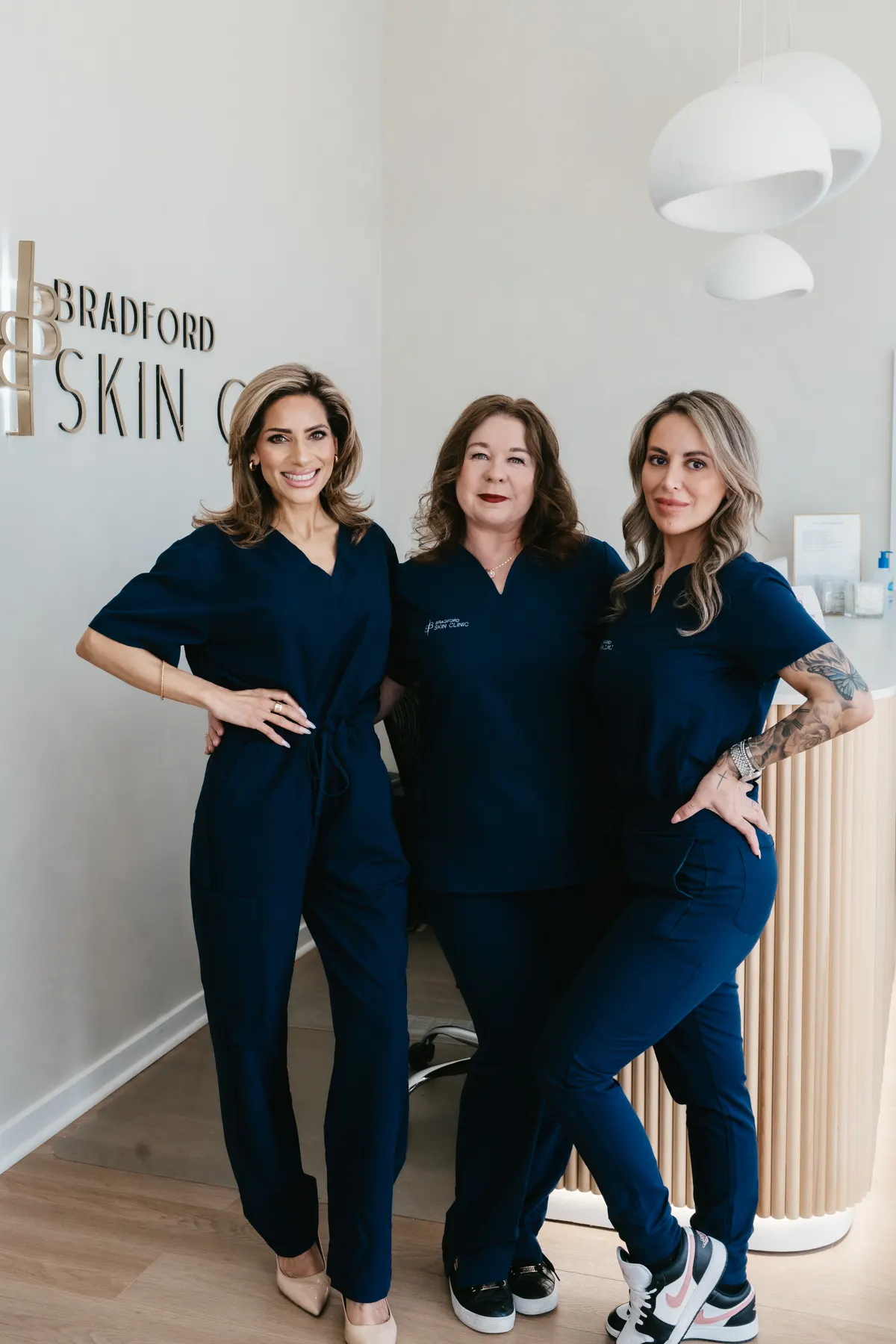
Who you would be working with
A person, not a signature.
Directorship is a professional relationship rather than a
location. You are choosing the person who authors your mechanism, reviews it as
your practice changes, and picks up when a client does not fit it.
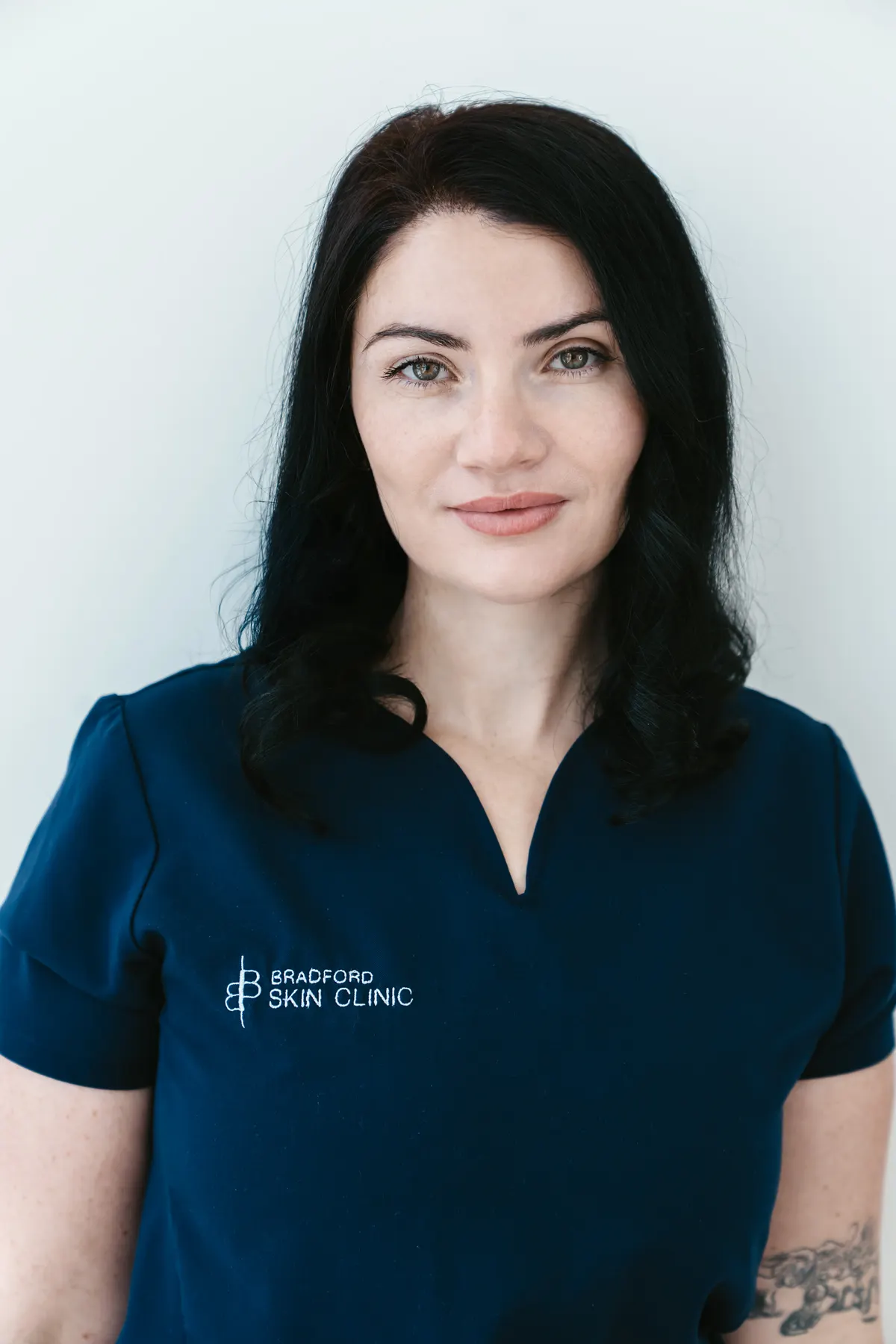
Alex Dinovich is Nurse Practitioner and Medical Director here. She is registered with the College
of Nurses of Ontario as 13564840, verifiable on the
public register.
What a directive gives you
Authority to perform the controlled act it names.
A written mechanism you can show.
A named provider accountable for authoring it.
What it does not cover
Anything the directive does not say.
Competence, which comes from training and practice.
Your own accountability to the College for your own decisions.
A directive covers what it says it covers.
Accountability under an authorizing mechanism is specific and bounded.
You remain accountable to the College of Nurses of Ontario for your own practice.
Alex Dinovich, NP. The authorising provider, not a name on a certificate.
What a medical director actually does
A medical director gives you the authority you do not have on your own, and nothing more than that.
If you are an RN or an RPN injecting a neuromodulator or a dermal filler in Ontario, you are performing two controlled acts under the Regulated Health Professions Act, 1991. You are administering a substance by injection, and you are performing a prescribed procedure below the dermis. Neither of those is something you may initiate. The authority has to be granted to you by an authorized provider, and the document that grants it is an authorizing mechanism.
Alex Dinovich, Nurse Practitioner and Medical Director at Bradford Skin Clinic and Medical Spa, provides that mechanism to nurses across Ontario. She holds College of Nurses of Ontario registration 13564840. As a Nurse Practitioner she can assess, diagnose, prescribe, issue direct orders and author directives in her own right, which is the whole reason a Nurse Practitioner can hold this role.
The two controlled acts, and why fillers are not a drug question
Almost every page you will read on this subject gets the filler question wrong, so it is worth being precise.
Neuromodulators are prescription drugs in Canada. That means somebody with prescribing authority has to prescribe them, and the drug cannot simply be bought and used.
Dermal fillers are not prescription drugs. Health Canada regulates them as Class III medical devices, and as Class IV where the filler is permanent. There is no prescription to write. People conclude from this that fillers sit outside the rules, and that is the error. The requirement for fillers does not come from drug scheduling at all. It comes from the controlled acts. Injecting a filler is still administering a substance by injection and still a procedure below the dermis, and an RN or RPN still cannot initiate either one.
So for a neuromodulator you need both a prescription and an authorizing mechanism. For a filler you need an authorizing mechanism. In both cases you need the mechanism, which is why the same directorship arrangement covers both.
Direct order or directive
An authorizing mechanism comes in two shapes and they are not interchangeable.
A direct order applies to a named client. The authorized provider has that specific person in mind and orders the specific intervention. It is narrow, it is clean, and it does not scale.
A directive applies to any client who meets the conditions written into it. It names the intervention, the circumstances in which it may be carried out, the clients it covers, the conditions that must be met first, and the situations in which you must stop and consult. It scales, and it is how most working injectors practise, but it is only as good as the document. A vague directive is a liability rather than a protection.
Either way, three things have to line up before you inject: the authority is in place, you have the competence for that specific intervention on that specific client, and the situation actually fits the mechanism. If any of the three is missing, you do not proceed. Your director cannot supply competence, and no document overrides your own judgement at the chairside.
What Alex provides
The arrangement is built around the documents and the clinical relationship behind them, not around a logo on your wall.
What she will not do is take blanket responsibility for your practice. Nobody can, and anybody who offers it is either misunderstanding the accountability structure or hoping you will not look closely. Accountability under an authorizing mechanism is specific and bounded. You remain accountable to the College of Nurses of Ontario for your own practice, your own competence and your own decisions.
The rules are under active review
The College of Nurses of Ontario published a new Aesthetic Services practice guideline dated 3 July 2026, and has said it continues to review how authorizing mechanisms, including directives and delegation, are used in aesthetic practice.
That means the requirements may change. Anyone telling you the position is settled is selling you certainty they do not have. Part of what a directorship arrangement is for is that somebody is watching for those changes and reissuing your documents when they land, rather than leaving you working from a directive written against an older guideline.
Who this suits, and who it does not
This suits a nurse who already has the clinical competence, is building or running an aesthetic practice, and needs the regulatory structure underneath it done properly.
It does not suit someone who has not yet trained. Authority without competence is worse than useless, because it puts you in a position to do harm with the paperwork in order. If you are at that stage, training comes first.
It also does not suit someone shopping for a signature. If what you want is a name to put on a form so that a landlord or an insurer stops asking, say so and we will tell you this is not that. If that is not what you need, do not buy it from us.
How it starts
It starts with a conversation about what you actually inject, where you inject it, who your clients are, and what you are competent to manage when something goes wrong. From that comes the scope of the directives, and from the scope comes the fee.
Call 647-333-6805 or use the enquiry form. Bradford Skin Clinic and Medical Spa is at 444 Holland Street West, Unit 2, Bradford, Ontario, and directorship arrangements are available to nurses working anywhere in the province.
Asked by nurses
Asked and answered.
Do I legally need a medical director to inject in Ontario?
You need an authorizing mechanism, and in practice a medical director is how most nurse injectors obtain one. An RN or RPN cannot initiate the controlled acts involved in cosmetic injection. The authority has to come from an authorized provider, such as a Nurse Practitioner or a physician, in the form of a direct order for a named client or a directive that covers a defined set of clients and circumstances. The phrase medical director is a business description of the person who provides and maintains that mechanism.
Is medical director a protected title in Ontario?
No. Medical director is not a protected title under the Nursing Act, 1991 or the Regulated Health Professions Act, 1991. Nurse, Registered Nurse, Registered Practical Nurse and Nurse Practitioner are protected. Anyone can call themselves a medical director, which is exactly why you should check the registration, the scope and the actual documents rather than the job label.
Does my medical director have to be on site when I inject?
The requirements differ depending on which regulator governs the authorizing provider, and the specifics are confirmed in conversation rather than assumed from a web page. What is fixed is that a directive has to state its own conditions, and those conditions are binding on you. If your directive requires the author to be reachable, or requires a particular assessment before you proceed, that is a requirement of your practice and not a formality.
Can a Nurse Practitioner be my medical director instead of a physician?
Yes. A Nurse Practitioner is an autonomous provider who can assess, diagnose, prescribe, issue direct orders and author directives, which covers everything an authorizing mechanism for cosmetic injection requires. Ontario clinics have historically defaulted to physicians for the role, but that is convention, not a legal requirement.
What happens to my clients if my medical director leaves?
Your authority to initiate stops when the authorizing mechanism stops. A directive is only live while the authorizing provider stands behind it, so if that person withdraws, retires or ends the arrangement, your booked treatments cannot proceed on that mechanism. Ask any prospective director what the notice period is and what happens to clients mid-course before you sign anything.
Are dermal fillers a prescription product?
No. Dermal fillers are regulated by Health Canada as Class III medical devices, or Class IV where the filler is permanent, and they are not prescription drugs. The authority you need for filler comes from the controlled acts involved, not from drug scheduling. Neuromodulators are different: they are prescription drugs as well as controlled acts, so both questions apply.
Does a training certificate give me authority to inject?
No. There is no injector licence in Ontario and no course confers legal authority. Training builds competence, which you need. Authority is a separate thing that comes from an authorizing mechanism issued by an authorized provider. A clinic that implies its certificate makes you legally able to practise is describing something that does not exist.
Sources
Where this comes from.
Everything on this page is drawn from the regulator, not from a
competitor's marketing. Read the originals rather than taking our word for any of it.
General information about Ontario regulatory requirements. Not
legal or regulatory advice. Nurses remain accountable to the College of Nurses of Ontario
for their own practice decisions.
Talk to us
Ask before you commit to anything.
Leave four details and Alex will come back to you directly. If what
you need is not something we do, we will say so and point you at whoever does.

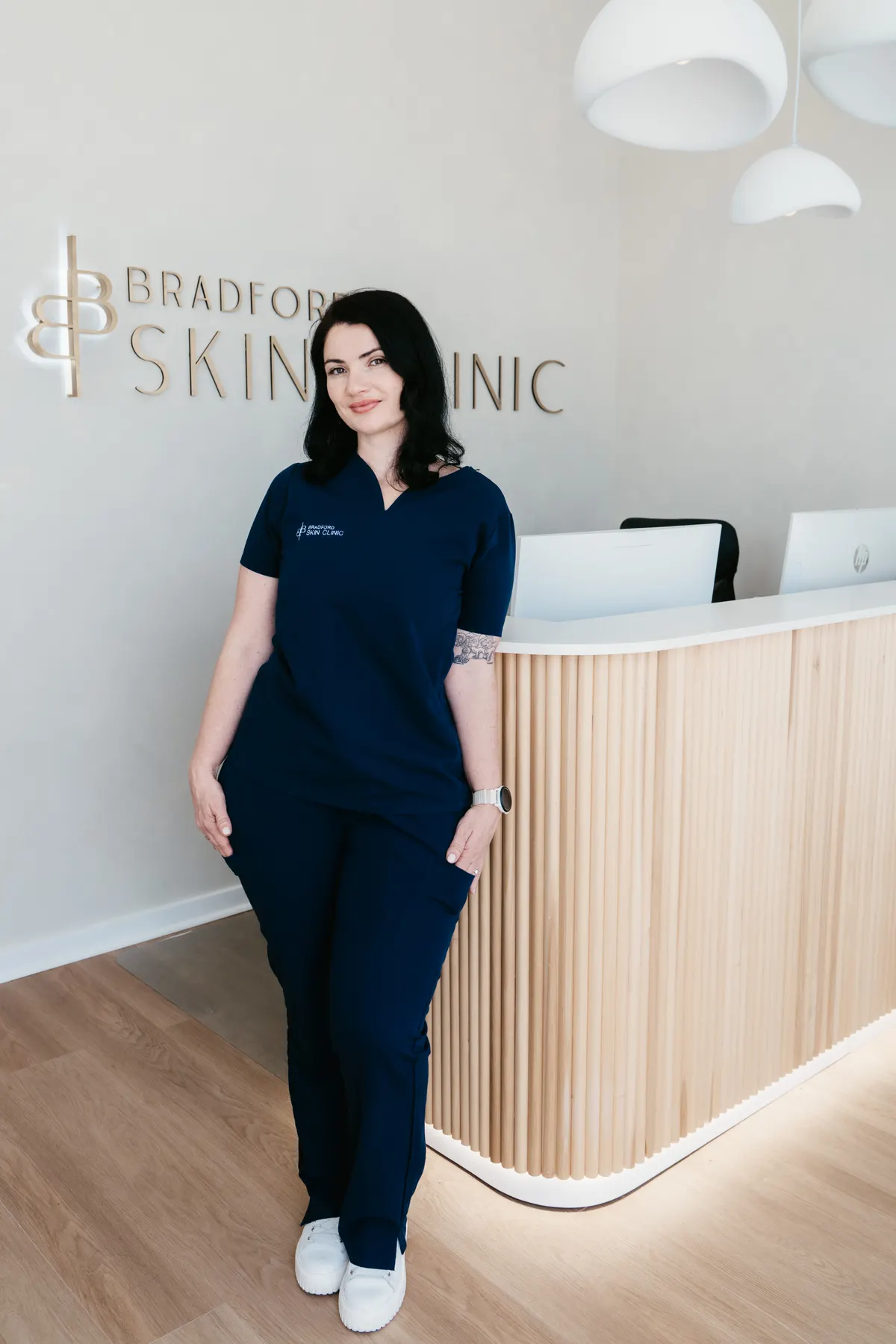
 Written and reviewed by Alex Dinovich, NP, Nurse Practitioner and Medical Director at Bradford Skin Clinic & Medical Spa.
College of Nurses of Ontario registration 13564840, verifiable on the
public Find a Nurse register.
Last reviewed .
Written and reviewed by Alex Dinovich, NP, Nurse Practitioner and Medical Director at Bradford Skin Clinic & Medical Spa.
College of Nurses of Ontario registration 13564840, verifiable on the
public Find a Nurse register.
Last reviewed .