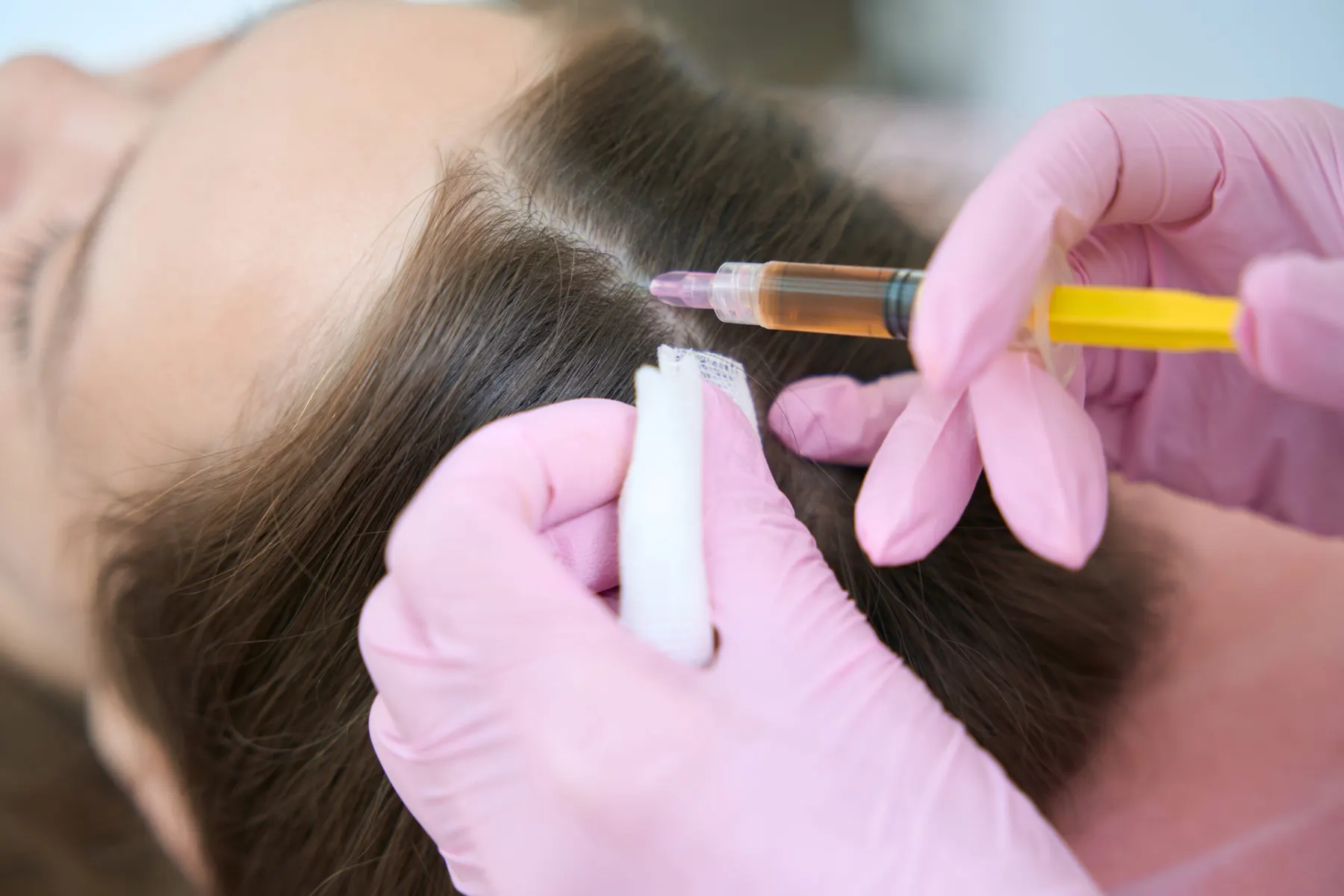
PRP for hair
Hair
Platelet-rich plasma prepared from your own blood and injected across the scalp to support follicles that are miniaturising but still alive.
from $599 About PRP for hair →

Hair Loss is a reduction in hair density or thickness caused by a range of distinct processes including hereditary pattern thinning, hormonal change, nutritional deficiency, illness, stress and autoimmune activity; outcomes depend heavily on which cause is present and on how early it is addressed.
02 · The honest version
Thinning hair and a widening part, the several very different causes behind them, and the treatments we offer once the cause is clear.

Every face is different. This page is the general picture. What is actually happening on your skin is something a nurse should look at up close, in clinic light, before anyone recommends a treatment.
Does it get worse? That depends on the concern and on you. It is a reason to start early, not a reason to panic - and we will tell you plainly where you are rather than where a treatment plan would be easiest to sell.
This is the single most useful thing to understand before you spend money on it. “Hair loss” describes a symptom, not a diagnosis, and the underlying processes are genuinely different from one another.
Androgenetic alopecia, or pattern hair loss, is the most common. It is hereditary and hormonally mediated: susceptible follicles progressively miniaturise, producing finer, shorter, less pigmented hairs each cycle until they stop producing visible hair altogether. In men it typically shows as hairline recession and crown thinning. In women it more often shows as diffuse thinning across the top of the scalp with a widening part and a preserved frontal hairline.
Telogen effluvium is a shedding response. A systemic event such as illness, surgery, childbirth, rapid weight loss or major stress pushes an unusually large number of follicles into the resting phase simultaneously, and they shed together some weeks later. It is usually temporary and usually recovers once the trigger has resolved.
Nutritional and endocrine causes are common and frequently missed. Low iron and ferritin, thyroid dysfunction, vitamin D deficiency and vitamin B12 deficiency can all present as diffuse thinning, and all of them are addressable once identified.
Alopecia areata is autoimmune and produces sudden, well-defined round patches of loss. It behaves differently from everything above, and we cover it on its own page.
Traction alopecia results from years of sustained pulling from tight hairstyles and extensions, and it becomes permanent if the tension continues long enough.
Each follicle runs independently through three phases: a long growth phase, a short transitional phase, and a resting phase after which the hair is shed and replaced. Because follicles are not synchronised, you shed continuously and unremarkably.
Two things go wrong. Either too many follicles enter the resting phase at once, which produces the sudden dramatic shedding of telogen effluvium, or the growth phase gets progressively shorter with each cycle, which is the slow miniaturisation of pattern loss. The first is alarming and often temporary. The second is subtle and progressive, and it is the one people notice too late.
The assessment comes before any treatment, and it involves history as much as examination: when it started, whether it was gradual or sudden, what was happening in your life and health in the months before, your family history, your medications, and whether the pattern is diffuse or localised. That history usually narrows the field considerably.
Where bloodwork is warranted to rule in or out deficiency and thyroid causes, that can be arranged. Our Medical Director, Alex Dinovich, FNP-PHC, is a Nurse Practitioner and an authorised prescriber, which means this can be handled within a clinical framework rather than as a purely cosmetic exercise.
PRP hair restoration uses growth factors concentrated from your own blood, injected into the scalp to support follicles that are miniaturising but still viable. It is most relevant earlier in the process rather than later.
Naturopathic services with Dr. Erica Vriend, ND, can address the nutritional and systemic contributors that sit behind a good proportion of diffuse thinning.
Vitamin B12 injections have a role specifically where a deficiency has been identified, not as a general hair treatment.
If your presentation suggests something outside what we can appropriately manage, we will tell you and direct you to the right assessment rather than treating around it.
04 · What we actually offer
These are the ones we use for hair loss. Not every face needs all of them, and we will say so. The goal in every case is the same: treat the cause, not the photograph.
Hair
Platelet-rich plasma prepared from your own blood and injected across the scalp to support follicles that are miniaturising but still alive.
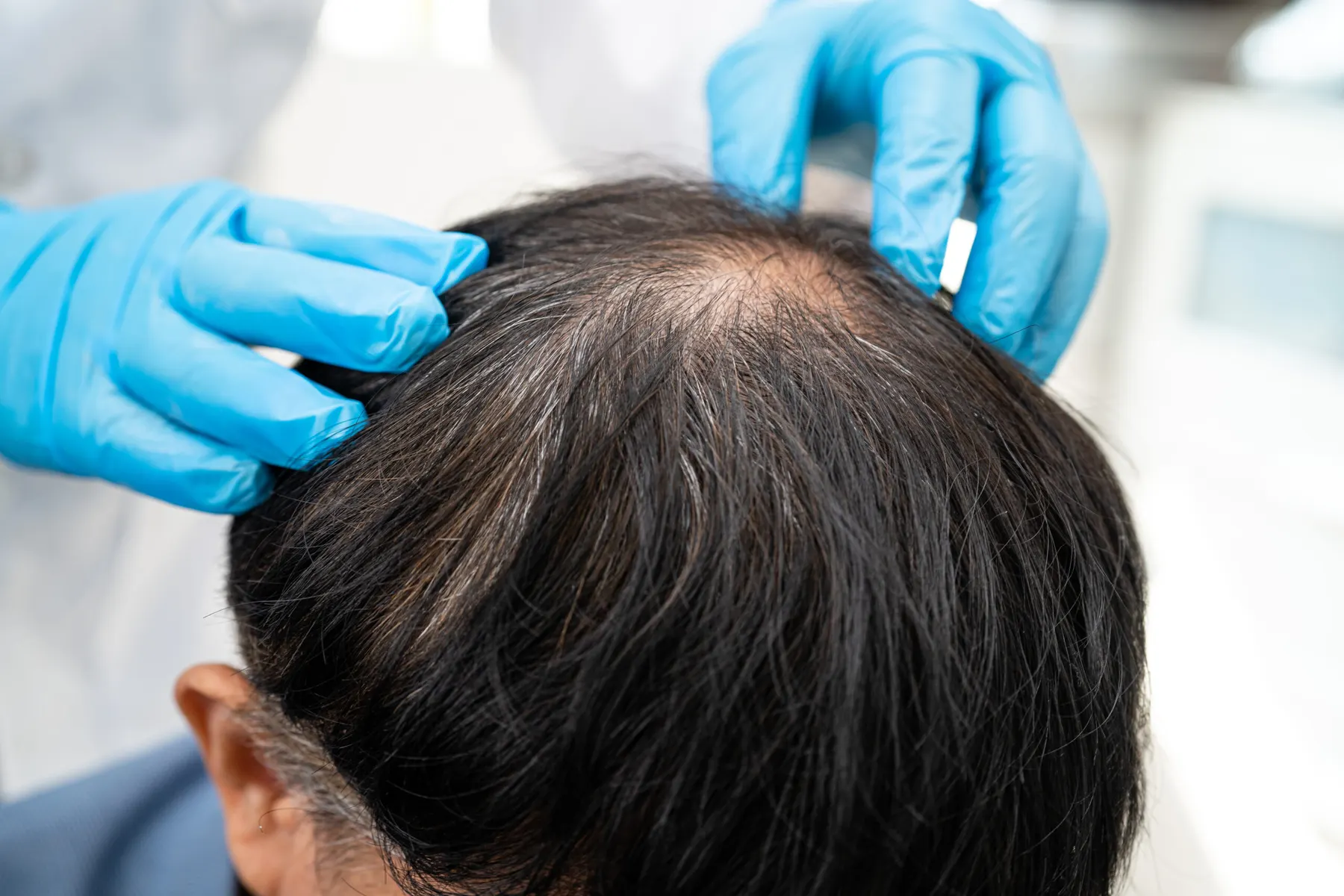
Hair
An assessment-first approach to thinning hair, working out the cause before choosing between in-clinic treatment, prescribing and referral.

Wellness
Naturopathic assessment and care with Dr. Erica Vriend, ND, working alongside our clinical team where skin, hormones and nutrition overlap.
Wellness
An intramuscular vitamin B12 injection, appropriate for people who genuinely cannot absorb B12 or are genuinely low, and not much use to anyone else.
Every plan is personalised. Which of these you need, in what order and how often, is decided after a nurse has looked at your skin - not before. We will also tell you when a treatment is wrong for you, and we say it before you book.
05 · What actually happens
If you have been putting this off, this section is for you. A consultation costs you nothing and commits you to nothing - you are allowed to walk out having booked absolutely nothing.
She is the one who answers the phone and the texts, so you will already have spoken to her. No clipboard interrogation in the waiting room.
In clinic light, up close, with your makeup off if you are wearing any. This is the part people dread and it takes about a minute.
When it happens, what you had noticed before it happened, what you have already tried and what made it worse. Bring your current products if it is easy.
What we would do, in what order, and what it costs - including the option of doing nothing yet. If a treatment is wrong for you, we say so here, not after.
Nothing is booked in the room unless you want it booked. No deposit, no pressure, no offer that expires on Friday.

Always so kind and personal. Took the extra time to make sure I was comfortable.
06 · Straight answers
The questions people actually ask us on the phone, answered the way we answer them on the phone.
Because the causes of hair loss respond to completely different things. Pattern hair loss is a follicle-miniaturisation problem and needs treatment aimed at the follicle. Telogen effluvium is a shedding response to a systemic event and usually resolves once the trigger is addressed. Deficiency-related thinning improves when the deficiency is corrected. Autoimmune hair loss is a different process again. Starting treatment without establishing which one you have is how people spend a year on the wrong thing.
Assessment of hair loss commonly involves looking at iron and ferritin, thyroid function, vitamin D and vitamin B12, because deficiencies and thyroid disorders are genuinely common and genuinely treatable causes of thinning. Bradford Skin Clinic & Medical Spa is nurse-practitioner-led and our Medical Director is an authorised prescriber, so this can be discussed as part of your assessment or coordinated with your family doctor.
Yes. Shedding a certain amount daily is a normal part of the hair growth cycle, because follicles move independently through growing, transitional and resting phases. What is worth attention is a sustained increase in shedding, a change in the density of your part or ponytail, or hair that no longer grows to its previous length.
Postpartum shedding is usually a form of telogen effluvium, where a large number of follicles that stayed in the growing phase during pregnancy shift into shedding together afterwards. It is typically self-limiting and hair density usually recovers, though it can take a while and it can feel alarming while it happens. If it does not recover, that is worth investigating rather than waiting out.
Platelet-rich plasma is prepared from a small sample of your own blood, which is spun to concentrate the platelets and the growth factors they contain. That concentrate is injected into the scalp with the aim of supporting follicle function in areas where hair is thinning but follicles are still present. It is most relevant where miniaturising follicles remain viable, which is why early assessment matters.
It depends on the cause and how long it has been present. Shedding from a temporary systemic trigger usually recovers. Deficiency-related thinning usually improves when the deficiency is corrected. Hereditary pattern loss can often be slowed and partially improved, particularly when treated early, but follicles that have been dormant for a long time are much less responsive. Anyone promising full regrowth regardless of your situation is overselling.
Significant physical or emotional stress can trigger telogen effluvium, where a large proportion of follicles enter the resting phase at once and shed together. The shedding typically appears some weeks or months after the stressful event, which is why people often fail to connect the two. It is generally reversible once the underlying stressor has passed.
Often, yes. Pattern hair loss presents differently, with men more commonly showing hairline recession and crown thinning and women more commonly showing diffuse widening of the part with the frontal hairline preserved. Some prescription options are appropriate for one and not the other, and hormonal contributors differ. Your plan is built around your presentation rather than a template.
Where this comes from
We would rather you did not take our word for any of this. These are the sources behind what is written above, and none of them are ours.
07 · The next step is small
A hair loss consultation costs you nothing and commits you to nothing. You will leave knowing what your skin is doing, what we would do about it, and what it would cost - whether or not you book anything.
Bring three things. Whatever you are currently putting on your face, a rough idea of when it is at its worst, and any questions you have written down. That is genuinely all the preparation we need.
Makeup is fine either way. If it is easier to arrive with it on, arrive with it on - there is a mirror and a cleanser in the room.
We answer during clinic hours, usually within the hour.
647-333-6805 Open messagesOn a desktop? Save the number and text from your phone.