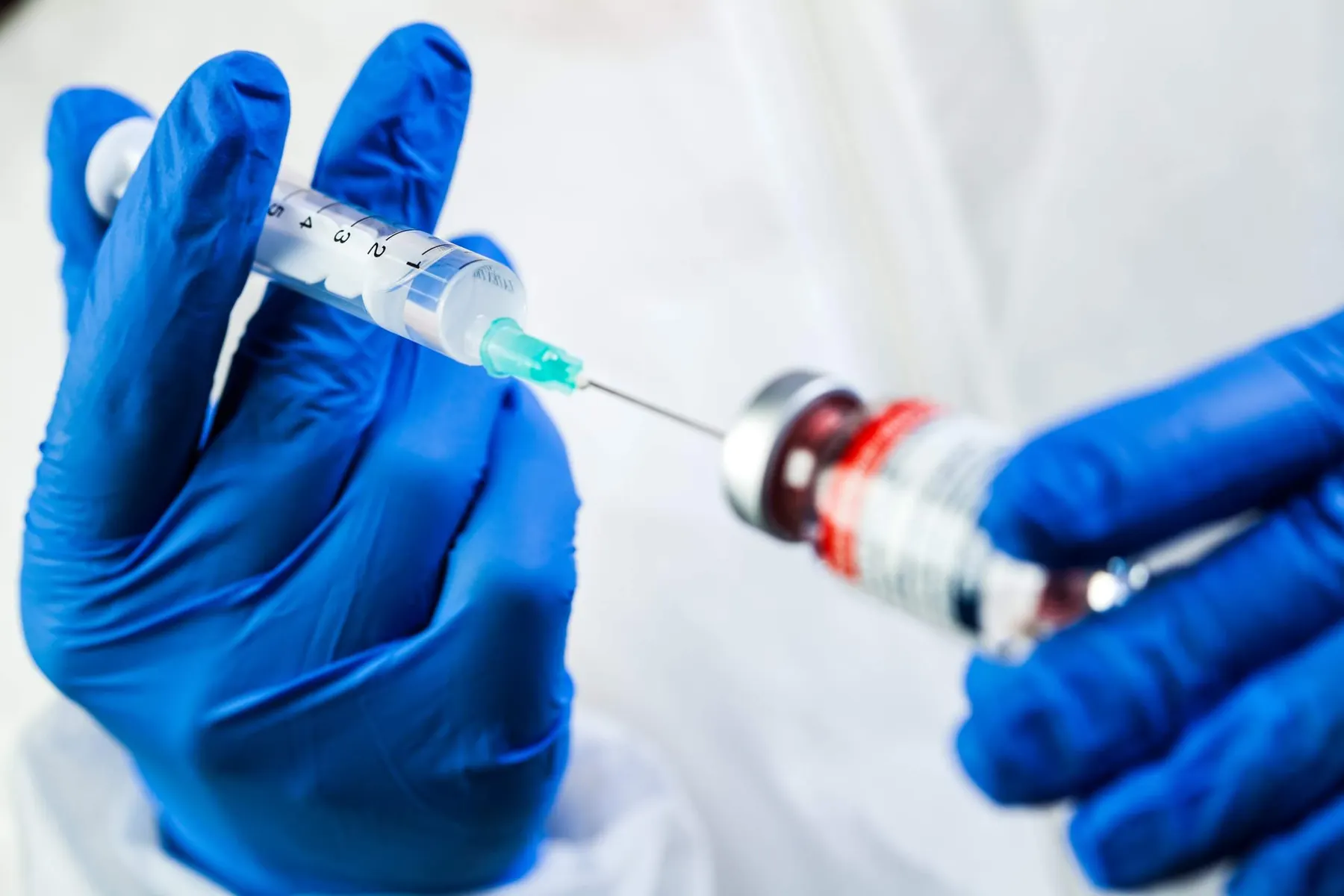
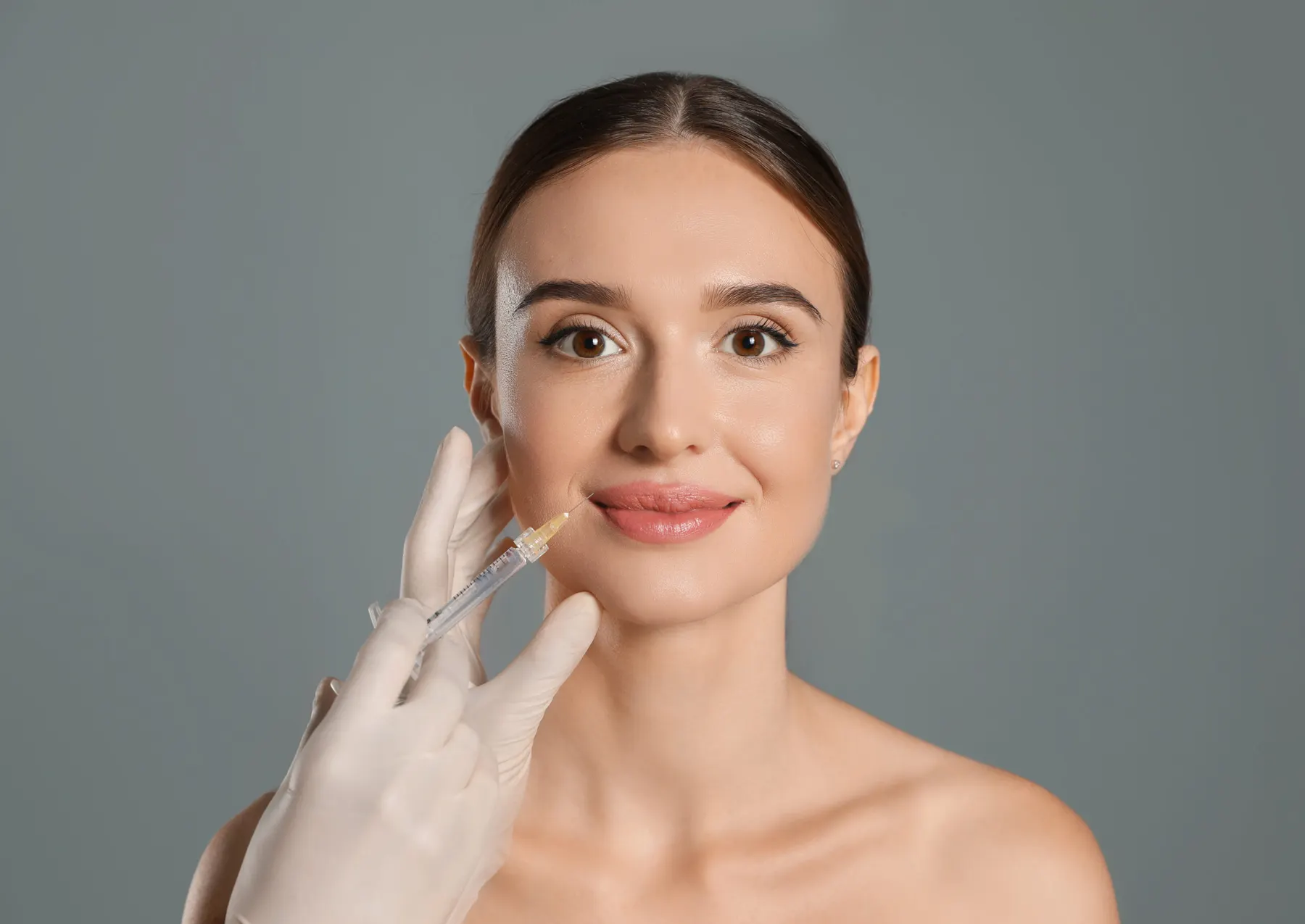
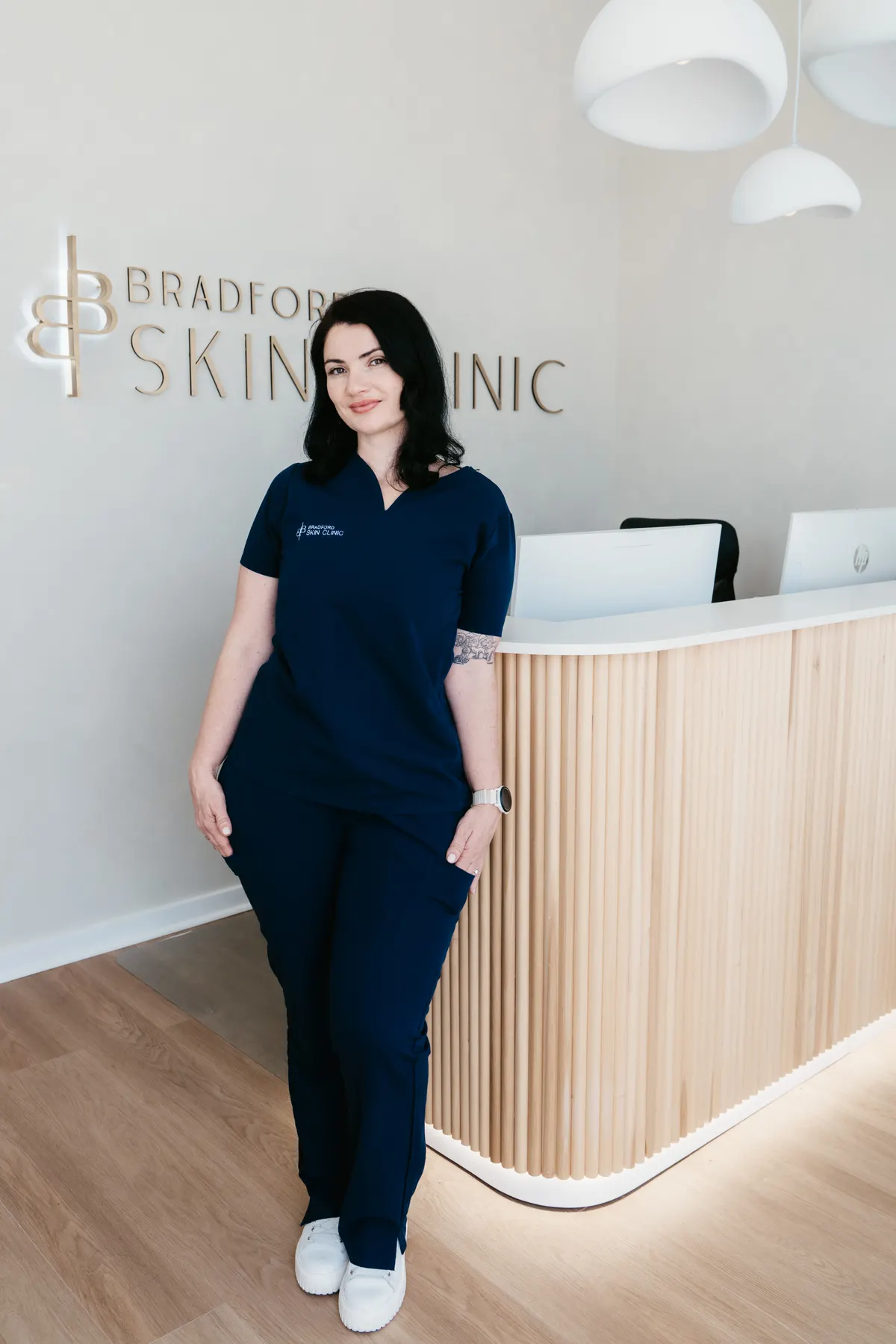
The Foundation Injectables Course at Bradford Skin Clinic and Medical Spa in Bradford, Ontario is two full days of neuromodulator and dermal filler training for nurses new to aesthetics, taught by Alex Dinovich, Nurse Practitioner and Medical Director. Day one covers neuromodulators and day two covers dermal fillers, both 9:00am to 5:00pm, and the fee is $3,999.
Written and reviewed by Alex Dinovich, NP, Nurse Practitioner and Medical Director at Bradford Skin Clinic & Medical Spa.
College of Nurses of Ontario registration 13564840, verifiable on the
public Find a Nurse register.
Last reviewed .
At a glance
The short version.
Investment$3,999
LengthTwo full days, 9:00am to 5:00pm each day
FormatIn person, in our Bradford treatment rooms
Who it is forCurrent registration with the College of Nurses of Ontario as an RN, RPN or NP
What the course includes
Placeholder. This list is stand-in copy while the
clinic confirms the detail. Anything in square brackets is an open question.
Included in the course fee
Day one, neuromodulators, 9:00am to 5:00pmFacial anatomy in the order you meet it, muscle behaviour, assessment and dose.
Day two, dermal fillers, 9:00am to 5:00pmTissue planes, vascular anatomy, volume, and the complication profile that actually frightens experienced injectors.
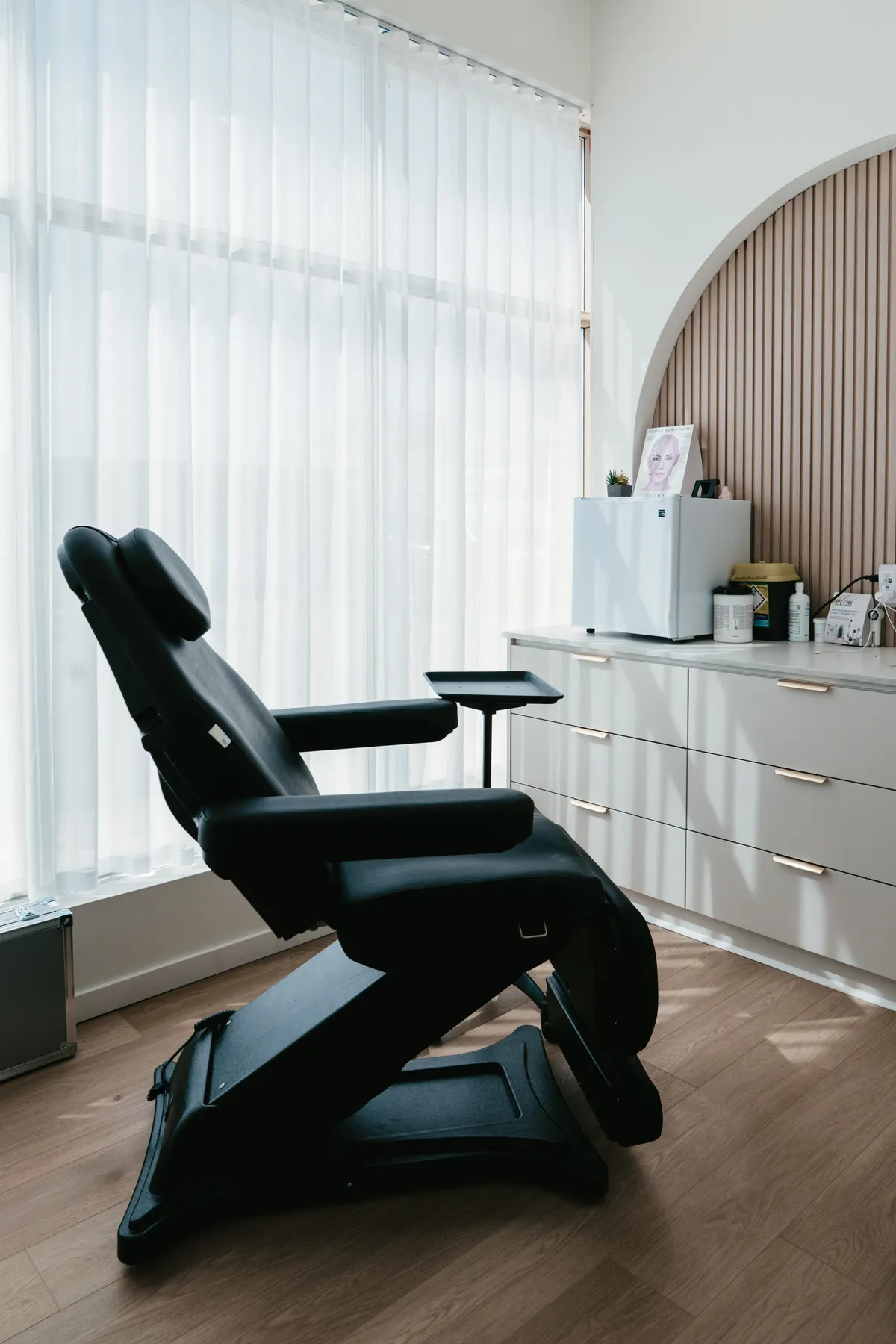
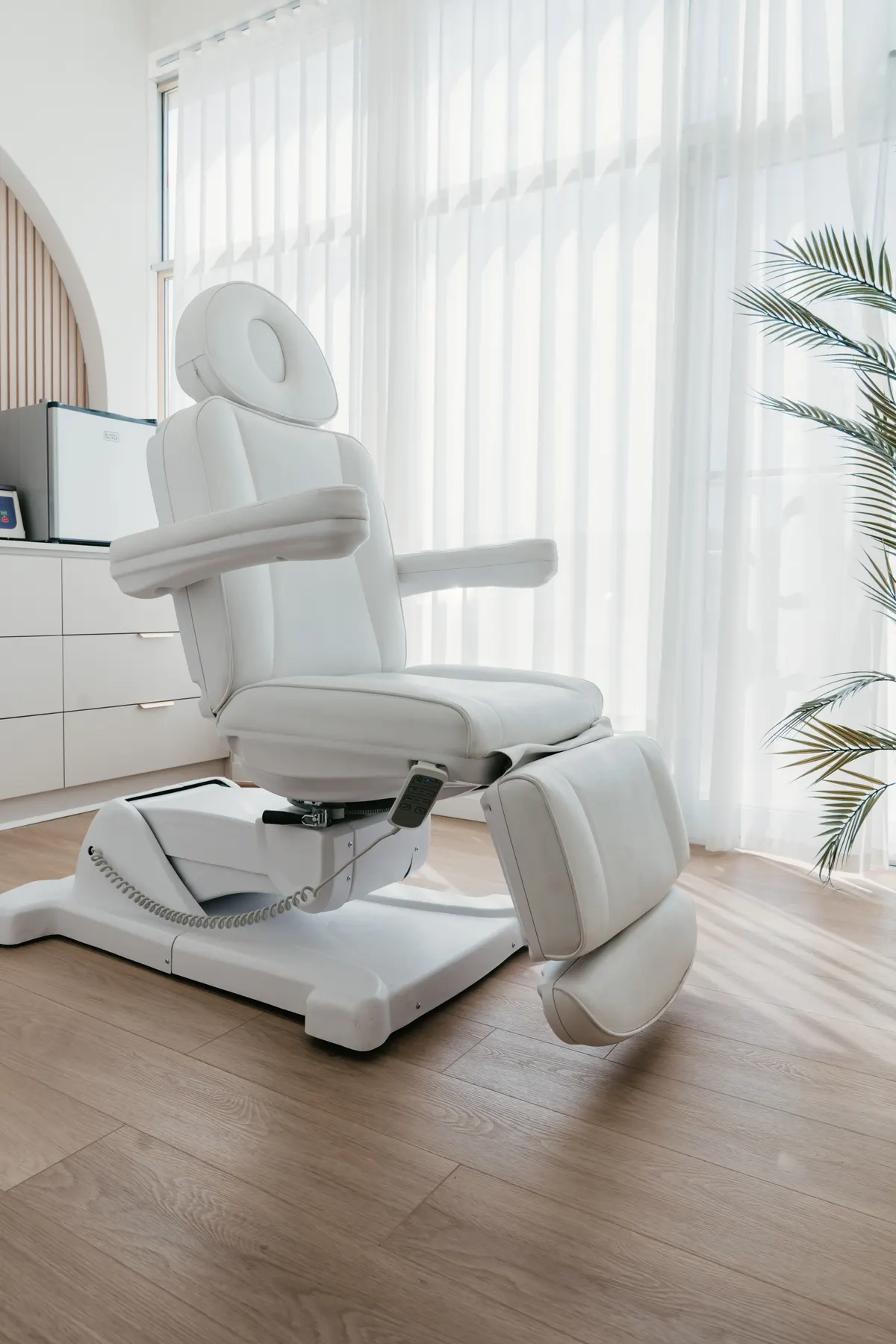
Taught in the clinic's own treatment roomsNot a hotel function room. The chair, the lighting and the trolley are the ones a working clinic uses.
Supervised injecting, with your hands corrected in the momentThe number of models is confirmed in writing before you pay. Inflated model counts are the oldest trick in this market.
Assessment, consent and documentation you could defend eighteen months laterIncluding photography and aftercare, and what to do when the phone rings on day three.
[To confirm with Alex: group size, whether models are provided, what you take home]
Not included: an authorising mechanism. The course gives you competence. Authority is a separate thing, and it comes from an authorised provider.
Where you will be standing
The room, not a slide deck.
You inject here, in a room that is running clinics the rest of the week.Assessment is taught in the room where assessment happens.Cohort size is confirmed in writing before you pay.
What the course gives you
Technique, on real anatomy.
Assessment, consent and documentation.
Competence you can demonstrate.
What you still need
Current registration with the College of Nurses of Ontario.
An authorising mechanism from an authorised provider.
A directive or a direct order that covers what you actually do.
Competence is not authority.
Ontario issues no injector licence, and no course grants legal authority to inject.
We can author the mechanism. You are not obliged to use us for it.
Taught on real anatomy, in a working treatment room.
The foundation injector course is neuromodulator and filler training for nurses who have not injected cosmetically before. It is taught at Bradford Skin Clinic and Medical Spa, 444 Holland St W, Unit #2, Bradford, by Alex Dinovich, Nurse Practitioner and Medical Director, College of Nurses of Ontario registration 13564840. It teaches you to inject. It does not, and cannot, give you the legal authority to inject, and we will say that to you again on the first morning.
What a foundation course should actually contain
A foundation course is worth the money when it changes what you can do with your hands and what you can defend on paper.
The clinical spine is facial anatomy taught in the order you will meet it: the muscles that move the upper face, the vessels that matter when a needle goes deep, the tissue planes and how they differ across the face and between patients. Then product behaviour, because a neuromodulator and a hyaluronic acid filler solve different problems by different mechanisms and are not interchangeable. Then technique, on real faces, with your hands corrected in the moment rather than in a debrief.
The other half is the part nurses undervalue until their first complaint. Assessment, so that you can recognise the client you should not treat. Consent, done as a conversation and recorded as one. Documentation that would still make sense to a stranger reading it eighteen months later. Photography and consent for it. Aftercare, and what to do when the phone rings on day three.
If a course spends its time on injection patterns and skips the second half, you are being taught the enjoyable part of the job and left exposed on the rest of it.
Neuromodulator and filler are two different regulatory questions with one answer
Neuromodulators are prescription drugs. Fillers are Class III medical devices. Both still require an authorizing mechanism for an RN or an RPN.
This confuses a lot of nurses, so here is the whole logic in one place.
A neuromodulator is a prescription drug in Canada. That means there is a prescribing decision, made by someone who is authorized to make it, before the product reaches the client. It also means the marketing rules are strict: Health Canada’s Food and Drug Regulations limit advertising a prescription drug to the public to name, price and quantity, and the College of Nurses separately prohibits nurses from referencing therapeutic benefits of prescription drugs in advertisements. This is why this page says neuromodulator and never a brand name, and why your own future advertising will need the same discipline.
A dermal filler is not a prescription drug. Health Canada regulates fillers as Class III medical devices, which is a different framework entirely. There is no prescription.
Now the part that catches people. Because there is no prescription for filler, it is easy to assume filler is the freer of the two. It is not. The authority requirement for filler has nothing to do with drug scheduling. It comes from the controlled acts under the Regulated Health Professions Act, 1991: administering a substance by injection, and performing a prescribed procedure below the dermis. An RN or an RPN cannot initiate either one. So filler requires an authorizing mechanism for exactly the same reason a neuromodulator does, and it does so while carrying the harder complication profile of the two.
Competence is what you are buying here
You are buying the ability to do the work safely. You are not buying the right to do it.
We are explicit about this because the alternative is a nurse who pays for training, finishes it, books clients, and only then finds out that an RN or an RPN cannot initiate these controlled acts. At that point the nurse is either calling round for an authorizing mechanism in a hurry or, worse, treating people without one.
If you are a Nurse Practitioner, your position is different. An NP can initiate these acts within her own scope, so for you the course genuinely is the missing piece.
If you are an RN or an RPN, plan the authorizing mechanism at the same time as the training, not after it. Medical directorship explains how that arrangement works and what authority actually transfers under it.
Why we teach in a working clinic
Training in the room where the work happens teaches you things a classroom structurally cannot.
You see how a treatment room is stocked and who is responsible for checking it. You see where the emergency equipment lives, in the place it actually lives, rather than on a slide. You watch a consent conversation that involves a real person with real reservations. You see charting done at the speed of a working day rather than at the speed of a demonstration.
None of that is glamorous, and none of it photographs well. It is also the difference between a nurse who has injected and a nurse who can run a clinical appointment end to end.
What we will not promise you
We will not tell you what you are going to earn, and we will not tell you that clients will follow.
Third parties publish figures for this market and you are free to weigh them: Indeed reports an average of roughly $73,000 for nurse injectors in Ontario. That is their number, drawn from their data, and it describes a population rather than you. What you earn depends on your authorizing mechanism, your setting, your hours, your local market and how good you become. Any provider that puts an income figure next to a course fee is selling you a feeling.
We will also not tell you the course is accredited, because we cannot name an accrediting body for aesthetic injecting in Ontario or the scope of its accreditation. If another provider uses the word, ask them those two questions and see what comes back.
Who should not book this
If you are not registered with the College of Nurses of Ontario, this course is not open to you.
If you are hoping to finish and immediately practise alone as an RN or RPN, that outcome is not available anywhere in Ontario, from us or from anyone else, and we would rather tell you now. If your reason for wanting this is that someone showed you a salary figure, slow down and read injector training cost before you spend anything.
And if you enquire and we think you are not ready, we will say so. That happens, and it is not a rejection of you as a nurse. It usually means the sequence is wrong rather than the ambition.
Can I start injecting clients as soon as I finish?
Not as an RN or an RPN, because the course gives you competence and not authority. Before you treat anyone you need an authorizing mechanism from an authorized provider, which is a direct order or a directive. A Nurse Practitioner is different, since an NP can initiate the controlled acts involved within her own scope. This is the step most foundation courses in Ontario leave you to discover on your own.
I have never injected anything cosmetic. Is that a problem?
No. That is who the foundation course is for. What you do need is current registration with the College of Nurses of Ontario and a working comfort with sterile technique, consent and clinical documentation from your existing practice. If your nursing background is a long way from any of that, tell us at enquiry and we will say honestly whether to start here or elsewhere.
Why do you say neuromodulator instead of the brand name?
Because neuromodulators are prescription drugs in Canada, and Health Canada's Food and Drug Regulations limit advertising a prescription drug to the public to name, price and quantity. The College of Nurses separately bars nurses from referencing the therapeutic benefits of prescription drugs in advertising. A training provider that ignores both is teaching you compliance while breaching it in its own marketing.
Can I take neuromodulator training on its own?
Yes. The Foundation Neuromodulator Course is the same two day format covering tox alone, at $2,999. Take it if you want to start with neuromodulator and add filler once you are confident, or if you do not intend to inject filler at all. Filler carries the complication profile experienced injectors actually worry about, and there is no shame in not starting there.
Is filler covered on this course, or only neuromodulator?
Both are covered, and they are taught as different problems rather than two flavours of the same one. Neuromodulator work is about muscle behaviour and dose. Filler work is about tissue planes, vascular anatomy and volume, and it carries the complication profile that actually frightens experienced injectors. Fillers are Class III medical devices rather than prescription drugs, but the controlled acts and therefore the authority requirement are identical.
How many models will I inject?
The model number is confirmed when you enquire and is given to you in writing before you pay. We will not publish a figure here, because the honest answer depends on the cohort and inflated model counts are the oldest trick in this market. Ask every provider you are considering for the number in writing and compare on that basis.
How long is the course and when does it run?
It is two full days, 9:00am to 5:00pm on each. Day one is neuromodulators and day two is dermal fillers. Cohort dates are published on our courses page as soon as each one is committed to, and we do not publish a date the clinic has not committed to running. If nothing on the calendar suits you, register anyway and tell us which month does.
Do I need my own insurance?
You need to speak to your insurer before you train and again before you practise, and you should assume the answer changes between those two conversations. Professional liability cover for cosmetic injecting is priced on what you actually do, under what authorizing mechanism, and in what setting. Nurses routinely budget for a course and forget this entirely.
What happens after the foundation course?
Two things, and only one of them is more training. The clinical next step is complication management and then advanced filler work. The regulatory next step is obtaining your authorizing mechanism from an authorized provider, without which the clinical skills stay theoretical. We can help with the second, and you are under no obligation to use us for it.
Sources
Where this comes from.
Everything on this page is drawn from the regulator, not from a
competitor's marketing. Read the originals rather than taking our word for any of it.
General information about Ontario regulatory requirements. Not
legal or regulatory advice. Nurses remain accountable to the College of Nurses of Ontario
for their own practice decisions.
Talk to us
Ask before you commit to anything.
Leave four details and Alex will come back to you directly. If what
you need is not something we do, we will say so and point you at whoever does.


 Written and reviewed by Alex Dinovich, NP, Nurse Practitioner and Medical Director at Bradford Skin Clinic & Medical Spa.
College of Nurses of Ontario registration 13564840, verifiable on the
public Find a Nurse register.
Last reviewed .
Written and reviewed by Alex Dinovich, NP, Nurse Practitioner and Medical Director at Bradford Skin Clinic & Medical Spa.
College of Nurses of Ontario registration 13564840, verifiable on the
public Find a Nurse register.
Last reviewed .