A Registered Practical Nurse in Ontario can perform cosmetic injections but cannot initiate them: injecting a neuromodulator or a dermal filler involves two controlled acts requiring an authorizing mechanism from an authorized provider. Bradford Skin Clinic and Medical Spa in Bradford, Ontario provides that mechanism through Alex Dinovich, Nurse Practitioner and Medical Director.
Written and reviewed by Alex Dinovich, NP, Nurse Practitioner and Medical Director at Bradford Skin Clinic & Medical Spa.
College of Nurses of Ontario registration 13564840, verifiable on the
public Find a Nurse register.
Last reviewed .
At a glance
The short version.
InvestmentQuoted against the scope of the directives your RPN practice needs
Who you would be working with
A person, not a signature.
Directorship is a professional relationship rather than a
location. You are choosing the person who authors your mechanism, reviews it as
your practice changes, and picks up when a client does not fit it.
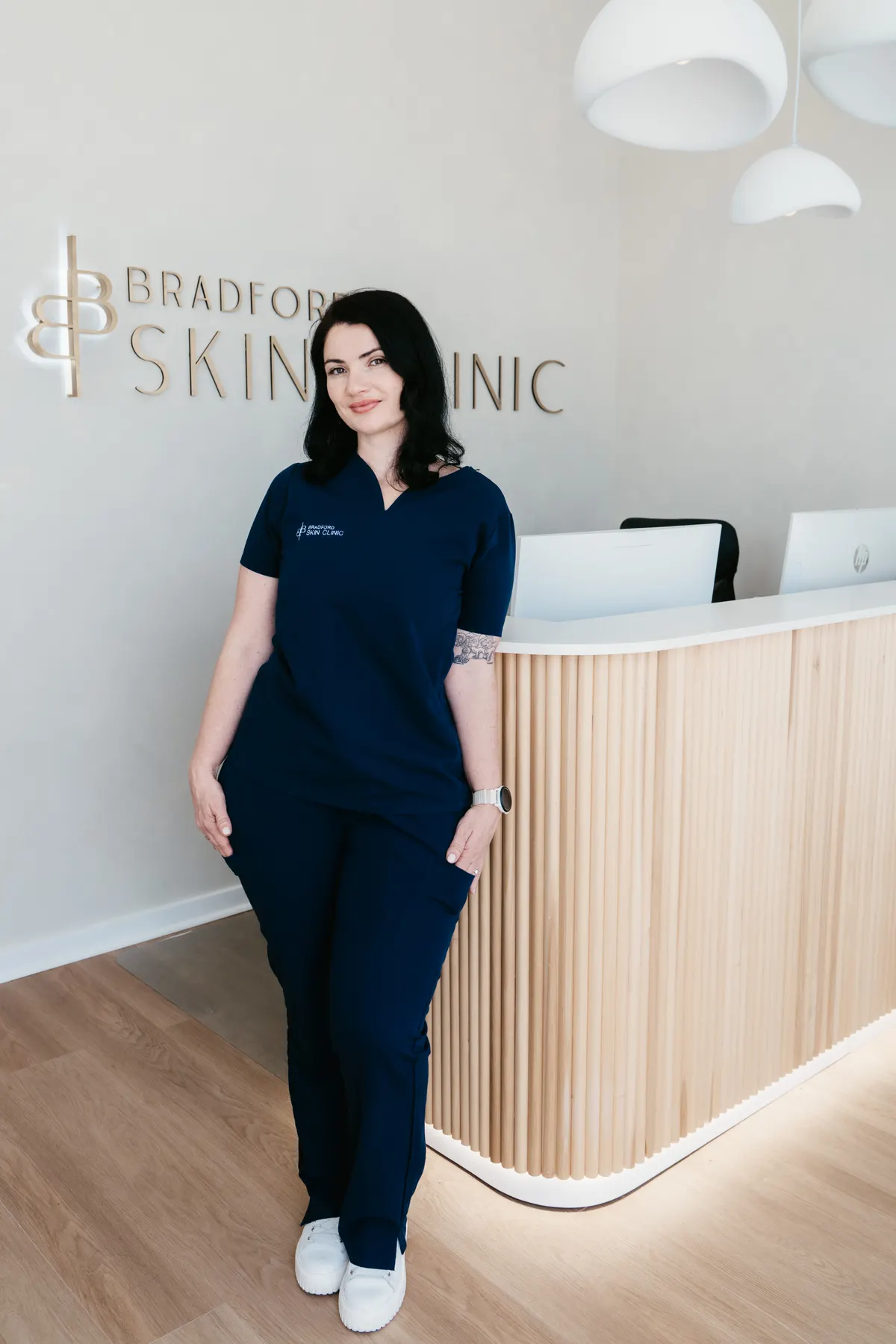
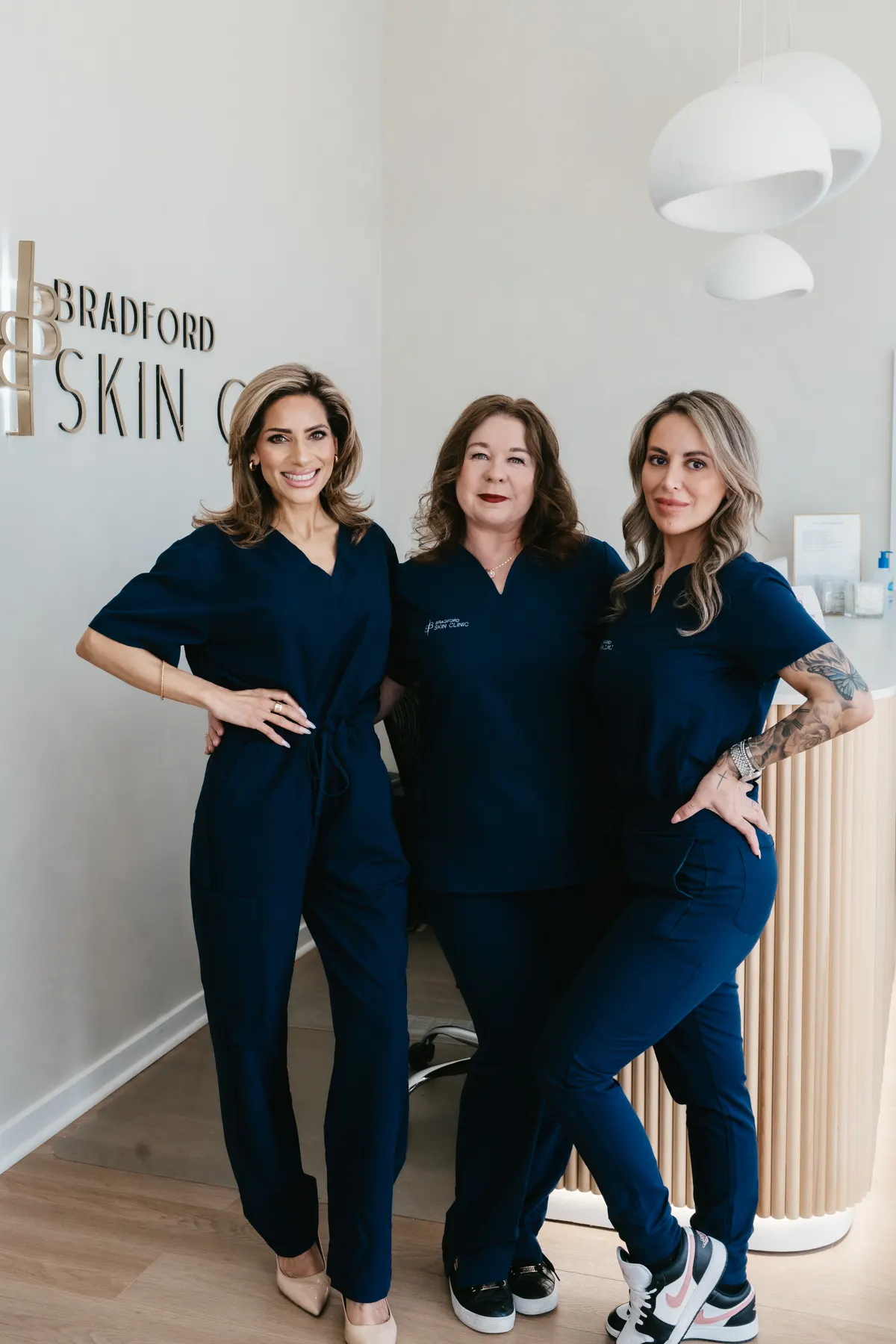
Alex Dinovich is Nurse Practitioner and Medical Director here. She is registered with the College
of Nurses of Ontario as 13564840, verifiable on the
public register.
What a directive gives you
Authority to perform the controlled act it names.
A written mechanism you can show.
A named provider accountable for authoring it.
What it does not cover
Anything the directive does not say.
Competence, which comes from training and practice.
Your own accountability to the College for your own decisions.
A directive covers what it says it covers.
Accountability under an authorizing mechanism is specific and bounded.
You remain accountable to the College of Nurses of Ontario for your own practice.
Alex Dinovich, NP. The authorising provider, not a name on a certificate.
The position, stated plainly
An RPN in Ontario can inject cosmetically. An RPN cannot be the person who decides to.
Registered Practical Nurse is a protected title under the Nursing Act, 1991, and it establishes what you are. It does not establish authority to initiate the controlled acts that cosmetic injection involves. That authority arrives separately, in the form of an authorizing mechanism issued by an authorized provider such as a Nurse Practitioner or a physician.
If you already knew that, the useful part of this page is further down, where the document itself gets pulled apart.
The two controlled acts
Injecting a neuromodulator or a dermal filler engages two controlled acts under the Regulated Health Professions Act, 1991: administering a substance by injection, and performing a prescribed procedure below the dermis.
Both are engaged every time. There is no cosmetic injection that only touches one of them, and there is no product on the market that avoids the second by going shallower in some technical sense that satisfies the Act.
An RPN may perform these acts when authorized. An RPN may not initiate them.
Why filler is not the exception people think it is
Neuromodulators are prescription drugs in Canada. Dermal fillers are not. Health Canada regulates fillers as Class III medical devices, or Class IV where the filler is permanent.
That fact is true and is regularly used to reach a false conclusion. Because filler is not a prescription drug, the reasoning goes, no prescriber is involved, so no authority is required and an RPN can simply inject it.
The requirement for filler was never about drug scheduling. It is about the controlled acts, and filler is fully inside them. You need an authorizing mechanism for filler exactly as you do for a neuromodulator. What you do not need for filler is a prescription, because there is nothing to prescribe.
This is worth being able to explain, because you will meet people in the industry who have this backwards, and some of them will be the people offering to employ you.
What differs between RPN and RN practice here
The initiation rule does not differ. Neither can initiate; both need a mechanism.
What differs is the kind of client situation each is expected to take on. RPN practice is oriented towards clients whose conditions are more predictable and whose responses are less variable, with consultation and collaboration where they are not. A directive written for an RPN should reflect that, not by being vaguer, but by defining the covered client group more tightly and setting clearer triggers for stopping and consulting.
A directorship arrangement that hands an RPN a document identical to the one it gives an RN has not thought about this. Ask about it.
What your directive has to actually say
A directive is only worth what is written in it. At minimum yours should name:
The specific intervention, and the specific products or product classes it covers.
The client group it applies to, described in a way you can actually apply at the chairside.
The conditions that must be met before you proceed, including assessment and consent.
The circumstances in which it does not apply, and the trigger points for stopping and consulting.
What happens when a complication occurs: what you manage, what you escalate, and how you reach the authorizing provider urgently.
A review date, and who is responsible for revising it.
If your current document does not do these things, it is not protecting you, and you carry the consequences of that rather than the person who wrote it.
Competence sits with you and cannot be delegated to a certificate
You are accountable to the College of Nurses of Ontario for practising within your competence, and competence is specific to the intervention, the anatomical area and the client.
No authorizing mechanism supplies competence. No course supplies authority. Those two sentences are the entire architecture, and most of the bad advice in this industry comes from collapsing them into each other. There is no injector licence in Ontario, and a training certificate that implies otherwise is describing a credential that does not exist.
What Alex provides to an RPN
Alex Dinovich, Nurse Practitioner and Medical Director at Bradford Skin Clinic and Medical Spa, holds College of Nurses of Ontario registration 13564840. As an autonomous provider she can assess, diagnose, prescribe, issue direct orders and author directives.
For an RPN that means directives written to your actual scope rather than a template, prescribing where a neuromodulator is involved, an agreed and specific route to consult when a client does not fit, agreed complication handling, and revision of the documents as your practice or the College’s expectations change.
What she will not do is take blanket responsibility for your practice. Accountability under an authorizing mechanism is specific and bounded. Anyone offering to carry your practice wholesale is either misreading the accountability structure or hoping you will not ask.
The requirements may change
The College of Nurses of Ontario published a new Aesthetic Services practice guideline dated 3 July 2026 and has said it continues to review how authorizing mechanisms, including directives and delegation, are used in aesthetic practice.
Treat any confident claim that the position is fixed with suspicion, including confident claims made in your favour. Part of the point of a proper arrangement is that somebody is tracking this and reissuing your documents when it moves.
Starting a conversation
Tell us what you inject, where you work, who your clients are, and what you are competent to manage when something goes wrong. That determines the directives, and the directives determine the fee.
If the honest answer is that you need more training before you need authority, we will tell you that instead of selling you a document.
Call 647-333-6805. Bradford Skin Clinic and Medical Spa, 444 Holland Street West, Unit 2, Bradford, Ontario. Arrangements are available to RPNs anywhere in the province.
Asked by nurses
Asked and answered.
Can an RPN do cosmetic injections in Ontario?
Yes, with an authorizing mechanism from an authorized provider. An RPN may perform the controlled acts involved in cosmetic injection but may not initiate them, which means the decision that this client should have this intervention has to be authorized by a direct order or a directive. Without that mechanism, the answer is no, regardless of training or experience.
Is the rule different for an RPN than for an RN?
The initiation rule is the same: neither an RN nor an RPN can initiate these controlled acts, and both need an authorizing mechanism. What differs is the client situation each is expected to take on. RPN practice is oriented to clients whose conditions are more predictable and whose outcomes are less variable, and a well-written directive reflects that by defining the client group and the consultation triggers accordingly.
Do I need a physician, or can a Nurse Practitioner authorize me?
A Nurse Practitioner can authorize you. An NP is an autonomous provider who can assess, diagnose, prescribe, issue direct orders and author directives, which is everything an authorizing mechanism for cosmetic injection requires. The habit of looking for a physician is convention in the aesthetics industry rather than a legal requirement.
Does an RPN need authority for dermal filler as well as neuromodulators?
Yes. Dermal fillers are Class III medical devices under Health Canada, Class IV where permanent, and are not prescription drugs, but the authority requirement does not come from drug scheduling. It comes from the two controlled acts: administering a substance by injection, and performing a prescribed procedure below the dermis. Filler engages both.
My clinic says its physician covers everyone. Is that enough?
Not on its own. A blanket assurance that somebody covers the clinic is not an authorizing mechanism. You need to see the actual document, confirm it names your intervention and your client group, confirm it is current, and confirm you are within its conditions. If nobody can produce it when you ask, treat that as the answer.
What should I do if a client falls outside my directive?
Stop and consult the authorizing provider. That is the designed function of the boundary, not an inconvenience. Directives define a client group precisely so that the ones who fall outside it are escalated rather than absorbed on the day. This is why how reachable your authorizing provider is matters more than almost anything else in the arrangement.
Can I take on complication management under a directive?
Only what the directive covers and only what you are competent to manage, and the two have to be agreed in advance rather than worked out during the event. Filler complications in particular have a serious end of the spectrum, and the arrangement should state clearly what you manage, what you escalate, and how you reach the authorizing provider urgently.
Does calling myself an aesthetic injector change my scope?
No. Aesthetic injector, injector and certified injector are not protected titles in Ontario and carry no regulatory meaning. Your scope comes from the Nursing Act, 1991, your competence, and your authorizing mechanism. Registered Practical Nurse is the protected title and is the one that describes what you are.
Sources
Where this comes from.
Everything on this page is drawn from the regulator, not from a
competitor's marketing. Read the originals rather than taking our word for any of it.
General information about Ontario regulatory requirements. Not
legal or regulatory advice. Nurses remain accountable to the College of Nurses of Ontario
for their own practice decisions.
Talk to us
Ask before you commit to anything.
Leave four details and Alex will come back to you directly. If what
you need is not something we do, we will say so and point you at whoever does.

 Written and reviewed by Alex Dinovich, NP, Nurse Practitioner and Medical Director at Bradford Skin Clinic & Medical Spa.
College of Nurses of Ontario registration 13564840, verifiable on the
public Find a Nurse register.
Last reviewed .
Written and reviewed by Alex Dinovich, NP, Nurse Practitioner and Medical Director at Bradford Skin Clinic & Medical Spa.
College of Nurses of Ontario registration 13564840, verifiable on the
public Find a Nurse register.
Last reviewed .