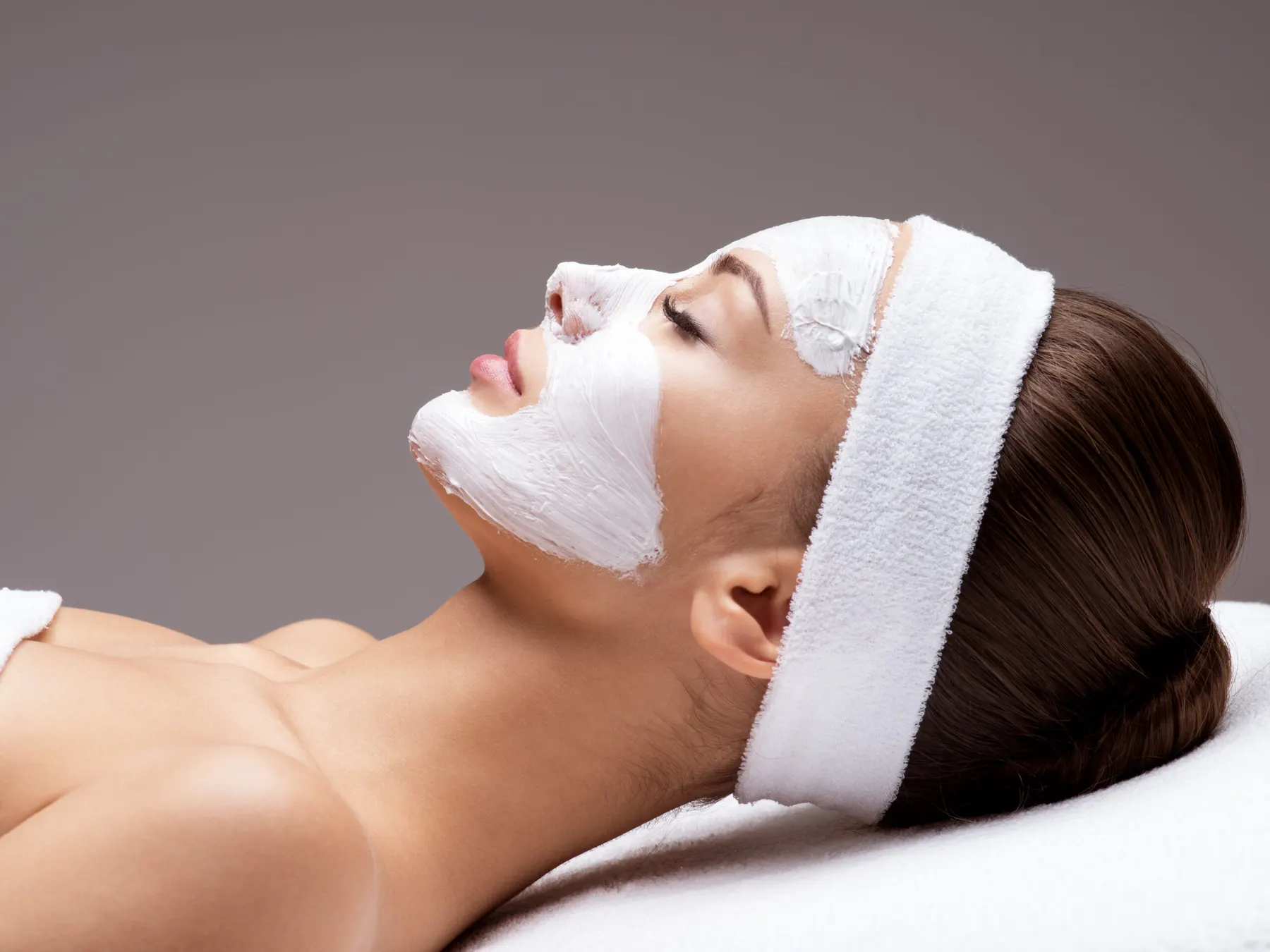
Medical-grade peels
Skin & laser
Chemical solutions applied at a controlled strength and depth to shed damaged skin, chosen for your concern rather than sold as a single signature peel.
from $99 About Medical-grade peels →

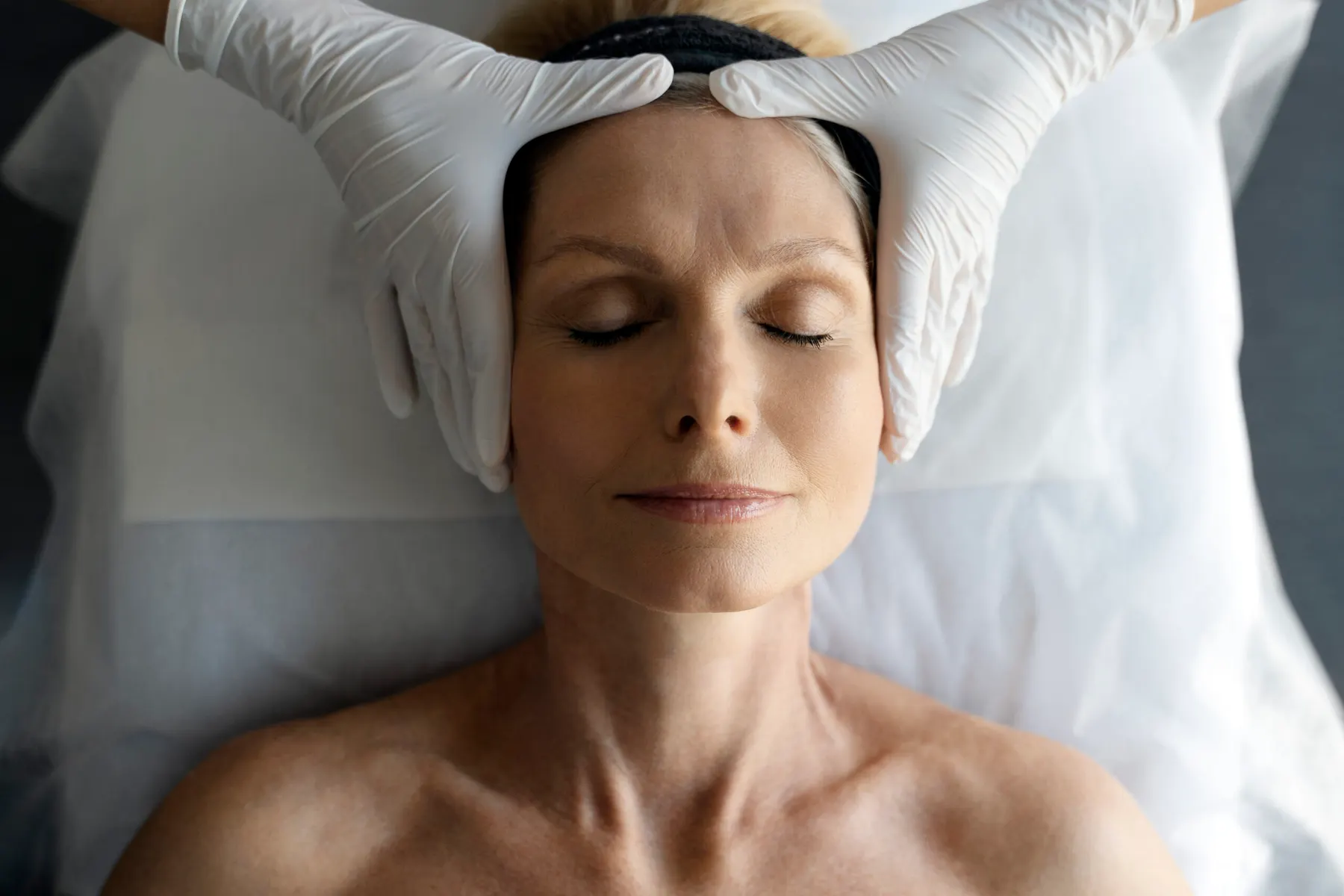
Acne is a chronic inflammatory condition of the hair follicle and its oil gland, producing blackheads, whiteheads, papules, pustules and sometimes deeper nodules; it is a medical skin condition rather than a hygiene failure, and it is controlled and kept in remission rather than permanently cured.
02 · The honest version
Teen and adult acne, what is actually driving it, and the in-clinic treatments that help bring it under control.
Every face is different. This page is the general picture. What is actually happening on your skin is something a nurse should look at up close, in clinic light, before anyone recommends a treatment.
Does it get worse? That depends on the concern and on you. It is a reason to start early, not a reason to panic - and we will tell you plainly where you are rather than where a treatment plan would be easiest to sell.
Acne starts in the pilosebaceous unit, which is the hair follicle and the oil gland attached to it. Four things go wrong there, usually at the same time: the gland produces more oil than it needs to, the cells lining the follicle become sticky and fail to shed properly, a normal skin bacterium called Cutibacterium acnes multiplies in that trapped environment, and the immune system responds with inflammation.
That is the whole mechanism, and it explains almost everything people find confusing about acne. It explains why blackheads are not dirt (they are oxidised oil and keratin). It explains why scrubbing harder does not help, because the blockage is below the surface. And it explains why acne so often runs in families and follows hormonal patterns rather than following how careful you are with your skincare.
Comedonal acne is blackheads and whiteheads with little redness. It responds well to treatments that clear the follicle and normalise cell turnover.
Inflammatory acne is the red, sore papules and pustules most people picture. There is an active immune response involved, so calming inflammation matters as much as clearing congestion.
Nodular and cystic acne sits deeper, feels painful, lasts longer and carries a significantly higher risk of permanent scarring. This is the type where waiting it out is the worst option, because the damage accumulates while you wait.
Teenage acne is usually driven by the surge in androgens at puberty and tends to affect the forehead, nose and chin, often with a lot of comedonal congestion. It responds to a fairly straightforward approach centred on decongesting the skin and controlling inflammation without stripping it.
Adult acne, which affects women more often than men, tends to concentrate along the jawline, chin and lower cheeks, to be more inflammatory and less comedonal, and to fluctuate with the hormonal cycle. Adult skin is also usually drier and more reactive than teenage skin, so treatments that would be fine on a sixteen-year-old can leave a thirty-five-year-old red, sore and worse off. This is why we treat the two differently rather than running one protocol for everybody.
The consultation comes first, and it is mostly listening: what your acne does, when it flares, what you have already tried, what made it worse, and whether it is leaving marks or texture behind. That last point changes the urgency, because scarring is the part that cannot be undone later.
In-clinic, the tools we use most often for acne are medical-grade peels to clear the follicle and regulate cell turnover, HydraFacial for gentle decongestion and extraction, BBL broadband light to target inflammation and the bacterial component, and the Hollywood Carbon Peel for oily, congested skin. Microneedling has a role once active inflammation is under control, particularly where marks and early texture have been left behind.
Alongside that, we will look honestly at your home routine. A common finding is that someone has been using too many active products at once, which strips the barrier and drives more inflammation. Sometimes the most useful thing we do is take products away.
Our Medical Director, Alex Dinovich, FNP-PHC, is a Nurse Practitioner and an authorised prescriber, so where acne warrants prescription treatment or onward referral, that conversation can happen here rather than sending you back to square one.
04 · What we actually offer
These are the ones we use for acne. Not every face needs all of them, and we will say so. The goal in every case is the same: treat the cause, not the photograph.
Skin & laser
Chemical solutions applied at a controlled strength and depth to shed damaged skin, chosen for your concern rather than sold as a single signature peel.
Skin & laser
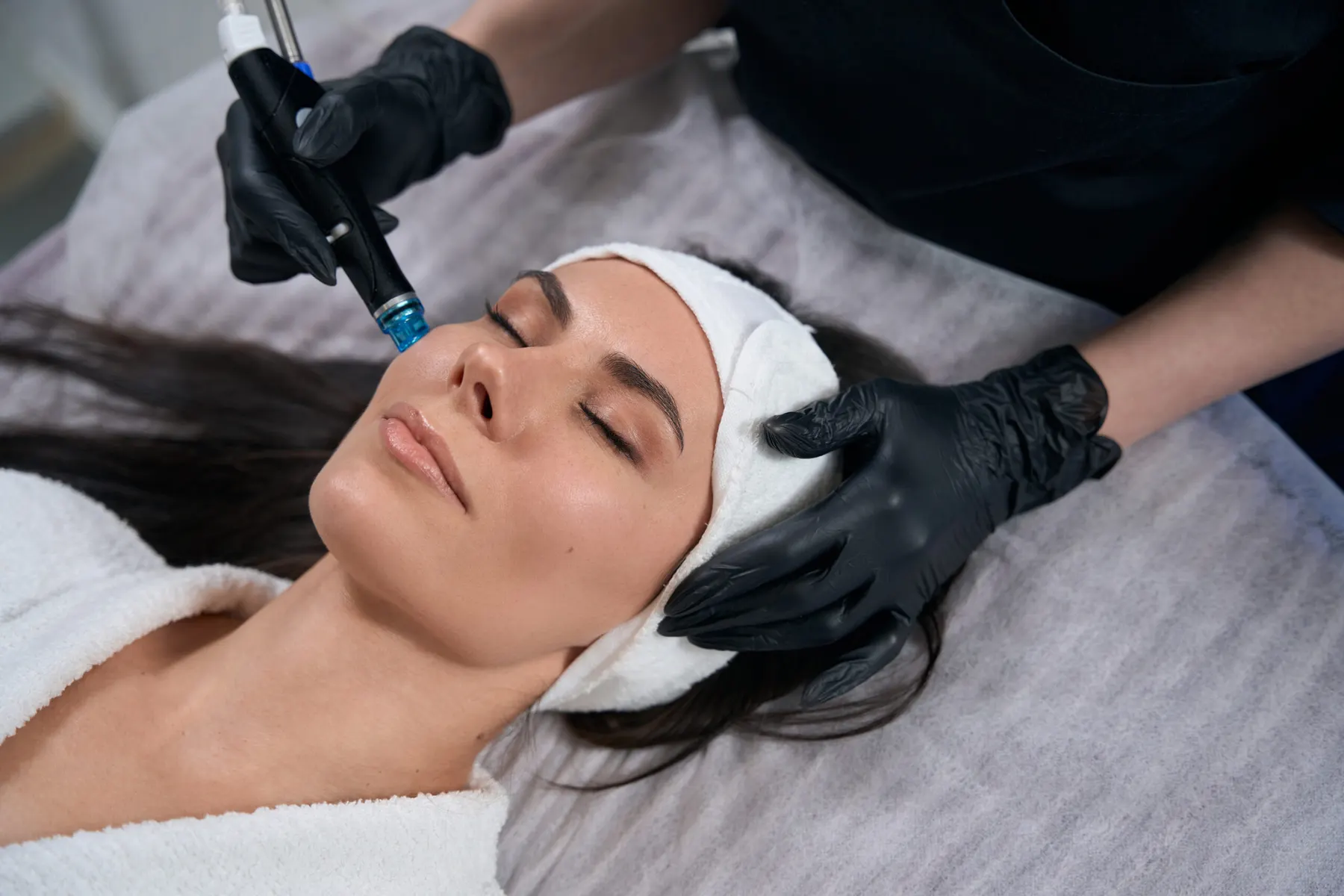
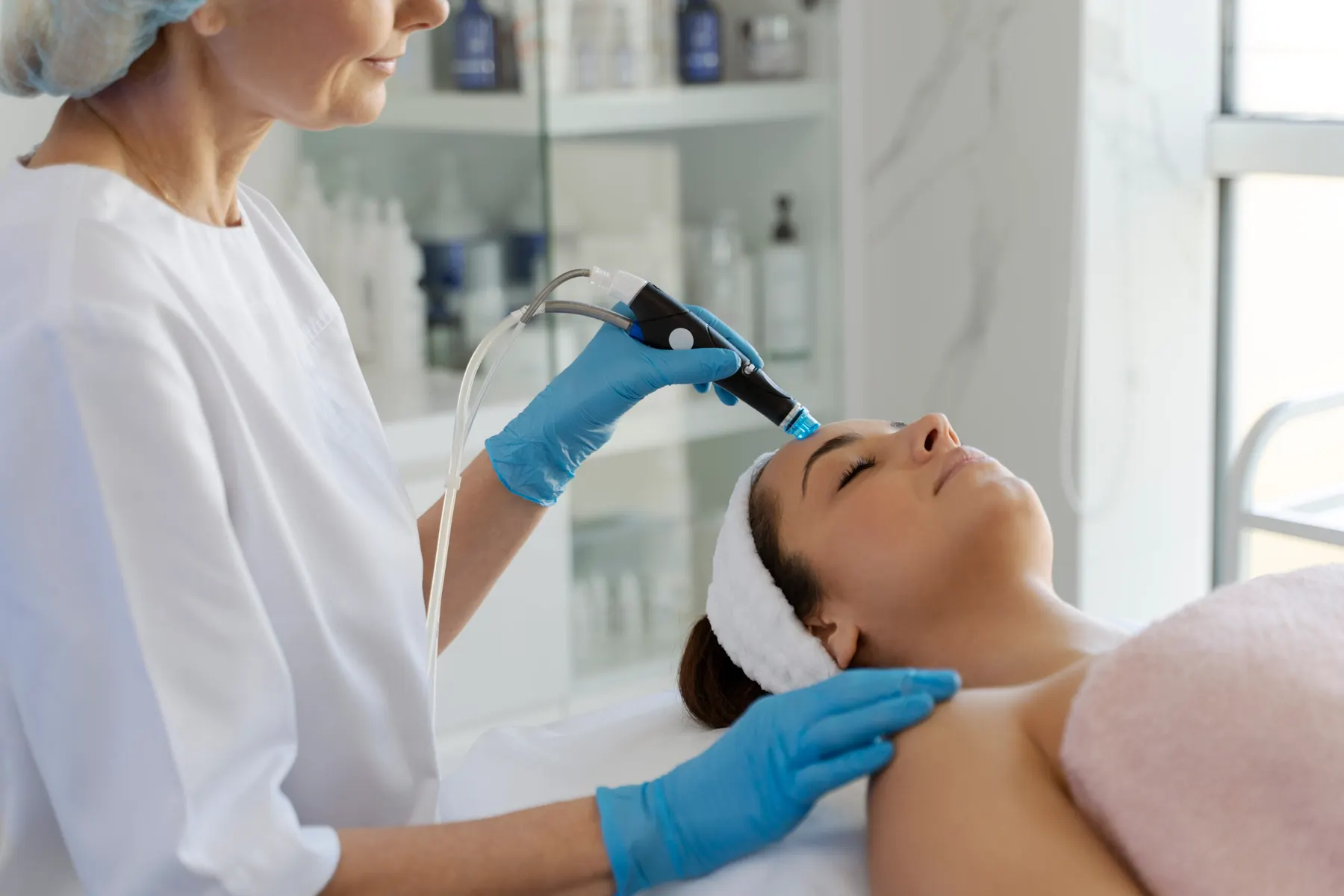
A device-led facial that cleanses, exfoliates, extracts with suction and infuses serums in one pass, with no recovery period afterwards.
Skin & laser
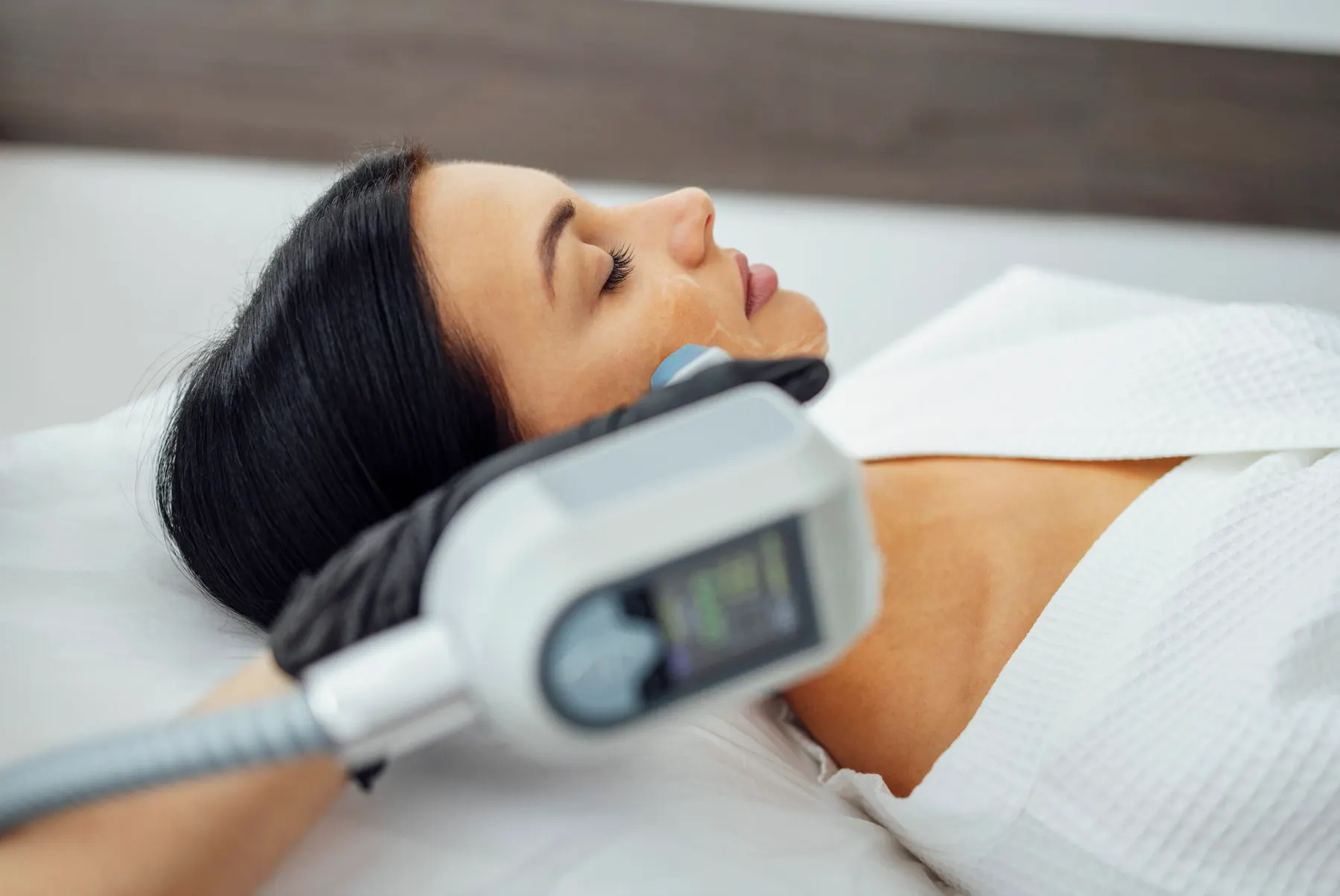
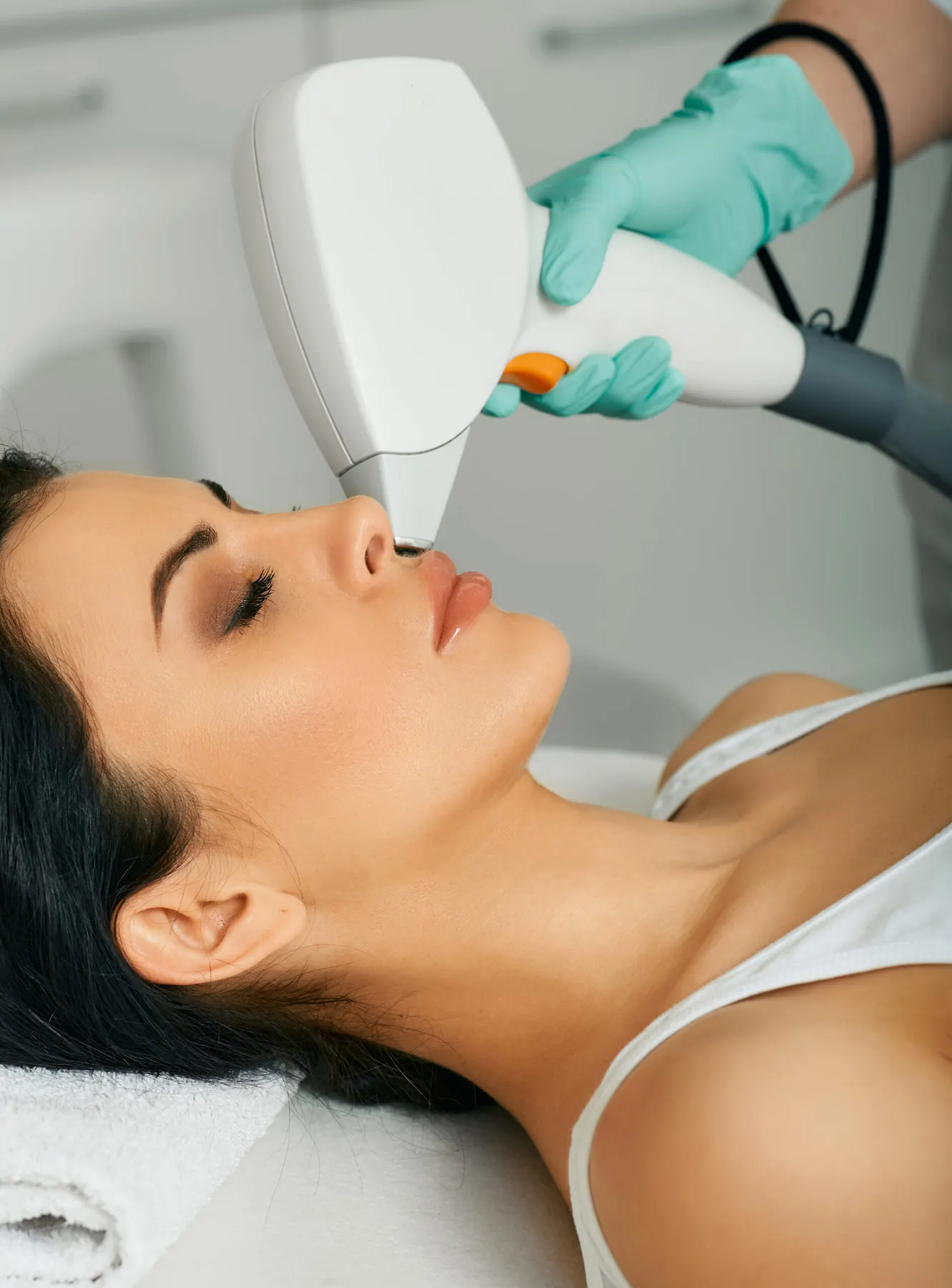
Filtered broadband light that targets the colour in your skin, absorbed by red vessels and brown pigment while leaving surrounding tissue alone.
Skin & laser
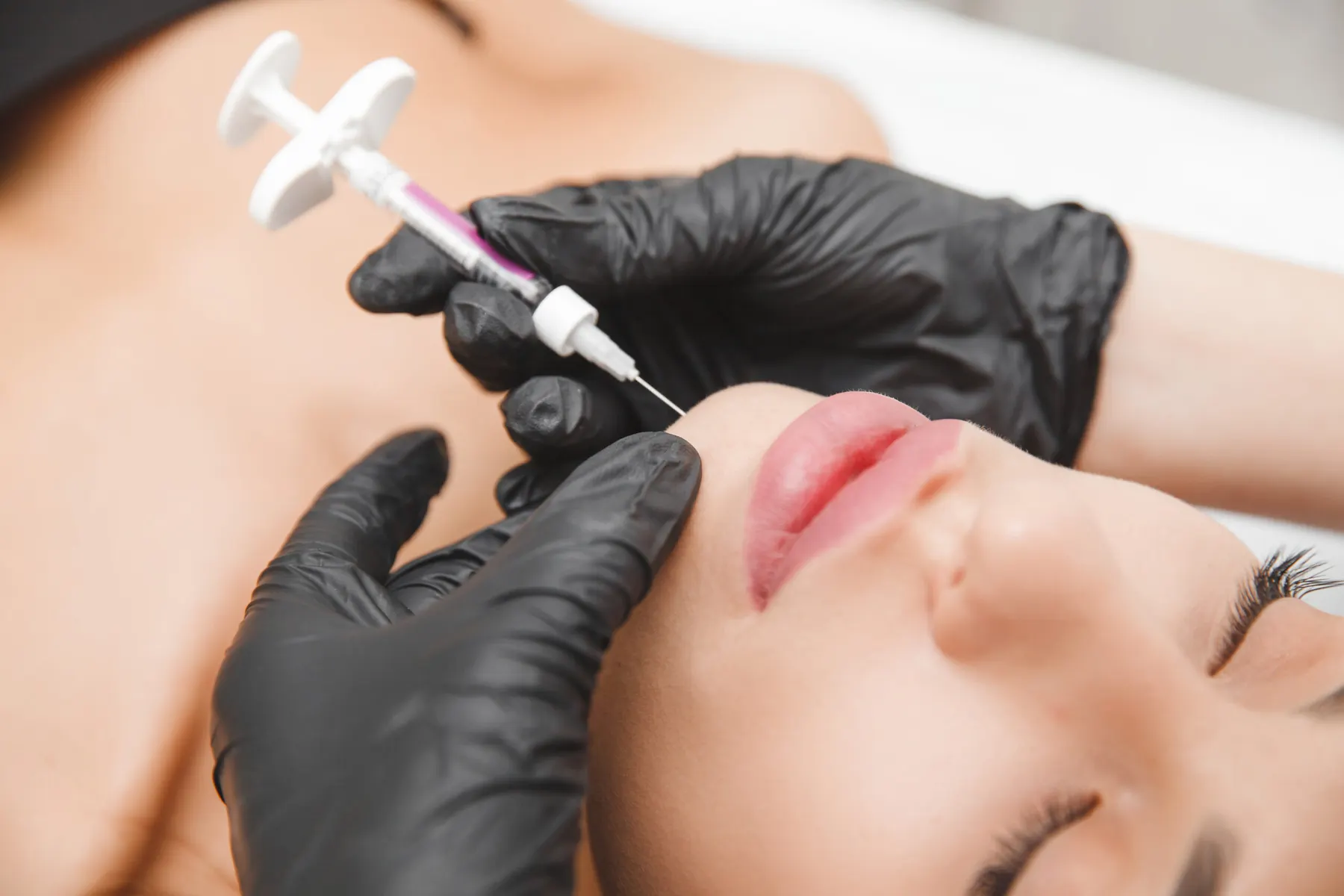
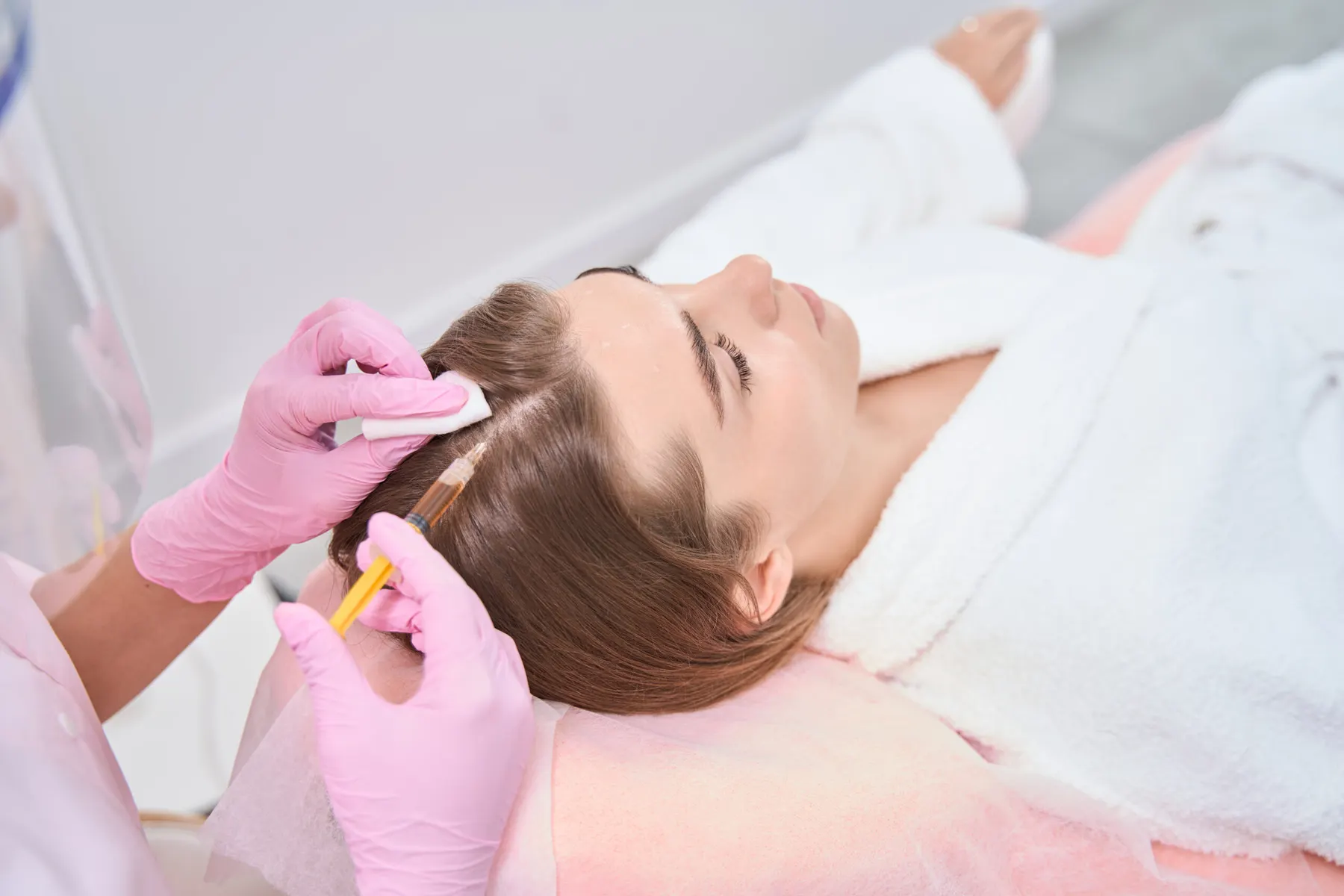
Sterile needles creating thousands of controlled micro-channels so the skin repairs itself with new collagen, at a depth chosen for your concern.
Skin & laser
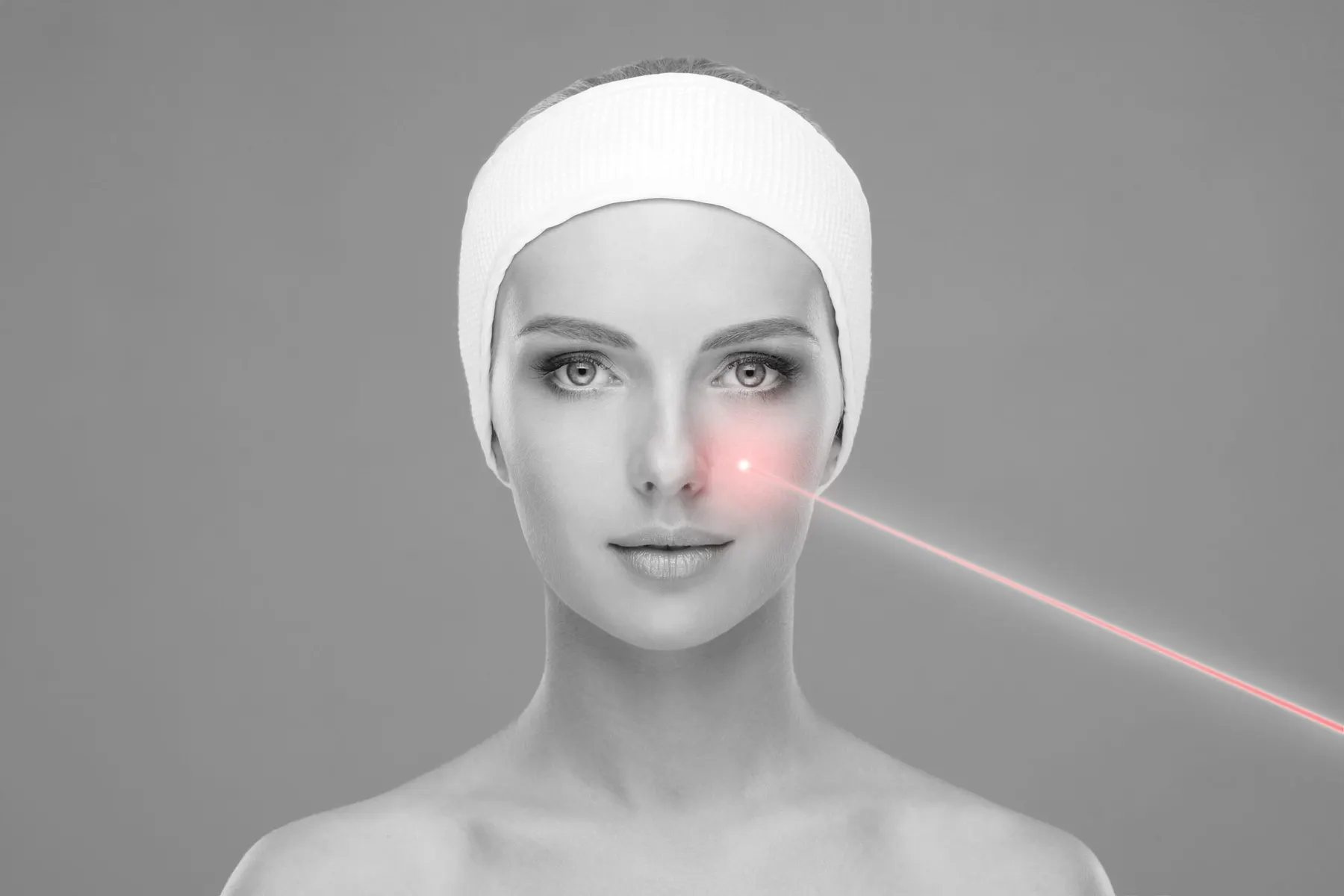
A layer of carbon lotion applied to the skin then targeted with laser, lifting oil and debris out of the pores and refining the surface.
Every plan is personalised. Which of these you need, in what order and how often, is decided after a nurse has looked at your skin - not before. We will also tell you when a treatment is wrong for you, and we say it before you book.
05 · One of our own patients
This is a real Bradford Skin Clinic patient, published with consent. We have not smoothed it, relit it, or attached a timeframe we cannot verify.
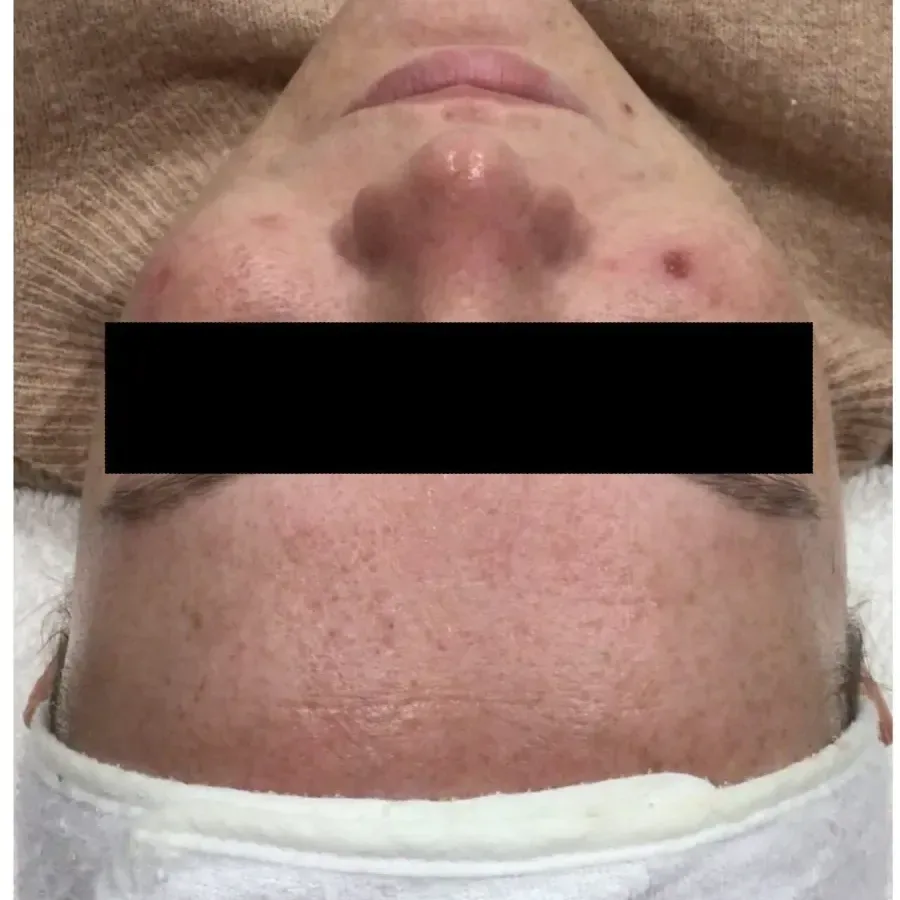
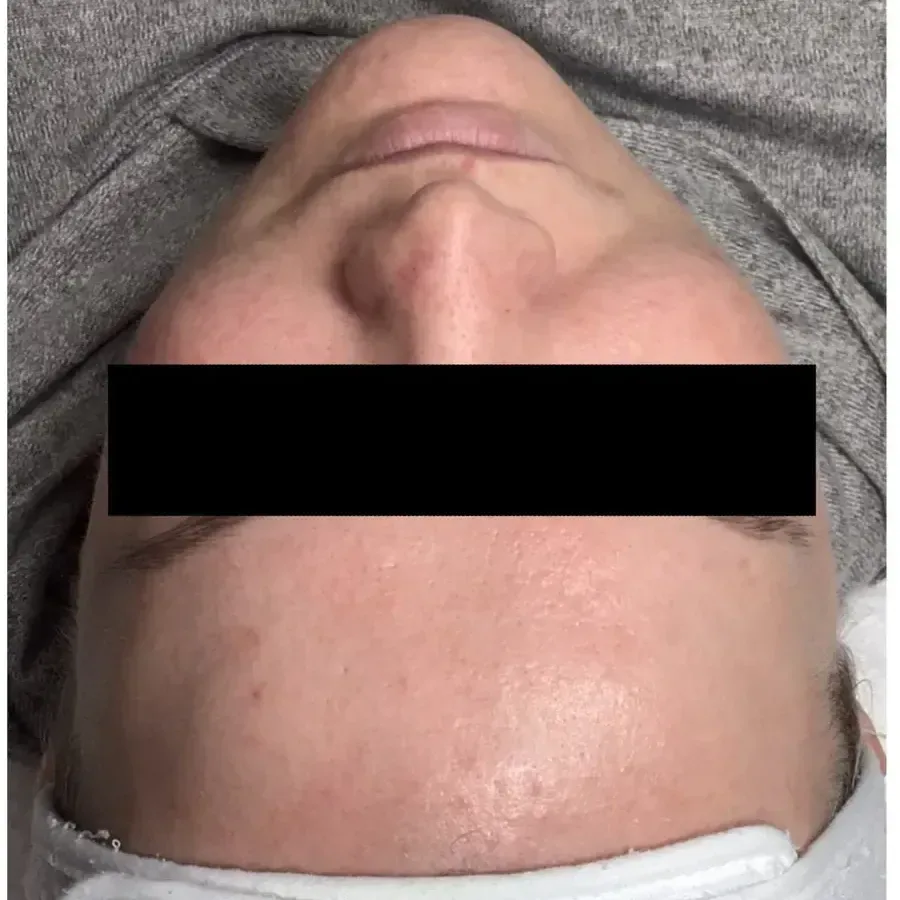
Real client, consent on file
Interval: One year. Treatment: The clinic acne protocol.
Results vary from person to person. This is a record of one patient, not a promise about yours.
06 · What actually happens
If you have been putting this off, this section is for you. A consultation costs you nothing and commits you to nothing - you are allowed to walk out having booked absolutely nothing.
She is the one who answers the phone and the texts, so you will already have spoken to her. No clipboard interrogation in the waiting room.
In clinic light, up close, with your makeup off if you are wearing any. This is the part people dread and it takes about a minute.
When it happens, what you had noticed before it happened, what you have already tried and what made it worse. Bring your current products if it is easy.
What we would do, in what order, and what it costs - including the option of doing nothing yet. If a treatment is wrong for you, we say so here, not after.
Nothing is booked in the room unless you want it booked. No deposit, no pressure, no offer that expires on Friday.
Always so kind and personal. Took the extra time to make sure I was comfortable.
07 · Straight answers
The questions people actually ask us on the phone, answered the way we answer them on the phone.
No, and this is the single most damaging myth about acne. Acne begins inside the follicle, where excess oil, sticky dead skin cells and bacteria combine to cause inflammation. Washing the surface of your skin more often does not reach that process, and aggressive scrubbing usually makes acne worse by damaging the skin barrier and increasing inflammation.
Diet can influence acne for some people, but it is not the cause of it. There is reasonable evidence linking high-glycaemic diets and, for some individuals, dairy with worsened acne, though the effect varies a great deal from person to person. We would rather talk about your whole picture than hand you a restrictive food list that may not apply to you.
Yes. Adult-onset acne is common and often looks different from teenage acne, tending to sit lower on the face along the jawline and chin and to be more inflammatory than comedonal. Hormonal changes, some medications and life stressors can all be involved, and the treatment approach is usually different from what would suit a teenager.
Yes, and this matters more than almost any product decision you will make. Picking pushes inflammation deeper into the skin, which is what turns a temporary spot into a lasting dark mark or a permanent textural scar. If extractions are needed, they can be done properly and hygienically in clinic during a HydraFacial or medical facial.
It depends on what the mark actually is. Flat red or brown marks are post-inflammatory pigmentation and usually fade over time, and treatments such as peels and BBL can help that along. Indented or raised marks are true scarring in the skin's structure and need a different approach, which we cover on our page about acne scarring.
Sometimes, and it depends on the type and severity of your acne. Bradford Skin Clinic & Medical Spa is nurse-practitioner-led, and our Medical Director is an authorised prescriber, so prescription options can be discussed as part of your assessment. Moderate to severe nodular acne may also warrant referral, and we will tell you if we think that is the right route.
In most cases yes, though there may be short windows after certain treatments where we ask you to leave the skin bare. Look for products labelled non-comedogenic, and be aware that heavy occlusive foundations and some hair products applied near the hairline can contribute to congestion.
That varies with the type of acne, how long it has been present and which treatments are used, so we will not give you a number we cannot stand behind. What we will do is set a clear review point so we can look at your skin together and adjust the plan rather than repeating something that is not working.
Where this comes from
We would rather you did not take our word for any of this. These are the sources behind what is written above, and none of them are ours.
08 · Often confused, often alongside
Concerns are regularly mistaken for one another - and they rarely turn up entirely alone. These are the ones that sit closest to it.
09 · The next step is small
A acne consultation costs you nothing and commits you to nothing. You will leave knowing what your skin is doing, what we would do about it, and what it would cost - whether or not you book anything.
Bring three things. Whatever you are currently putting on your face, a rough idea of when it is at its worst, and any questions you have written down. That is genuinely all the preparation we need.
Makeup is fine either way. If it is easier to arrive with it on, arrive with it on - there is a mirror and a cleanser in the room.
We answer during clinic hours, usually within the hour.
647-333-6805 Open messagesOn a desktop? Save the number and text from your phone.