

Start here
Foundation
$3,999 + HST
An RN, RPN or NP who has not injected before.
- Foundation Injectables Course
- Neuromodulator and dermal filler theory, assessment and consent
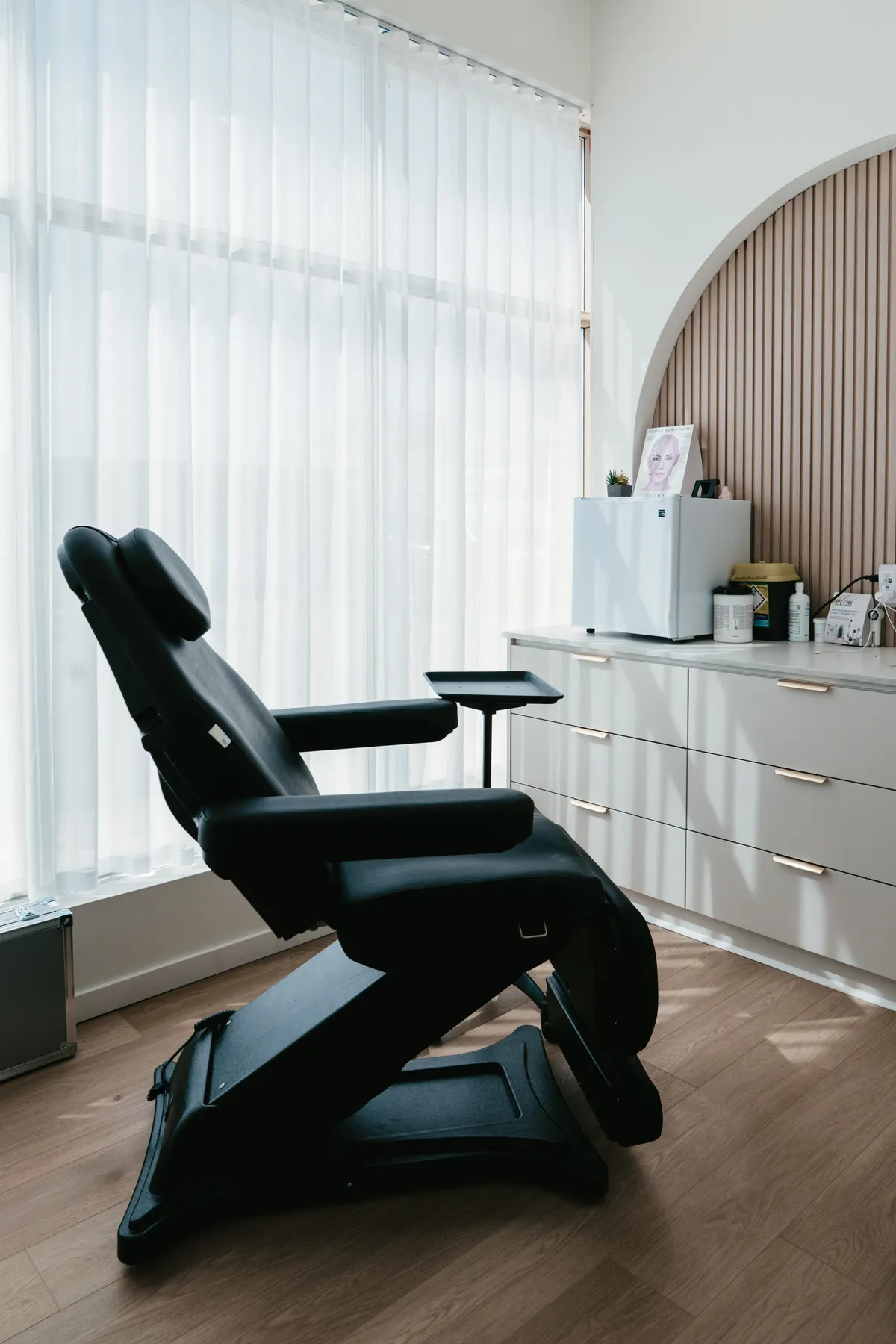
- Hands-on injecting in our treatment rooms, not a hotel function room

For regulated health professionals in Ontario
Injector trainingBradford Skin Clinic and Medical Spa in Bradford, Ontario runs injector training for RNs, RPNs and Nurse Practitioners, taught by Alex Dinovich, Nurse Practitioner and Medical Director, in the clinic's own treatment rooms. Training builds injecting competence. It does not by itself make injecting lawful: an RN or RPN also needs an authorizing mechanism from an authorized provider.
 Written and reviewed by Alex Dinovich, NP, Nurse Practitioner and Medical Director at Bradford Skin Clinic & Medical Spa.
College of Nurses of Ontario registration 13564840, verifiable on the
public Find a Nurse register.
Last reviewed .
Written and reviewed by Alex Dinovich, NP, Nurse Practitioner and Medical Director at Bradford Skin Clinic & Medical Spa.
College of Nurses of Ontario registration 13564840, verifiable on the
public Find a Nurse register.
Last reviewed .

How directorship worksCompetence is not authority.
Ontario issues no injector licence, and no course grants legal authority to inject.
Start here
$3,999 + HST
An RN, RPN or NP who has not injected before.
Most asked for
Confirmed on enquiry
Anyone who intends to inject unsupervised afterwards.
Training and authority
Confirmed on enquiry
Someone building their own injectable practice from nothing.
Ask about thisTraining teaches you to inject. It does not, on its own, make injecting lawful: for that you need an authorising mechanism from an authorised provider. We would rather you knew that before you paid us than after.

A nurse injector course in Ontario teaches you to inject. It does not make injecting lawful. Those are two different things, they are obtained from two different places, and you need both. Most of the marketing you will read this year blurs the line, because blurring it sells courses. We would rather be the page that tells you plainly, even when it costs us a booking.
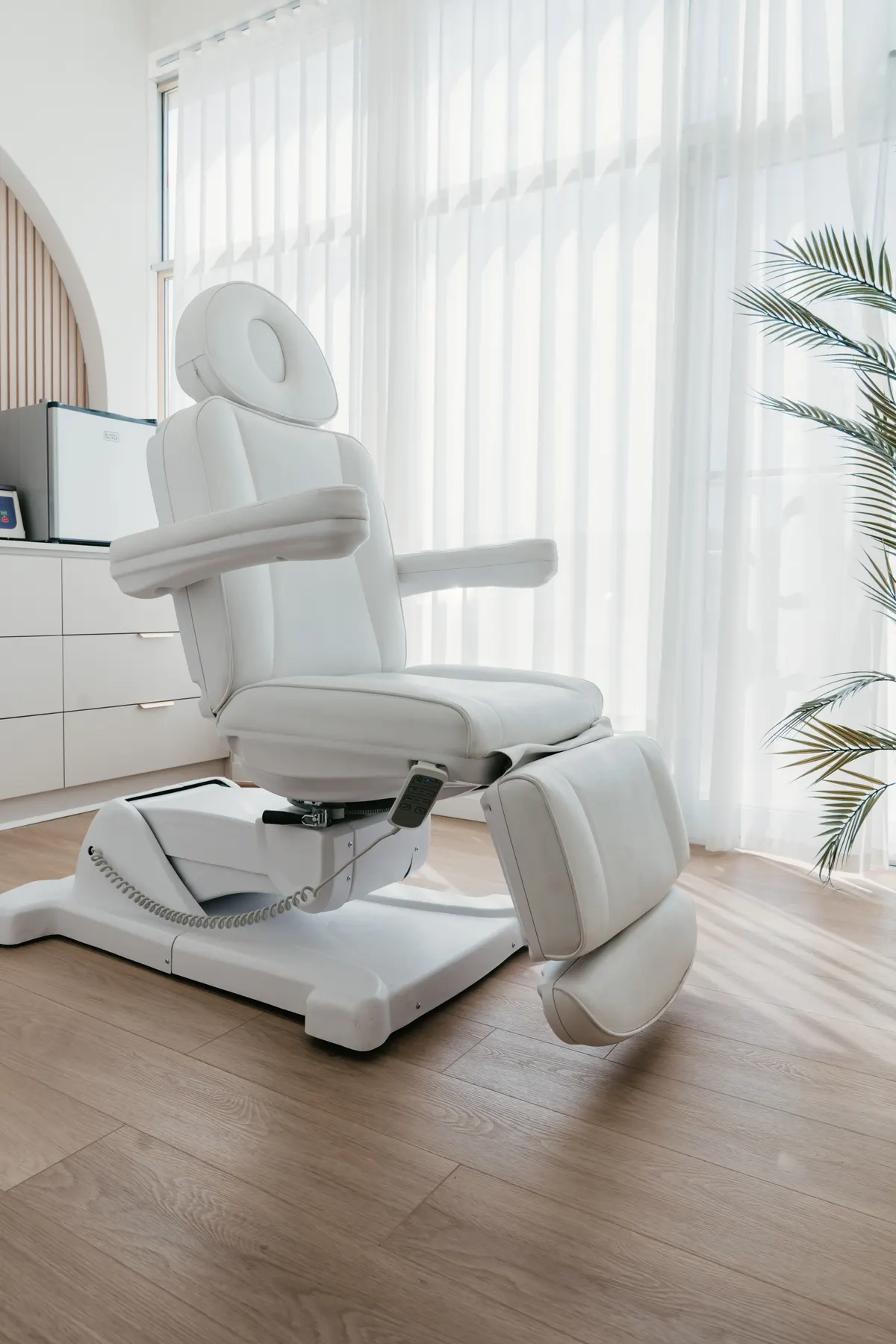
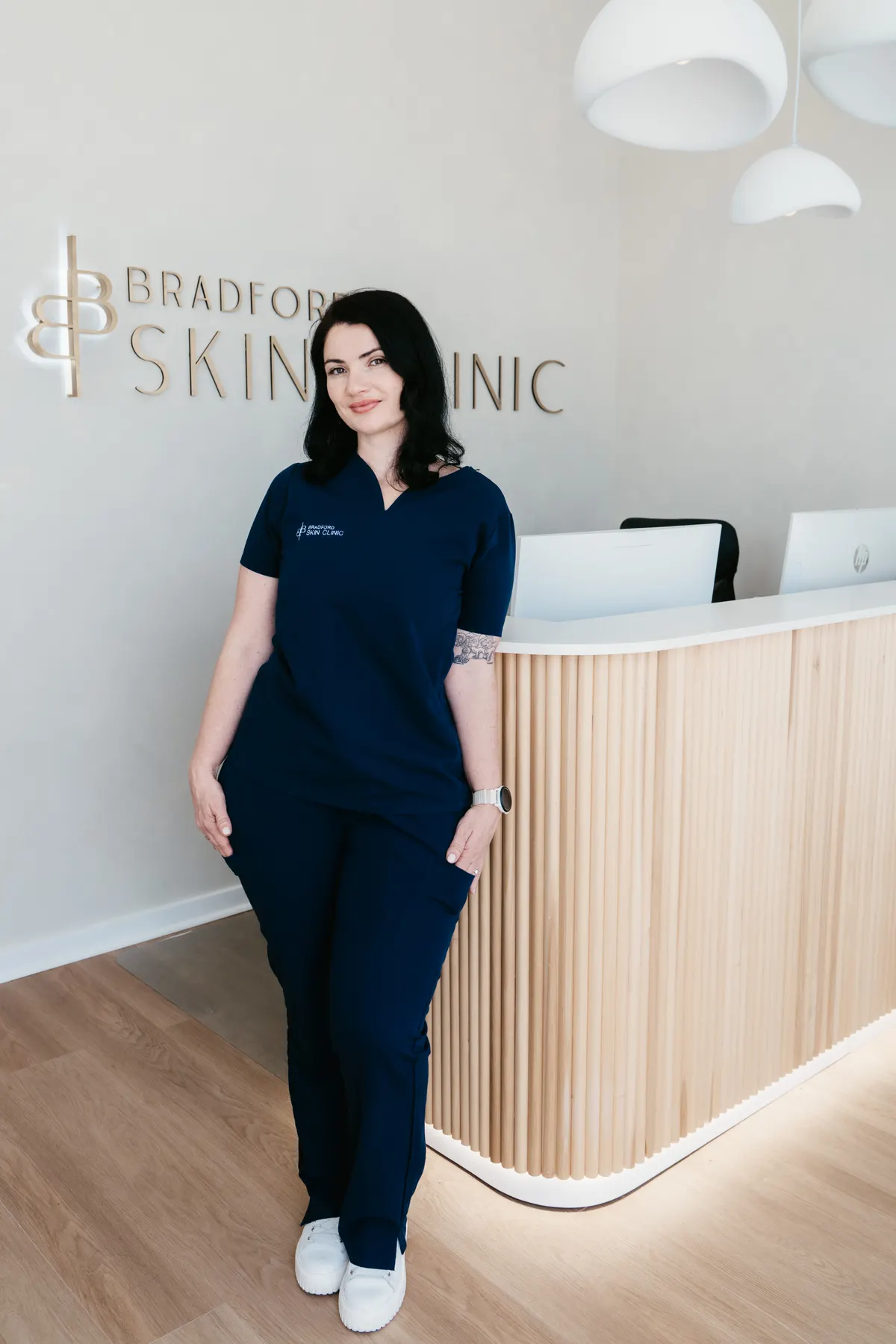
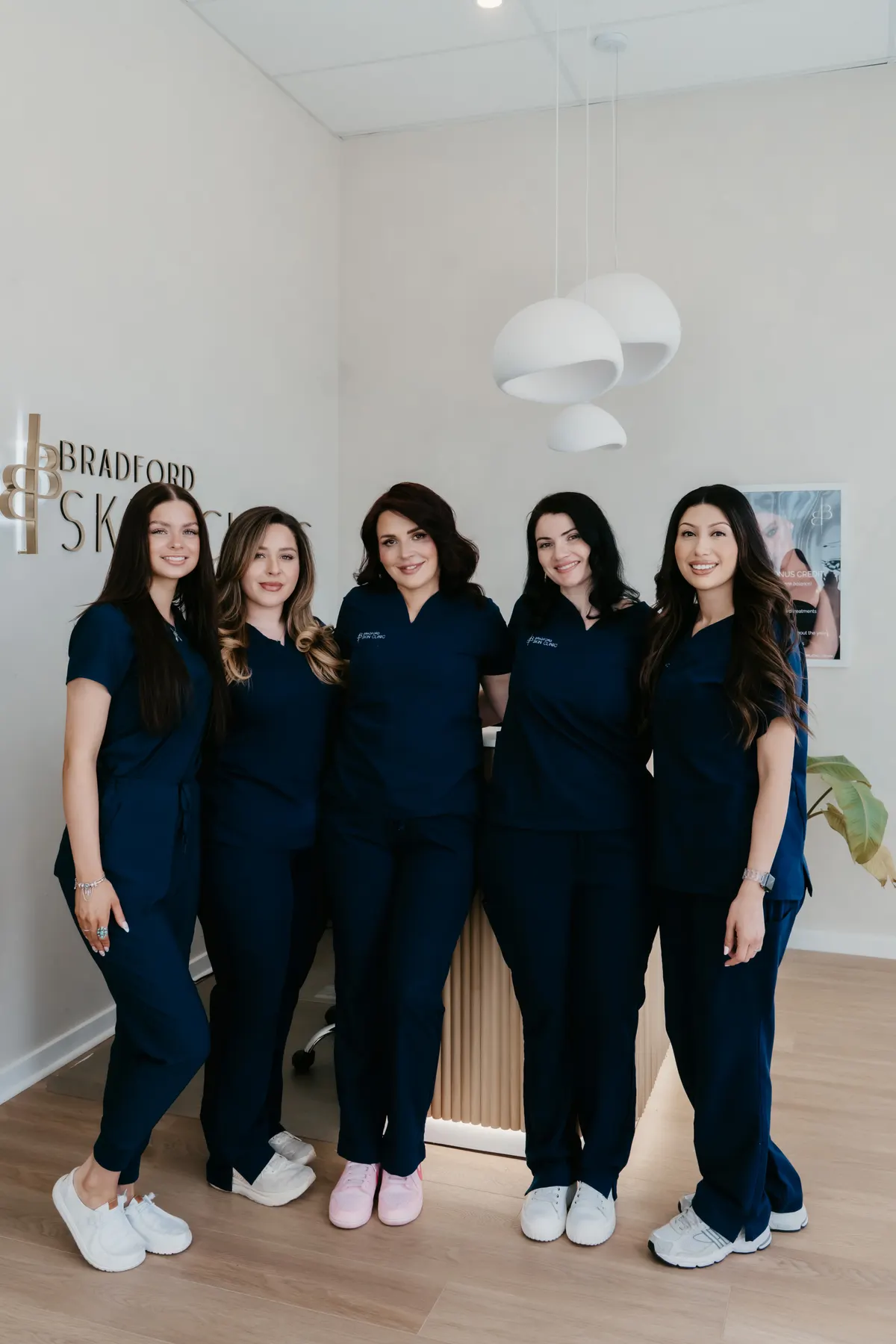
Bradford Skin Clinic and Medical Spa runs injector training at 444 Holland St W, Unit #2, in Bradford. It is taught by Alex Dinovich, Nurse Practitioner and Medical Director, who holds College of Nurses of Ontario registration 13564840. The teaching happens in the treatment rooms we use for patients, on the equipment we actually own, on our normal operating days.
Training gives you competence. An authorizing mechanism gives you authority. A certificate gives you neither on its own.
Competence is the part a course can deliver: facial anatomy, product behaviour, injection technique, assessment, consent, documentation, recognising when something has gone wrong. That is real, it is teachable, and it takes hands on a face rather than slides on a screen.
Authority is a legal question and it sits outside the course entirely. Injecting a neuromodulator or a dermal filler in Ontario involves two controlled acts under the Regulated Health Professions Act, 1991. You are administering a substance by injection, and you are performing a prescribed procedure below the dermis. An RN or an RPN may not initiate either of those acts. The authority has to be granted by an authorized provider, such as a Nurse Practitioner or a physician, through an authorizing mechanism: a direct order for a named client, or a directive covering a defined set of clients and circumstances.
So the honest sequence looks like this. You learn to inject, which is training. You obtain an authorizing mechanism, which is a separate arrangement with an authorized provider. Then, and only then, you treat clients. Anyone selling you step one while implying it covers step two is selling you a problem you will discover on your first booking.
There is no injector licence in Ontario, and no course anywhere can grant one, because the document does not exist.
Your licence is your registration with the College of Nurses of Ontario. That is the only licence in this picture. What a training provider issues is at most a record that you attended and were assessed against their own standard, which they set themselves. It carries whatever weight the person reading it decides to give it.
This matters commercially as well as legally. If a certificate were sufficient, the market would be flooded with newly certified injectors working alone, and it is not. What actually happens is that nurses finish a course, discover they still need an authorizing mechanism, and start calling round for a medical director from a standing start.
This is the fact the Ontario training market gets wrong most often, so it is worth stating precisely.
Neuromodulators are prescription drugs in Canada. That has consequences for how they are obtained, who may prescribe them, and how they may be advertised. Health Canada’s Food and Drug Regulations restrict advertising a prescription drug to the public to name, price and quantity, which is why you will not see a brand name used promotionally anywhere on this site, and why we write neuromodulator instead.
Dermal fillers are not prescription drugs. Health Canada regulates them as Class III medical devices. There is no prescription to write and no drug schedule to satisfy.
People take that second fact and draw the wrong conclusion from it, which is that filler is somehow a lighter regulatory proposition. It is not. The authority requirement for filler does not come from drug scheduling at all. It comes from the controlled acts. You are still injecting a substance and you are still going below the dermis, so an RN or RPN still cannot initiate, still needs an authorizing mechanism, and still carries the consequences if something goes wrong. Filler is the modality with the vascular complications. Treating it as the easy one is how people get hurt.
We teach in a working clinic because that is where the parts of the job you cannot fake actually live.
A function room can hold a slide deck and a row of chairs. It cannot show you how a treatment room is set up, where the emergency drugs are kept and who checks them, what a consent conversation sounds like when a client changes her mind, how a chart is written so it survives a complaint, or what happens on the phone three days later when someone is worried about a bruise. Those are the things that separate a nurse who can inject from a nurse who can practise.
It also means what you see is checkable. You can look up the address, look up the clinic, look up Alex Dinovich on the College of Nurses of Ontario public register, and confirm every claim on this page before you spend anything.
Start with foundation, add filler depth, and treat complication management as compulsory rather than optional.
The foundation injector course covers neuromodulator and filler training for nurses new to aesthetics: anatomy, assessment, technique, consent and documentation.
Advanced dermal filler training is for injectors already working, moving into more demanding regions and more difficult product decisions.
Complication management training is the one nobody markets and everybody needs. The CNO Aesthetic Services practice guideline dated 3 July 2026 requires emergency response protocols, which turns complication readiness into a compliance obligation rather than a nice extra.
Injector training cost sets out what actually drives the price of training in this province, including the costs nurses routinely fail to budget for.
And when you need the other half, medical directorship is how the authorizing mechanism gets made.
If you are not registered with the College of Nurses of Ontario, this is not for you, and no amount of enthusiasm changes that.
If you are looking for a weekend that ends with you injecting independently next month, we will disappoint you, because for an RN or an RPN that outcome is not available from any provider in Ontario at any price. If you want a certificate to hang on a wall rather than a practice you can defend, there are cheaper places to get one.
If you are a nurse who wants to do this properly, who is prepared to hear that you are not ready yet if you are not, and who would rather understand the regulatory position before spending money than after, then enquire and we will have a straight conversation about where you are.
If you are an RN or an RPN, no. Completing a course gives you competence, not legal authority. Injecting a neuromodulator or a dermal filler involves two controlled acts you may not initiate, so you need an authorizing mechanism from an authorized provider before you treat anyone. A Nurse Practitioner is in a different position, because an NP can initiate those acts within her own scope.
Both RNs and RPNs can train and both can inject in Ontario, and both need an authorizing mechanism to do it. The difference is not whether you are allowed near the work. It is in how your client population and your practice setting are assessed, because an RPN works with clients whose conditions are more predictable and whose outcomes are less variable. We will talk that through honestly with you rather than pretend the two designations are identical.
We do not use the word accredited, because in Ontario aesthetic injecting there is no accrediting body whose name we could put beside it. Anybody using that word owes you an answer to two questions: accredited by whom, and for what scope. If they cannot name the body, the word is decoration. What we can tell you is who teaches, where, and against what regulatory standard.
The model numbers are confirmed when you enquire, because they depend on the cohort and we will not publish a figure we cannot hold to. What we will commit to in writing before you pay is the number, so you can compare us against anyone else on the same basis. Model count is the single most inflated claim in this market.
No. Ontario issues no injector licence and no such document exists. Your registration with the College of Nurses of Ontario is your licence to practise nursing. Everything after that is a question of competence and of authority, and neither one is a certificate you can frame.
Whether a certificate is issued and what it says is confirmed when you enquire, and we would rather set your expectations low than high. A certificate records that you attended and were assessed. It is not a licence, it is not an authorizing mechanism, and no employer or regulator should treat it as either.
Yes, and that is deliberate. Alex Dinovich is an authorized provider who can act as medical director and author the directives or direct orders an RN or RPN needs. Most training providers cannot do this, which is why so many nurses finish a course and then discover they still cannot legally treat anybody. You are not obliged to use us for it.
We will tell you. If your background, your setting or your plan means the course would not leave you safe to practise, we would rather lose the booking than take your money. That conversation happens before you pay, not after.
Everything on this page is drawn from the regulator, not from a competitor's marketing. Read the originals rather than taking our word for any of it.
General information about Ontario regulatory requirements. Not legal or regulatory advice. Nurses remain accountable to the College of Nurses of Ontario for their own practice decisions.
Leave four details and Alex will come back to you directly. If what you need is not something we do, we will say so and point you at whoever does.
Four details. Alex reads these herself.
Your details are with us. Someone from the clinic will be in touch during opening hours to arrange your first appointment.

Whether you are enrolling, opening a directorship conversation, or checking one detail before you commit to anything, it reaches her either way.
Or leave your details and she will come to you
Alex has your details and will come back to you during clinic hours.
Answered during clinic hours. Nothing is committed by asking.