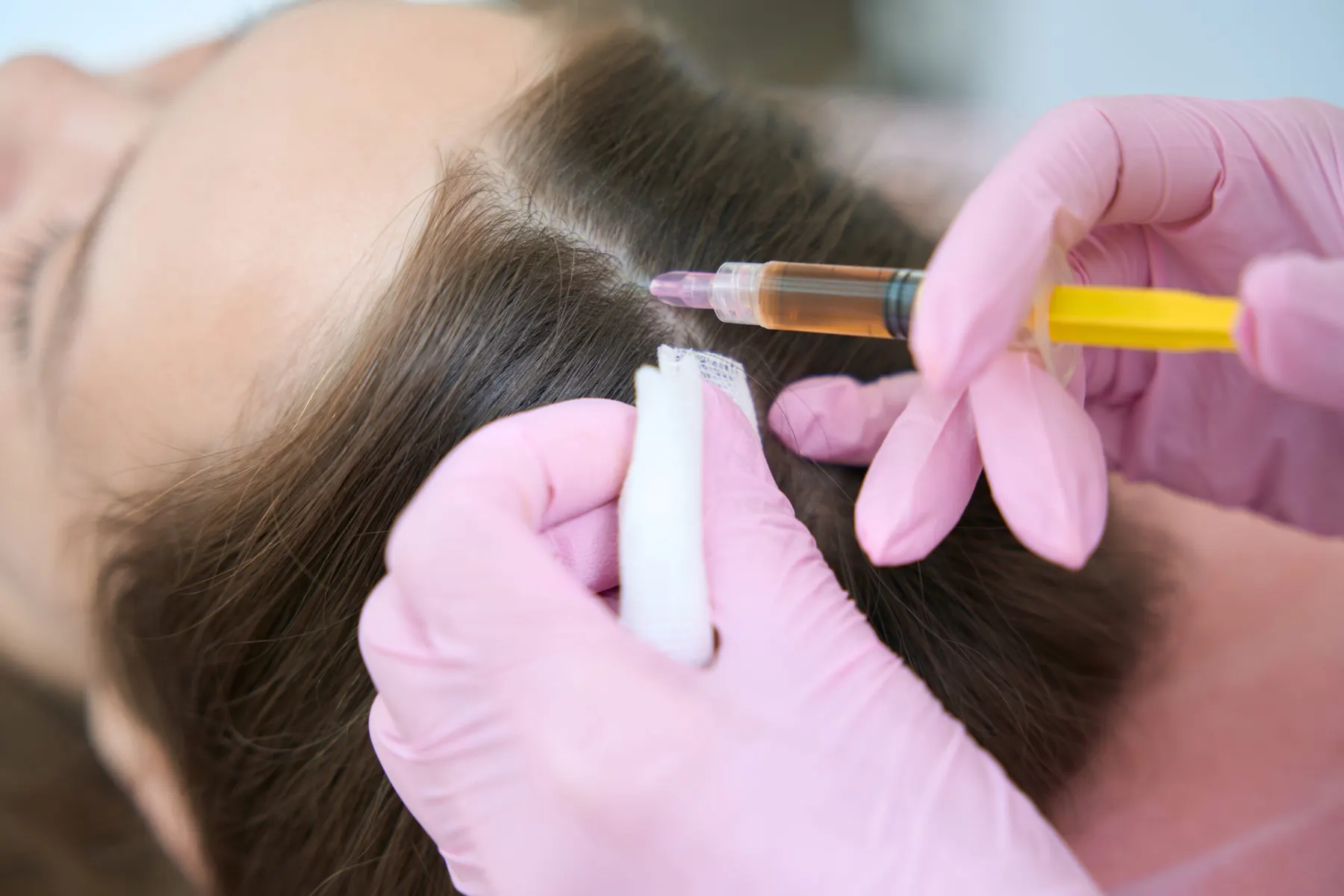
PRP for hair
Hair
Platelet-rich plasma prepared from your own blood and injected across the scalp to support follicles that are miniaturising but still alive.
from $599 About PRP for hair →

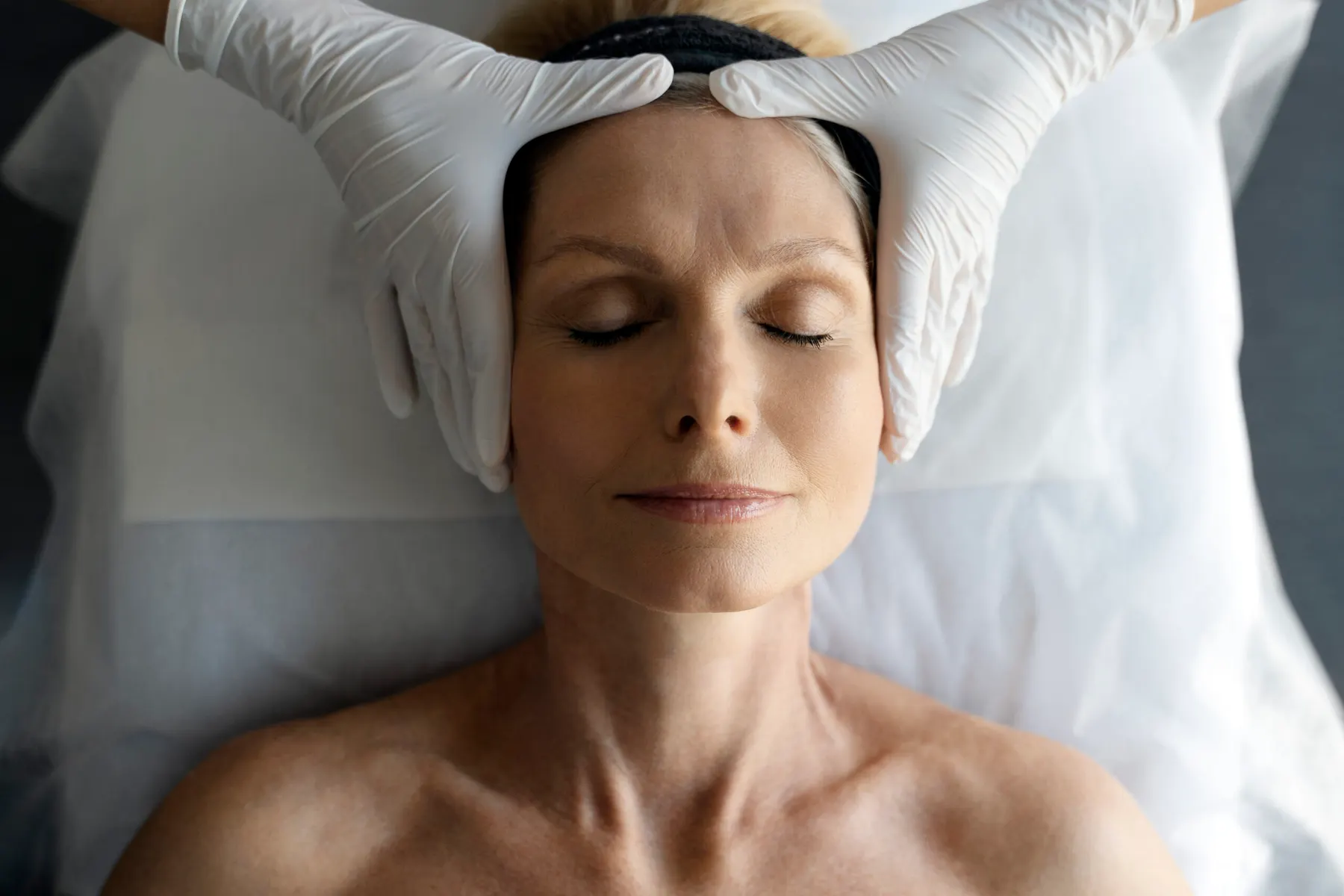
Alopecia Areata is an autoimmune condition in which the immune system attacks hair follicles, causing sudden, smooth, well-defined round patches of hair loss on the scalp, beard or elsewhere; it is unpredictable, frequently relapsing, and managed rather than cured, with hair sometimes regrowing spontaneously.
02 · The honest version
Sudden, well-defined patches of hair loss caused by an immune process, how it differs from pattern thinning, and where our clinic can and cannot help.
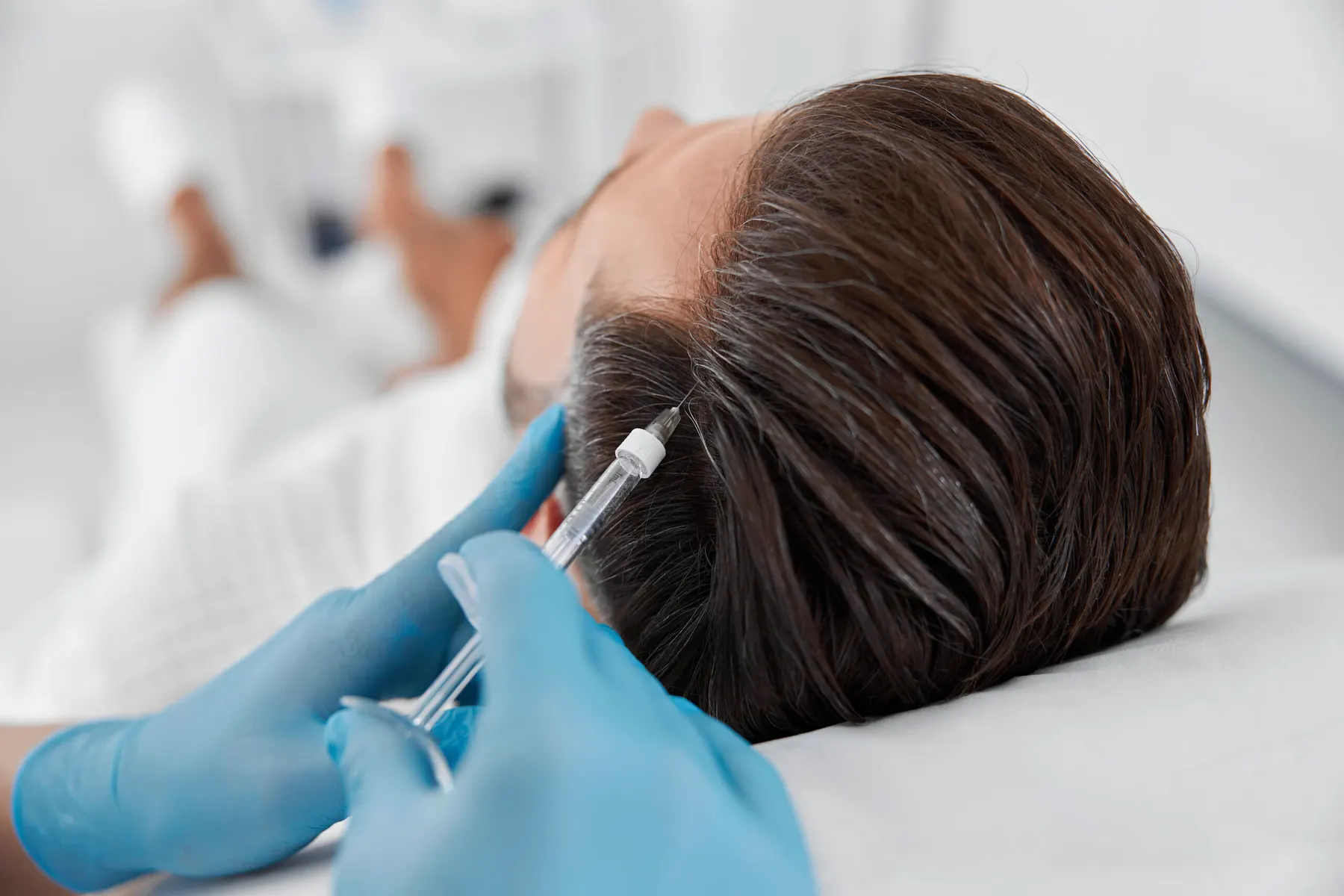
Every face is different. This page is the general picture. What is actually happening on your skin is something a nurse should look at up close, in clinic light, before anyone recommends a treatment.
Does it get worse? That depends on the concern and on you. It is a reason to start early, not a reason to panic - and we will tell you plainly where you are rather than where a treatment plan would be easiest to sell.
Alopecia areata is an autoimmune condition. The immune system, which normally leaves the hair follicle alone, begins to treat it as foreign and mounts an inflammatory attack around it. That attack interrupts the follicle’s growth cycle and pushes it into a resting state, and the hair falls out.
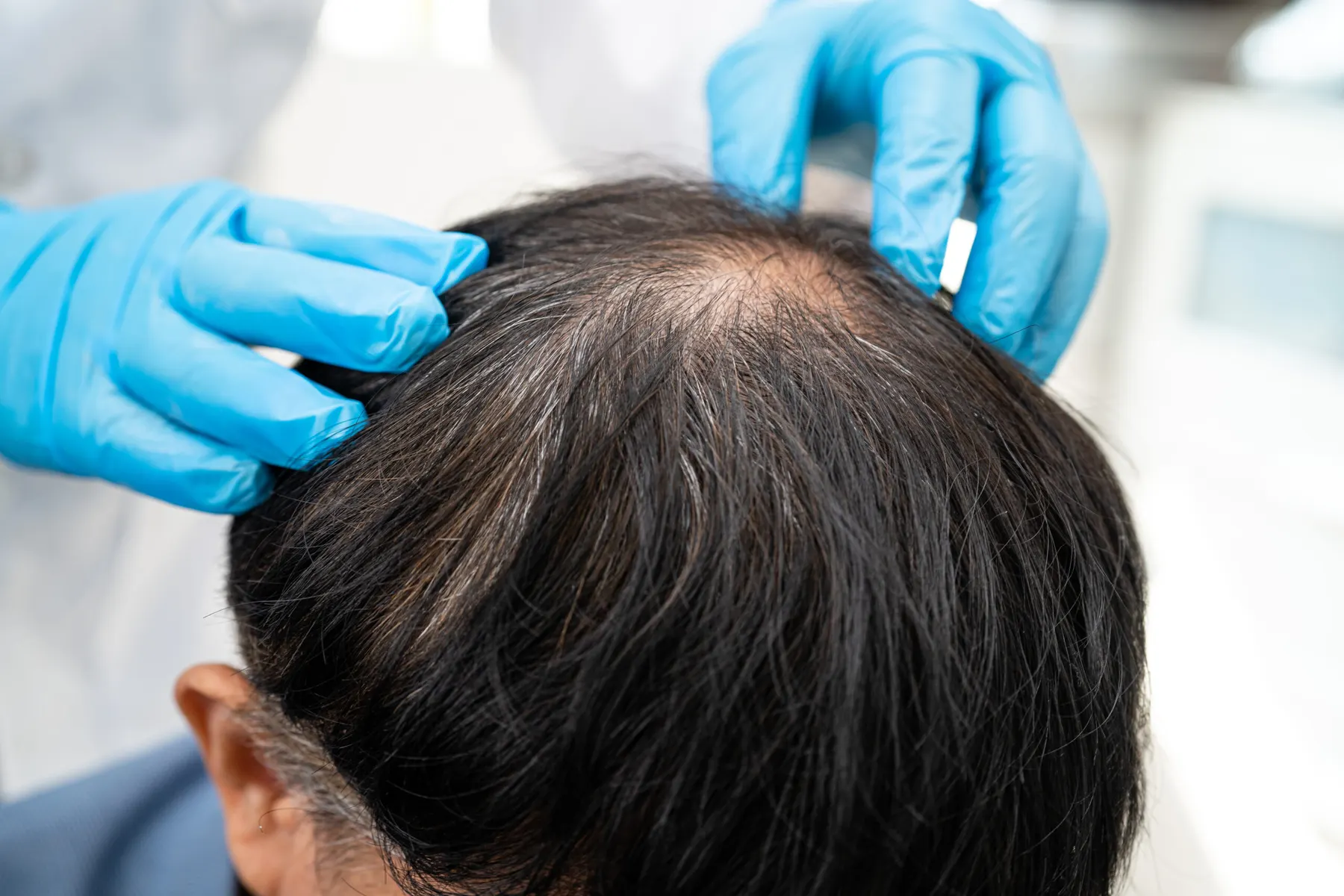
The characteristic result is a patch: round or oval, sharply defined, with smooth normal-looking skin underneath and no redness, scaling or scarring. It usually appears over days or a few weeks rather than gradually, which is one of the things that makes it so unsettling. People often find it by accident, or someone else notices it first.
Patchy alopecia areata is the most common form, with one or several discrete patches on the scalp. It can also affect the beard, eyebrows and eyelashes.
Alopecia totalis describes the loss of all scalp hair.
Alopecia universalis describes the loss of all body hair.
Nail changes occur in a proportion of people, typically fine pitting or ridging of the nail plate, and they can appear before or alongside the hair changes.
A useful diagnostic feature is the exclamation-mark hair: a short broken hair at the edge of an active patch that is narrower at the base than the tip. Its presence indicates the patch is still active.
The follicle is generally not destroyed in alopecia areata. It is suppressed. That is fundamentally different from a scarring alopecia, where inflammation permanently replaces the follicle with fibrous tissue and regrowth becomes impossible.
It is why spontaneous regrowth happens and why regrowth remains possible even after a long period of loss. It is also why the emotional experience of alopecia areata is so difficult: the outcome is genuinely uncertain in both directions.
We want to be straightforward here, because this is a condition where clinics sometimes overreach.
Alopecia areata is a medical condition, not a cosmetic one. The established treatments for it, including topical and intralesional corticosteroids, topical immunotherapy and newer systemic medications, sit primarily with physicians and dermatologists. If you have sudden patchy hair loss, particularly if it is spreading or extensive, the right first step is medical assessment, and we will help you get there.
What we can genuinely offer is this. Bradford Skin Clinic & Medical Spa is nurse-practitioner-led, and our Medical Director, Alex Dinovich, FNP-PHC, is an authorised prescriber, so an initial clinical assessment and appropriate onward referral can happen here rather than nowhere. Where thinning has more than one cause running at the same time, which is common, we can address the parts that fall within our scope. Dr. Erica Vriend, ND, can look at nutritional and systemic contributors alongside your medical care. And where pattern hair loss coexists with alopecia areata, our hair loss services may be appropriate for that component.
What we will not do is sell you a course of aesthetic treatments as though it were a treatment for an autoimmune disease.
Alopecia areata is unpredictable, and that unpredictability is often harder to handle than the hair loss itself. Regrowth can be spontaneous. It can also come back finer or lighter before returning to normal, and it can recur in a different place. None of that reflects anything you did or failed to do.
If it would help to talk it through with a clinician who will be honest with you about what is and is not known, you are welcome to book an assessment with us.
03 · What we actually offer
These are the ones we use for alopecia areata. Not every face needs all of them, and we will say so. The goal in every case is the same: treat the cause, not the photograph.
Hair
Platelet-rich plasma prepared from your own blood and injected across the scalp to support follicles that are miniaturising but still alive.
Hair
An assessment-first approach to thinning hair, working out the cause before choosing between in-clinic treatment, prescribing and referral.

Wellness
Naturopathic assessment and care with Dr. Erica Vriend, ND, working alongside our clinical team where skin, hormones and nutrition overlap.
Every plan is personalised. Which of these you need, in what order and how often, is decided after a nurse has looked at your skin - not before. We will also tell you when a treatment is wrong for you, and we say it before you book.
04 · What actually happens
If you have been putting this off, this section is for you. A consultation costs you nothing and commits you to nothing - you are allowed to walk out having booked absolutely nothing.
She is the one who answers the phone and the texts, so you will already have spoken to her. No clipboard interrogation in the waiting room.
In clinic light, up close, with your makeup off if you are wearing any. This is the part people dread and it takes about a minute.
When it happens, what you had noticed before it happened, what you have already tried and what made it worse. Bring your current products if it is easy.
What we would do, in what order, and what it costs - including the option of doing nothing yet. If a treatment is wrong for you, we say so here, not after.
Nothing is booked in the room unless you want it booked. No deposit, no pressure, no offer that expires on Friday.
Always so kind and personal. Took the extra time to make sure I was comfortable.
05 · Straight answers
The questions people actually ask us on the phone, answered the way we answer them on the phone.
It is an autoimmune process in which the immune system mistakenly targets the hair follicle and interrupts its growth cycle. There is a recognised genetic component and it occurs more commonly in people with other autoimmune conditions. What is not established is a single reliable trigger, and you should be sceptical of anyone who tells you they know exactly why yours started.
The pattern and the speed give it away. Alopecia areata produces distinct, smooth, round patches of complete loss that appear quickly, and the scalp underneath looks normal rather than scarred or inflamed. Pattern hair loss is gradual and diffuse, thinning hair progressively rather than removing it in defined patches. The two are different conditions with different treatments.
It often does, and spontaneous regrowth is well recognised, but it is genuinely unpredictable. Some people have a single patch that regrows and never recurs. Others have a relapsing course over years. More extensive forms, where all scalp hair or all body hair is lost, are less likely to regrow fully. We will not promise you an outcome that nobody can promise.
In alopecia areata the follicle is generally not destroyed, which is an important and hopeful distinction. The immune attack suppresses the follicle rather than scarring it, which is why regrowth remains possible even after long periods. This is different from scarring alopecias, where the follicle is permanently replaced by fibrous tissue.
Yes. Alopecia areata is a medical condition and it warrants proper medical assessment, particularly if it is spreading, extensive, or accompanied by other symptoms. Established medical treatments exist that fall outside what a medical aesthetics clinic offers. We will support you and we will refer you rather than pretend otherwise.
PRP is most established as a treatment for pattern hair loss rather than for autoimmune hair loss, and it is not a substitute for medical management of alopecia areata. Whether it has any role in your case is an individual assessment question, and if we do not think it is the right treatment for you we will say so plainly.
Stress is frequently reported around the time of onset, and it is a plausible contributor for some people, but alopecia areata is not simply caused by stress and framing it that way can leave people feeling responsible for a condition they did not create. The underlying process is immune-mediated, and it occurs in people whose lives are perfectly calm.
Generally yes, though it is sensible to be gentle with regrowing hair, which can come back finer and lighter before returning to its normal texture and colour. Avoiding tight styles that pull on the follicle is a good idea regardless. If your scalp is irritated or you are using a prescribed topical treatment, check with whoever prescribed it first.
Where this comes from
We would rather you did not take our word for any of this. These are the sources behind what is written above, and none of them are ours.
06 · The next step is small
A alopecia areata consultation costs you nothing and commits you to nothing. You will leave knowing what your skin is doing, what we would do about it, and what it would cost - whether or not you book anything.
Bring three things. Whatever you are currently putting on your face, a rough idea of when it is at its worst, and any questions you have written down. That is genuinely all the preparation we need.
Makeup is fine either way. If it is easier to arrive with it on, arrive with it on - there is a mirror and a cleanser in the room.
We answer during clinic hours, usually within the hour.
647-333-6805 Open messagesOn a desktop? Save the number and text from your phone.