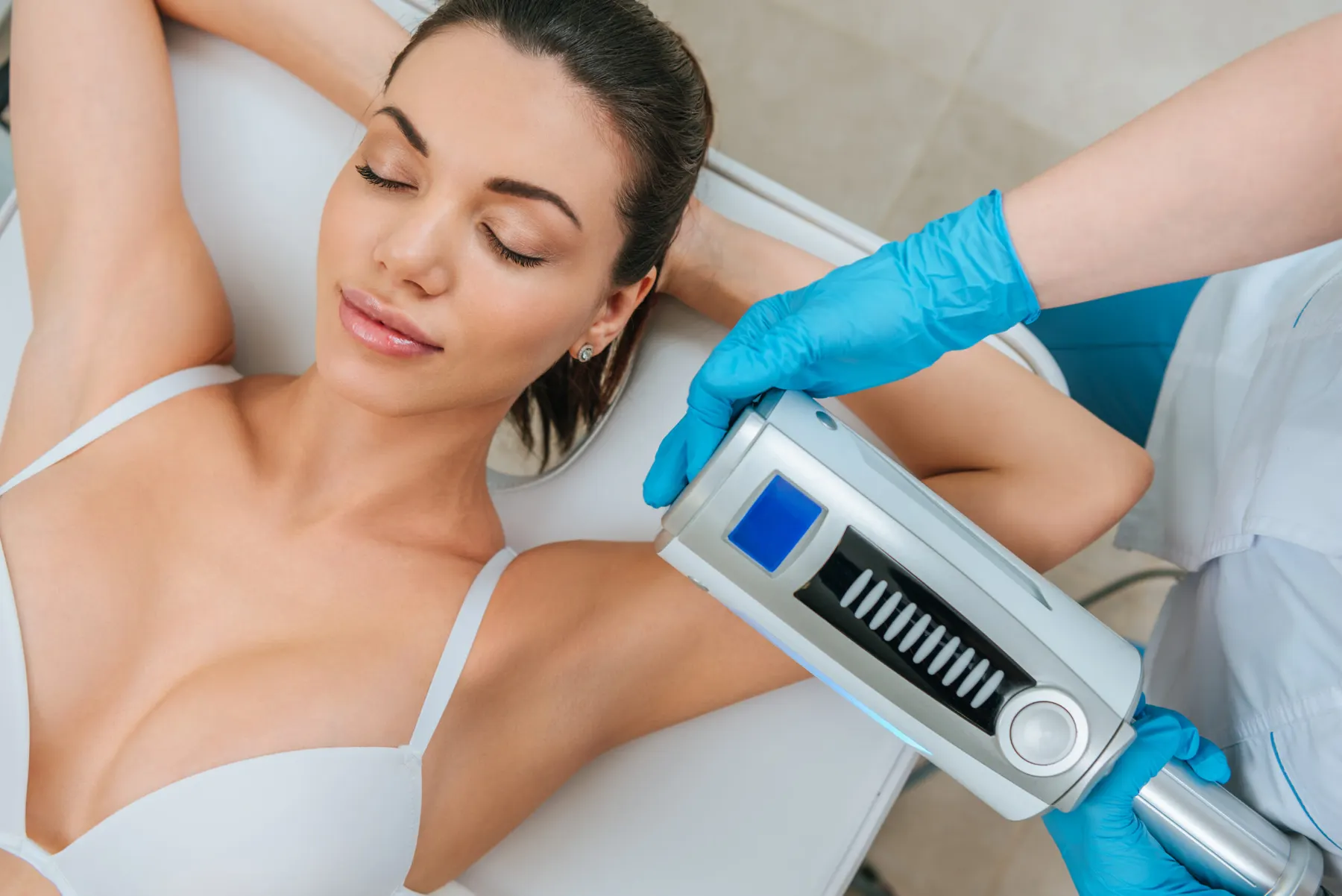
Medical weight loss
Body
A monitored, prescriber-led weight management program with regular review, run by a Nurse Practitioner rather than sold as a product.
from $195 About Medical weight loss →

Insulin Resistance is a state in which muscle, fat and liver cells respond poorly to insulin and take up glucose from the blood less readily, so the pancreas produces more insulin to compensate. It frequently produces no symptoms, is identified through blood testing rather than by how a person feels, and when the pancreas can no longer keep up it progresses to prediabetes and then to type 2 diabetes.
02 · The honest version
When your body stops responding properly to insulin. It usually causes no symptoms at all, is found on blood work, and is one of the few things on this site that is genuinely reversible.

Every face is different. This page is the general picture. What is actually happening on your skin is something a nurse should look at up close, in clinic light, before anyone recommends a treatment.
Does it get worse? That depends on the concern and on you. It is a reason to start early, not a reason to panic - and we will tell you plainly where you are rather than where a treatment plan would be easiest to sell.
Most conditions on this website announce themselves. You see a line, a patch of pigment, a vein. Insulin resistance generally does not. It is found on blood work, and a great many people carrying it feel perfectly well.
Insulin is the hormone that lets glucose move out of the blood and into muscle, fat and liver cells. In insulin resistance those cells respond poorly to it, so the pancreas compensates by producing more. For a while that works and blood glucose stays normal. The trouble is that the compensation is doing real work in the background, and eventually it cannot keep pace. That is the point at which prediabetes and then type 2 diabetes appear.
Being early in that sequence is the good news, not the bad news. It is the stage at which the most can still be changed.
There are a handful of visible signs, and two of them turn up in an aesthetics clinic more often than you would expect.
Acanthosis nigricans is velvety, darkened skin in the neck folds, the armpits or the groin. People regularly ask us to treat it as pigmentation. Lightening the surface does not touch what is producing it, and the honest answer is that the finding is a reason to have blood work rather than a reason to book a facial.
Multiple skin tags, particularly around the neck and underarms, are associated with it too. We remove skin tags here, and we will still remove them, but if somebody arrives with a lot of them and other risk factors, it is worth mentioning why.
Beyond that: weight that has become much harder to shift than it used to be, weight gathering around the middle in particular, and strong afternoon energy dips. All of them are non-specific on their own.
Excess weight around the abdomen is the strongest modifiable factor, and family history is a strong non-modifiable one. Polycystic ovary syndrome is closely associated with insulin resistance and is part of why weight, periods and skin so often move together in PCOS.
Physical inactivity matters more than most people assume, because working muscle takes up glucose largely without needing insulin to do it. Short or disrupted sleep and shift work both reduce insulin sensitivity. Gestational diabetes in a previous pregnancy is a recognised marker. Some medications, including steroids, contribute.
We assess it through our medical weight loss program, which is prescriber-led rather than sold as a product. That means a consultation with our Nurse Practitioner, blood work where it is indicated, and a plan reviewed monthly.
The reason this sits in a weight program rather than in a skin one is that the interventions with the best evidence behind them are weight loss, activity and particularly resistance training, and those need following over months rather than recommending once. Where medication is clinically appropriate it is prescribed and monitored.
If your blood work shows established diabetes, ongoing care belongs with your family physician or an endocrinologist. We can identify it, explain it and make sure it is followed up properly, and then we will send you to the right person. Symptoms suggesting very high blood sugar, such as heavy thirst, passing large volumes of urine, blurred vision or unexplained weight loss, need same-day medical attention rather than an appointment here.
04 · What we actually offer
These are the ones we use for insulin resistance. Not every face needs all of them, and we will say so. The goal in every case is the same: treat the cause, not the photograph.
Body
A monitored, prescriber-led weight management program with regular review, run by a Nurse Practitioner rather than sold as a product.
Every plan is personalised. Which of these you need, in what order and how often, is decided after a nurse has looked at your skin - not before. We will also tell you when a treatment is wrong for you, and we say it before you book.
05 · What actually happens
If you have been putting this off, this section is for you. A consultation costs you nothing and commits you to nothing - you are allowed to walk out having booked absolutely nothing.
She is the one who answers the phone and the texts, so you will already have spoken to her. No clipboard interrogation in the waiting room.
In clinic light, up close, with your makeup off if you are wearing any. This is the part people dread and it takes about a minute.
When it happens, what you had noticed before it happened, what you have already tried and what made it worse. Bring your current products if it is easy.
What we would do, in what order, and what it costs - including the option of doing nothing yet. If a treatment is wrong for you, we say so here, not after.
Nothing is booked in the room unless you want it booked. No deposit, no pressure, no offer that expires on Friday.

Always so kind and personal. Took the extra time to make sure I was comfortable.
06 · Straight answers
The questions people actually ask us on the phone, answered the way we answer them on the phone.
Mostly you would not, which is the point. Insulin resistance commonly produces no symptoms and is found on blood work rather than by how you feel. That is why screening matters for anybody with the risk factors, and why we would rather test than reassure you on the basis of a conversation.
Velvety, darkened skin in the neck folds, armpits or groin is called acanthosis nigricans, and it is one of the few visible signs associated with insulin resistance. People often arrive asking us to treat it as a pigmentation problem. It is worth saying plainly that lightening the skin does not address what is causing it, and that the finding is a reason to have blood work rather than a facial.
No. Insulin resistance is the state that comes before it. The pancreas compensates by producing more insulin, and for a period blood glucose stays normal. Prediabetes and then type 2 diabetes follow when that compensation can no longer keep up. Being earlier in that sequence is genuinely good news, because it is the stage where the most can be changed.
It can improve substantially, and that is unusual for anything discussed on this website. Insulin sensitivity responds to weight loss, to activity, and particularly to resistance training, because muscle takes up glucose without needing much insulin to do it. How much improvement is possible depends on how long it has been present and on your own history, and we will not promise you a number.
A consultation with our Nurse Practitioner, who is an authorised prescriber, and blood work where it is indicated. If the results point to insulin resistance or prediabetes, the plan is built around that finding and reviewed monthly rather than handed to you once. If they point somewhere else, we will tell you and refer you appropriately.
Closely. Insulin resistance is common in PCOS and is part of why weight, periods and skin can all be affected together. It is worth raising at your consultation, because it changes what is worth testing and what is worth trying.
We can assess, order blood work and identify when a result needs proper follow-up, and our Nurse Practitioner is a prescriber. Ongoing diabetes care belongs with your family physician or an endocrinologist, and where that is the right place for you we will say so rather than keep you here.
Where this comes from
We would rather you did not take our word for any of this. These are the sources behind what is written above, and none of them are ours.
07 · Often confused, often alongside
Concerns are regularly mistaken for one another - and they rarely turn up entirely alone. These are the ones that sit closest to it.
08 · The next step is small
A insulin resistance consultation costs you nothing and commits you to nothing. You will leave knowing what your skin is doing, what we would do about it, and what it would cost - whether or not you book anything.
Bring three things. Whatever you are currently putting on your face, a rough idea of when it is at its worst, and any questions you have written down. That is genuinely all the preparation we need.
Makeup is fine either way. If it is easier to arrive with it on, arrive with it on - there is a mirror and a cleanser in the room.
We answer during clinic hours, usually within the hour.
647-333-6805 Open messagesOn a desktop? Save the number and text from your phone.