
Keloid ScarsWhat it is, and what we can do about it.
A keloid is a raised scar formed when the healing response overproduces collagen and the scar tissue grows beyond the boundaries of the original wound; keloids do not resolve on their own, they recur readily after treatment, and management is aimed at flattening, softening and preventing new ones rather than removing them permanently.
- Nurse-practitioner-led
- Plan before treatment
- 444 Holland St W, Bradford
02 · The honest version
The honest version
of keloid scars.
Raised, overgrown scars that extend past the original injury, why they are difficult to treat, and how we assess keloid-prone skin before any procedure.
- -A raised, firm scar that extends past the original wound edge
- -Scar tissue that is shiny, smooth and darker or redder than surrounding skin
- -Itching, tenderness or a burning sensation in the scar
- -Scars that continue to enlarge months after healing
- -Keloids following ear piercing, acne, surgery or vaccination sites
- -Restricted movement where a keloid crosses a joint
Every face is different. This page is the general picture. What is actually happening on your skin is something a nurse should look at up close, in clinic light, before anyone recommends a treatment.
Does it get worse? That depends on the concern and on you. It is a reason to start early, not a reason to panic - and we will tell you plainly where you are rather than where a treatment plan would be easiest to sell.
What a keloid is
When skin is wounded, the body repairs it by laying down collagen, then remodelling that collagen over the following months so the scar gradually flattens and settles. A keloid is what happens when the first half of that process keeps going and the second half does not properly take over.
The result is a scar built from dense, disorganised excess collagen that does not stop at the wound edge. It expands sideways into healthy skin, which is the defining characteristic and the one that separates a keloid from every other kind of scar. Keloids are typically raised, firm, smooth and shiny, often darker or redder than the surrounding skin, and frequently itchy or tender.
They do not regress on their own. Left alone, a keloid may continue to enlarge slowly for months or years.
Keloid or hypertrophic scar
These get used interchangeably and should not be.
A hypertrophic scar is raised and often red, but it stays within the footprint of the original injury. It is a common outcome after burns, surgery and wounds under tension, and it usually improves substantially on its own over a year or two.
A keloid grows beyond the original wound, does not settle spontaneously, and has a strong tendency to recur if removed.
The practical importance is expectation. A hypertrophic scar has time on its side. A keloid does not.
Who develops them
There is a clear genetic component, and keloids are markedly more common in people with richly pigmented skin, particularly of African, Asian and Hispanic descent. If your parents or siblings form keloids, your own risk is higher.
Certain sites are far more prone than others. Earlobes after piercing are the classic example, along with the chest, shoulders, upper back and jawline. Acne on the chest and back is a common precursor, as are surgical incisions, burns, vaccination sites and even minor scratches in susceptible people.
Why this page exists, and what we can honestly offer
We want to be direct about scope, because keloids are an area where overpromising is common and harmful.
Established keloid management is largely physician-led. Intralesional corticosteroid injection, surgical excision combined with adjuvant treatment, cryotherapy, pressure therapy and radiotherapy are the treatments with a meaningful evidence base, and they are not on our service menu. We are not going to sell you a course of aesthetic treatments for a keloid and let you find out later that it was never the right approach.
What we do offer is genuinely useful.
Assessment. We will look at your scar, tell you honestly whether it looks like a keloid or a hypertrophic scar, and explain what that means for your outlook.
Referral. Where medical management is appropriate, we will direct you to it. Bradford Skin Clinic & Medical Spa is nurse-practitioner-led, and our Medical Director, Alex Dinovich, FNP-PHC, is an authorised prescriber, so that initial clinical conversation can happen here rather than nowhere.
Screening before our own treatments. This is the part that matters most to our own patients. A number of the treatments we offer work by creating controlled injury to the skin. Microneedling, CO2 laser resurfacing, thread placement and any procedure that breaches the skin all carry a different risk profile in someone who forms keloids. We ask about it, we take the answer seriously, and where the risk is not acceptable we will recommend against a treatment even if you have come in specifically for it.
Prevention advice. If you know you are keloid-prone, the most effective intervention is avoiding unnecessary wounds in high-risk sites, and managing any unavoidable wound carefully and early.
If you have a raised scar and are not sure what it is, book an assessment. We will tell you what we think it is and what the sensible next step is, even when that step is not with us.
03 · What actually happens
Come in as you are.
Nobody here will
react to your skin.
If you have been putting this off, this section is for you. A consultation costs you nothing and commits you to nothing - you are allowed to walk out having booked absolutely nothing.
- Sheli greets you at the front desk
She is the one who answers the phone and the texts, so you will already have spoken to her. No clipboard interrogation in the waiting room.
- A nurse looks at your skin properly
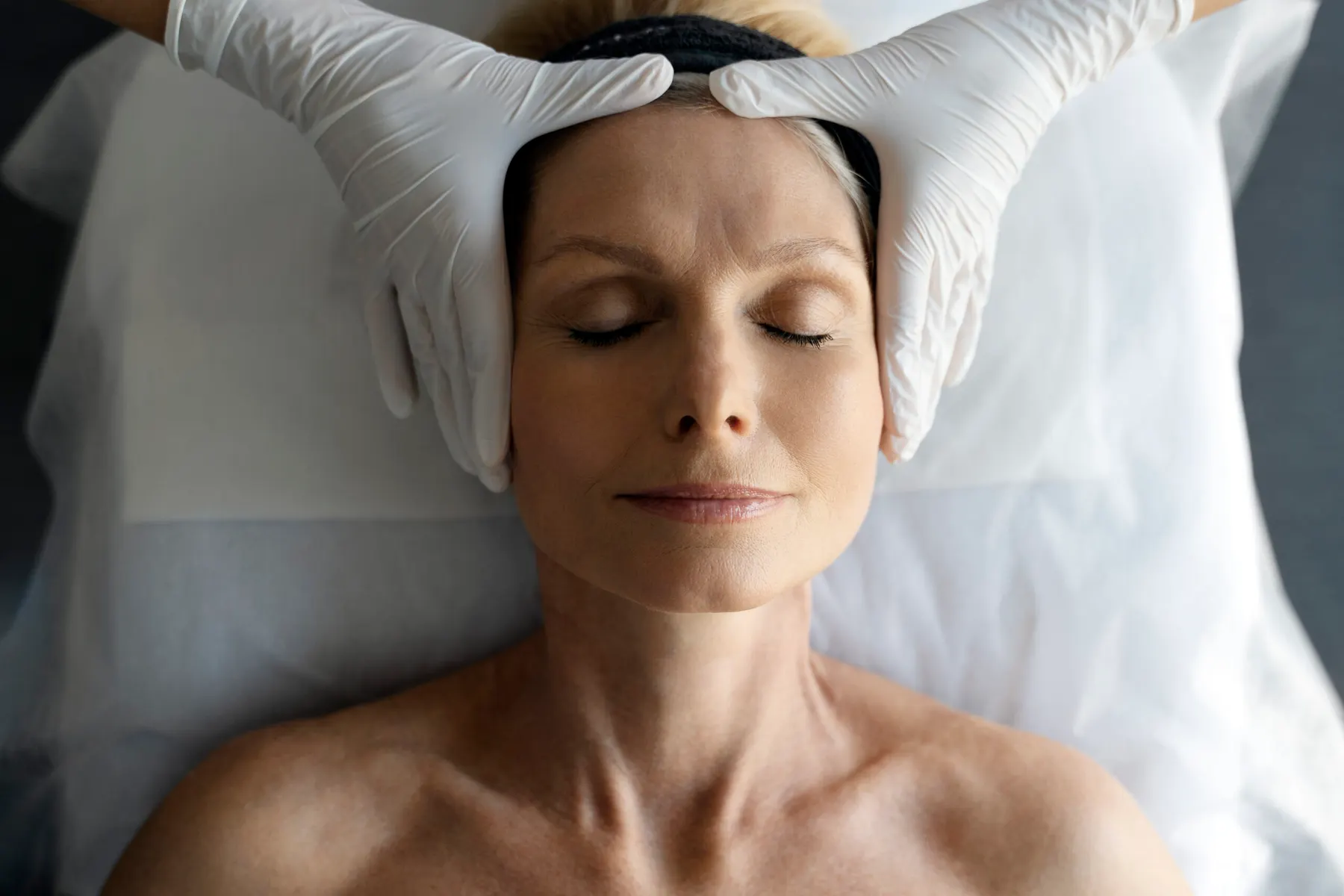
In clinic light, up close, with your makeup off if you are wearing any. This is the part people dread and it takes about a minute.
- We ask about the history, not just the face
When it happens, what you had noticed before it happened, what you have already tried and what made it worse. Bring your current products if it is easy.
- You get a written plan and a real price
What we would do, in what order, and what it costs - including the option of doing nothing yet. If a treatment is wrong for you, we say so here, not after.
- You decide in your own time
Nothing is booked in the room unless you want it booked. No deposit, no pressure, no offer that expires on Friday.
Always so kind and personal. Took the extra time to make sure I was comfortable.
04 · Straight answers
Keloid Scars, asked
and answered.
The questions people actually ask us on the phone, answered the way we answer them on the phone.
What is the difference between a keloid and a hypertrophic scar?
The boundary of the original wound is what separates them. A hypertrophic scar is raised but stays within the edges of the injury, and it often flattens and improves gradually on its own over months to years. A keloid grows beyond the original wound into surrounding normal skin, does not regress spontaneously, and recurs readily after removal. The distinction genuinely changes the outlook and the plan.
Why do keloids form?
The healing response overshoots. Normal wound healing lays down collagen and then remodels it, but in keloid formation the production phase continues without the usual brakes, producing dense excess collagen that expands into surrounding tissue. There is a strong genetic component, and keloids are considerably more common in people with richly pigmented skin, particularly of African, Asian and Hispanic descent.
Can a keloid be removed permanently?
Not reliably, and this is the hardest thing about them. Surgical excision alone has a high recurrence rate, because cutting a keloid out creates a new wound in skin that is prone to forming keloids. Management is usually about flattening and softening a keloid and reducing symptoms rather than eliminating it, and it commonly requires combined and repeated treatment under medical supervision.
Do you treat keloids at Bradford Skin Clinic?
We assess keloids and keloid-prone skin, and we are honest that established keloid management is largely a physician-led area. The mainstay treatments, including intralesional corticosteroid injection, surgical excision with adjuvant therapy and radiotherapy, sit outside our service menu. What we do offer is careful assessment, clear advice, referral where appropriate, and a genuine screening role before any of our treatments are performed on your skin.
Why does keloid tendency matter before a cosmetic treatment?
Because several treatments that are routine on most skin involve creating controlled injury, and controlled injury is exactly what provokes a keloid in a susceptible person. Microneedling, ablative resurfacing, thread placement and any procedure that breaks the skin all warrant a different risk conversation if you form keloids. Screening for this is part of our consultation, and it occasionally means we recommend against a treatment you came in wanting.
Does the location on the body make a difference?
Yes. Keloids form much more readily in some areas than others, with the earlobes, chest, shoulders, upper back and jawline being classic sites, and areas under tension being generally more prone. Skin over the eyelids, palms and soles rarely forms keloids. Location also affects how a keloid behaves and how any intervention is likely to go.
Can I prevent a keloid if I know I am prone to one?
You can reduce the risk. Avoiding elective procedures and piercings in high-risk sites is the most direct measure. Where a wound is unavoidable, minimising tension on it, keeping it protected and starting appropriate scar management early are all worthwhile, and silicone-based scar products have reasonable supporting evidence. Discuss it with your physician before, rather than after, any planned procedure.
My keloid itches and hurts. Is that normal?
Itching, tenderness and a burning or prickling sensation are commonly reported with keloids, particularly while they are actively growing. It is not something you have to simply live with, and it is a good reason to have the scar assessed medically rather than treated as a purely cosmetic issue.
Where this comes from
Check it yourself.
We would rather you did not take our word for any of this. These are the sources behind what is written above, and none of them are ours.
05 · Often confused, often alongside
Not sure it's
keloid scars?
Concerns are regularly mistaken for one another - and they rarely turn up entirely alone. These are the ones that sit closest to it.


06 · The next step is small
Let a nurse look
at it properly.
A keloid scars consultation costs you nothing and commits you to nothing. You will leave knowing what your skin is doing, what we would do about it, and what it would cost - whether or not you book anything.
- Address444 Holland St W, Unit #2
Bradford, ON L3Z 0G1 - Phone647-333-6805
- Emailinfo@bradfordskinclinic.com
- HoursMon, Tue, Thu 9am-7pm
Wed 9am-5pm
Fri, Sat 9am-4pm
Sun Closed
Bring three things. Whatever you are currently putting on your face, a rough idea of when it is at its worst, and any questions you have written down. That is genuinely all the preparation we need.
Makeup is fine either way. If it is easier to arrive with it on, arrive with it on - there is a mirror and a cleanser in the room.