
PDRN / polynucleotides
PDRNand Polynucleotides.
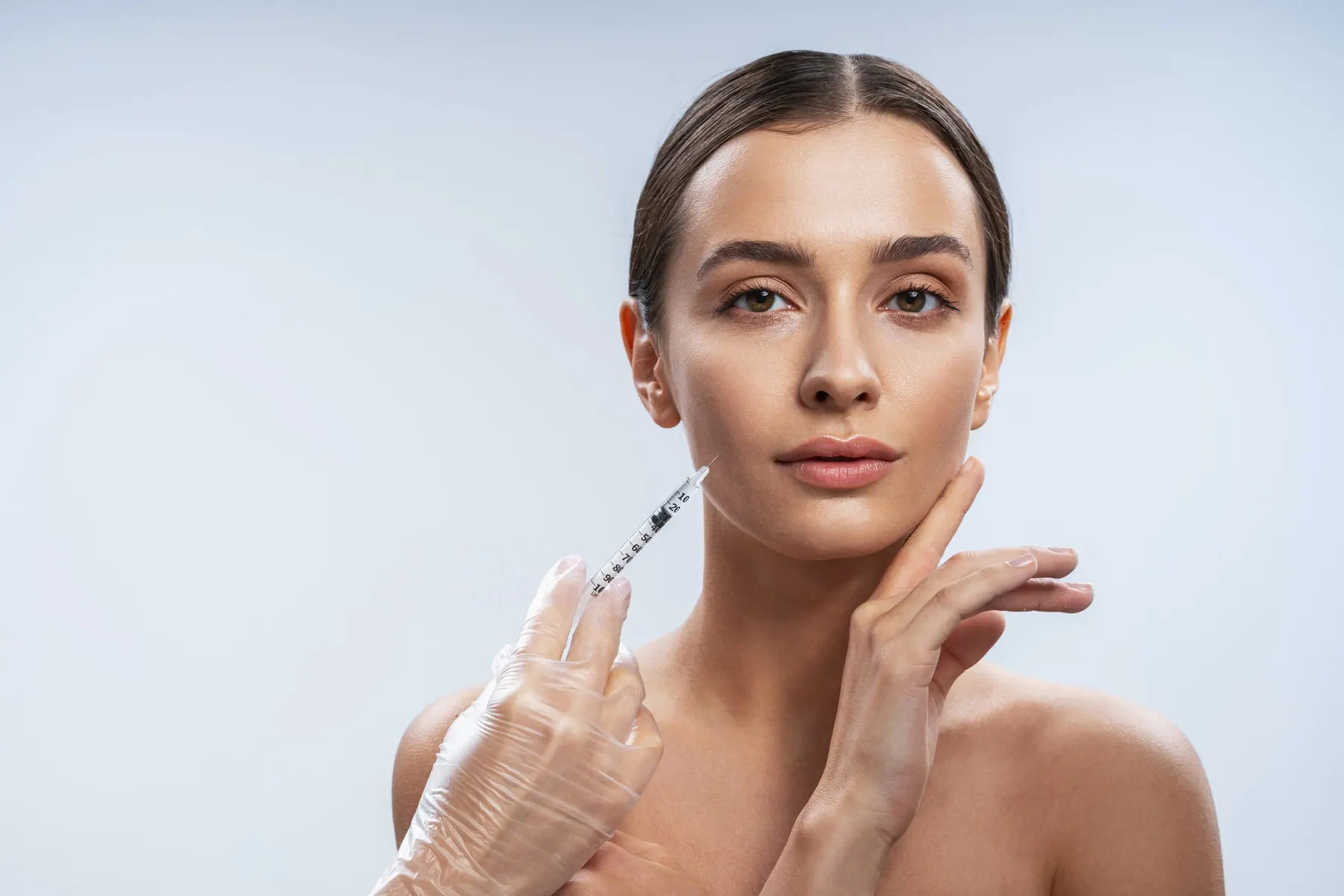
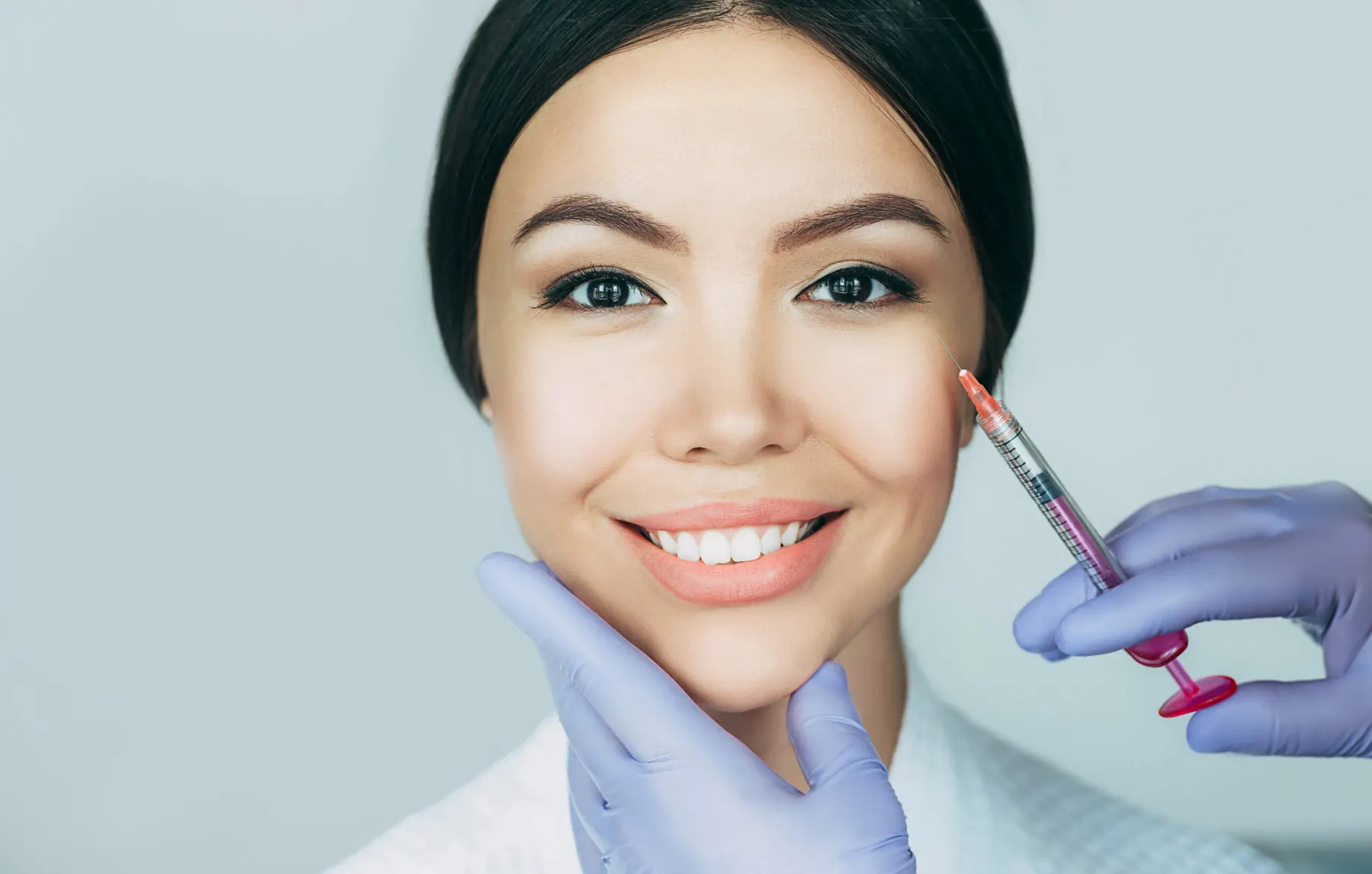
Purified DNA fragments injected into fragile or damaged skin to support repair, most often used where the tissue is thin and filler would be wrong.
At a glance
- Performed by
- Licensed RPN injector, plan signed off by our Medical Director
- Price
- Quoted per area and per course at your consultation
- Consultation
- Free
What it is
What PDRN / polynucleotides
actually do.
A newer category, and a genuinely different mechanism
You may have arrived here looking for a salmon sperm facial. That is the same treatment. The nickname is not wrong, the material really is derived from salmon DNA, but the clinical name is polynucleotides, and that is the word you will see on a consent form.
Polynucleotides are one of the few genuinely new arrivals in injectable aesthetics rather than a rebranding of something familiar. They are purified fragments of DNA, prepared to pharmaceutical standards and injected into the skin. PDRN refers to a particular short-chain form within that family.
The mechanism is not mechanical. Nothing is being propped up. The fragments act as a signal in the tissue, supporting fibroblast activity, moderating inflammation and encouraging the skin to repair and rebuild its own matrix. That makes them useful in a category of patient that injectables have historically served badly: people whose skin is not sagging or hollow, but poor quality.
Where we use them
The under-eye is the standout. A large proportion of people who ask for tear trough filler do not have a hollow at all. They have thin, crepey, poorly perfused skin over a normal orbital rim, and putting a hyaluronic acid gel under it makes it heavier, puffier and sometimes bluer. Polynucleotides address the skin, which is what was actually wrong.
They are also used across the face for overall fragility, on the neck and chest, and increasingly on the scalp as part of a hair plan.
Polynucleotides, skinboosters and PRP
These three often get lumped together as skin quality injectables, and they are not interchangeable.
A skinbooster is hyaluronic acid. It hydrates. If your skin is dry, flat and dull, that is the right tool.
PRP is your own concentrated platelets. It is autologous, it is prepared on the day, and it delivers your own growth factors.
Polynucleotides are a manufactured, standardised product with a consistent dose every time, aimed squarely at repair and tissue quality in fragile skin. Consistency is one of their practical advantages over PRP, which varies with the person it came from.
Who this suits, and who it does not
It suits you if your skin is thin, crepey, easily irritated or visibly damaged, if you have been told you are not a good filler candidate, or if you have had under-eye filler that did not go well.
It does not suit you if you want volume or contour. It will not lift, it will not project a cheek or a chin, and it will not clear pigmentation. If those are your goals, we will tell you which treatment does address them.
We do not treat in pregnancy or breastfeeding, over active infection, or where there is a known allergy to the source material.
At the appointment
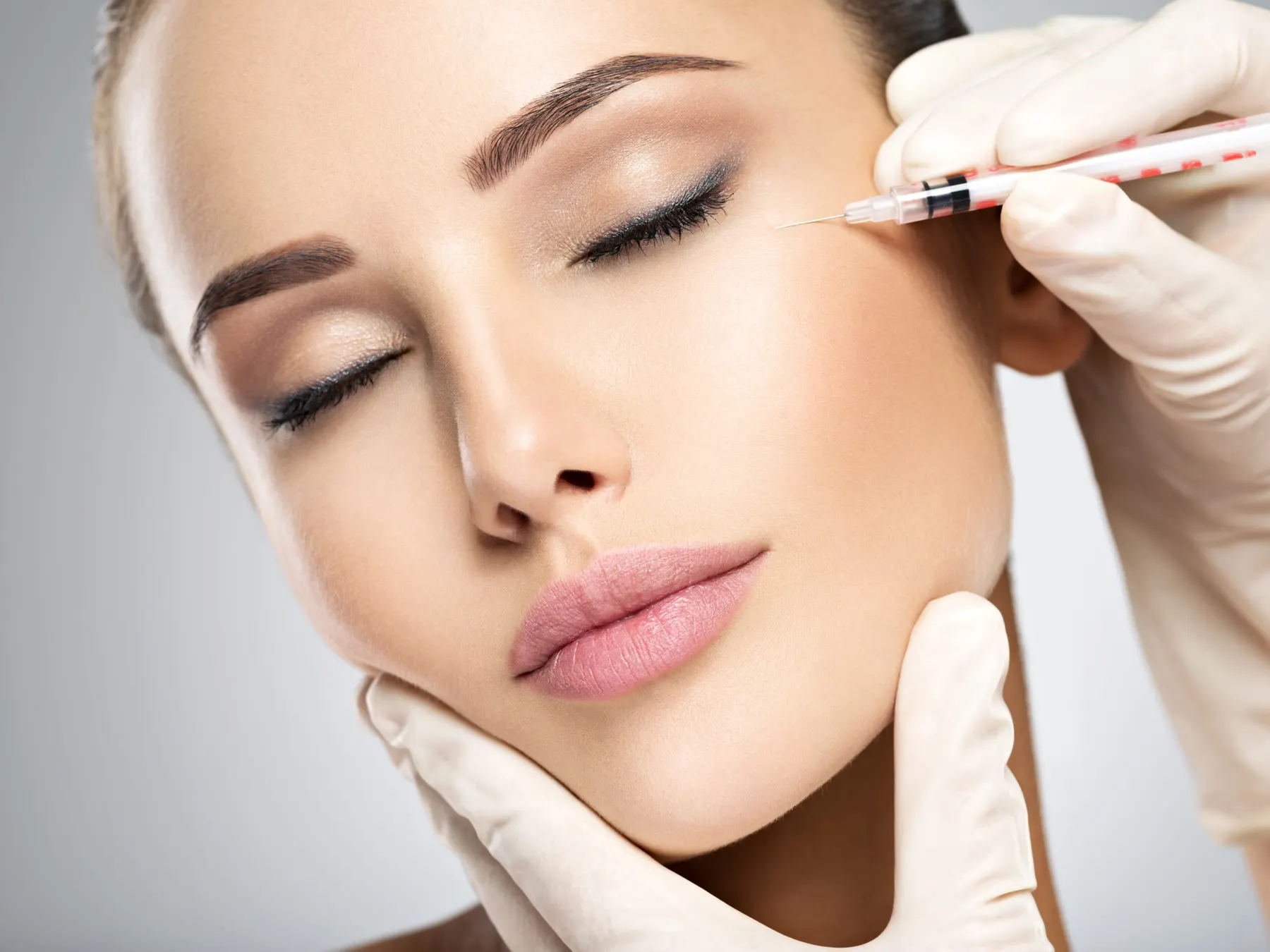
The area is cleansed and topical anaesthetic is applied where useful. The product is placed in a series of small deposits with a fine needle or a cannula, depending on the area, at a depth chosen for the tissue being treated.
Afterwards
Expect small raised blebs at the injection points, some swelling and possible pinpoint bruising, most noticeable under the eyes. It settles over the following day or so. You will be given aftercare covering makeup, heat, exercise and sun protection.
The benefit accumulates across the planned course, so we assess it at review rather than immediately.
If it is wrong for you, we say so before you book again. A nurse-practitioner-led clinic has a licence at stake. That is the whole reason we are careful - and the reason the honest answer sometimes is "not this, and not yet".
Concerns
What it treats.
Every concern below is one we would consider PDRN / polynucleotides for. Open any of them for the honest version: what actually causes it, and what we would and would not do.

Being straight with you
When we would
tell you no.
Every clinic lists who a treatment suits. This is the other half. If any of these is you, say so at the consultation and we will talk about what else might work, or about waiting.
- You want volume or contour. Polynucleotides work on skin quality and fill nothing.
- You have a documented fish allergy. Tell us, because the source material matters here.
- You are pregnant or breastfeeding. We will start the course afterwards.
- Your concern is pigmentation. This will not clear it, and something else will help more.
- You have active infection or inflamed acne in the treatment area.
- You want one appointment and a visible change. The benefit accumulates across a course.
Who performs it
A nurse holds
the syringe.
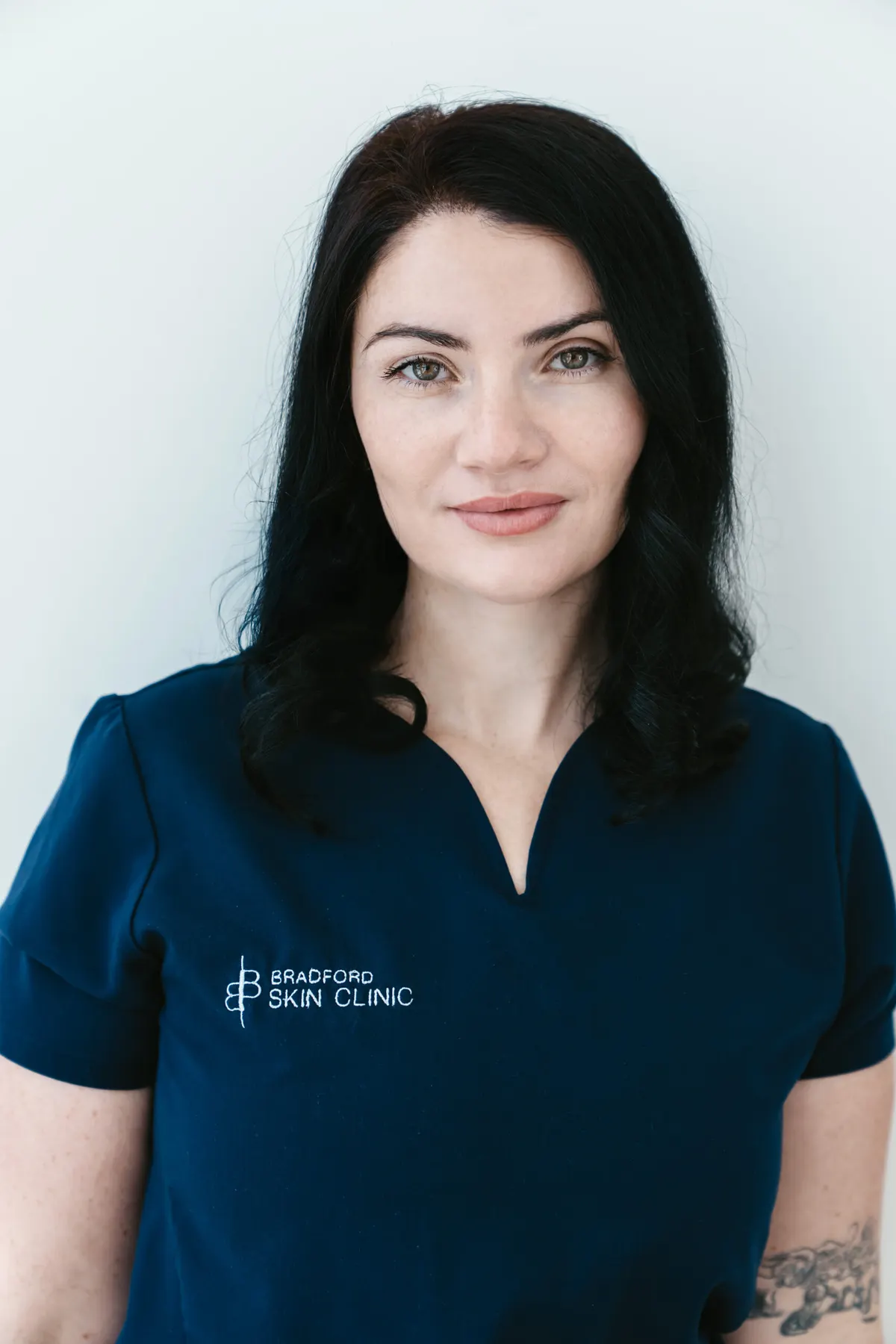
Every injectable in this clinic is placed by a licensed registered practical nurse - never a technician, never someone on a weekend certificate. Your treatment plan is then signed off by Alex Dinovich, FNP-PHC, our Nurse Practitioner & Medical Director, who has more than eight years in injectables, skin health and laser.
- Injected by Kaitlyn Meli, RPN · Ashley Bravo, RPN · Yuliya Leonov, RPN
- Signed off byAlex Dinovich, FNP-PHC - Nurse Practitioner & Medical Director
- Licence#13564840
- Experience8+ years in injectables, skin health and laser.
How it works
Four appointments'
worth of care.
Nothing here happens on the same visit you first walk in, unless you want it to and it is right for you. This is the order we work in.
- 01
Consult
We look at what is actually bothering you, ask what you have tried, and tell you honestly whether this is the right treatment. Costs nothing and commits you to nothing.
- 02
Plan
Your clinician maps the plan with you and agrees it before you commit to anything. The plan is signed off by our Medical Director before treatment begins.
- 03
Treatment
Your clinician carries out the plan exactly as it was agreed. You are told what is happening, where and why, before it starts - and the quoted price does not change on the chair.
- 04
Review
We see you again to check the result and adjust the plan for next time. The first appointment is the start of the plan, not the whole of it.
What it costs
There is no
price list. On purpose.
PDRN and Polynucleotides is quoted at your consultation, because the honest answer depends on the person in front of us. Two people asking for the same thing can need genuinely different treatments.
A number on a web page would be easy to publish and useless to you: it tells you nothing about what your own treatment actually involves. So we give you the real figure in person, before anything begins, and it does not change once you are in the chair.
- ConsultationFree
- PDRN / polynucleotidesQuoted per area and per course at your consultation
- Skinboosters from $595
- PRP microneedling from $599
- Dermal fillers from $600
Questions people actually ask
Straight answers.
Is the salmon sperm facial the same thing as polynucleotides?
Yes. Salmon sperm facial is the nickname the treatment picked up online, and polynucleotide injection is what it actually is. The material is purified DNA fragments most commonly derived from salmon, prepared to a pharmaceutical standard. Nothing about the nickname is inaccurate, it is just less precise than the clinical name, and a clinic offering a salmon sperm facial and a clinic offering polynucleotides are offering the same category of treatment.
What are polynucleotides?
Polynucleotides are purified chains of DNA fragments, most commonly derived from salmon or trout, prepared to a pharmaceutical standard and injected into the skin. PDRN, polydeoxyribonucleotide, is a specific shorter fragment within that family. They are used to support the skin's own repair processes rather than to add volume.
How is PDRN different from a skinbooster?
A skinbooster is hyaluronic acid and works mainly by holding water in the skin, so the benefit is hydration and bounce. Polynucleotides are not a hydrating gel. They act on the tissue itself, supporting fibroblast activity and repair. In practice we choose polynucleotides when skin is thin, fragile, inflamed or damaged, and a skinbooster when skin is simply dehydrated.
Is it safe if I am allergic to fish?
Tell us at consultation and we will not proceed without addressing it properly. The material is highly purified and protein content is minimised, but a documented fish allergy is a conversation to have with your prescriber before treatment, not something to disclose afterwards. We would rather cancel a booking than take that risk.
Can polynucleotides be used under the eyes?
The under-eye is one of the areas where they are most often chosen, precisely because it is somewhere filler frequently goes wrong. Thin, crepey, dark under-eye skin is often a skin quality problem rather than a hollow, and adding filler to it can make it puffier and worse. If that is what we find, polynucleotides are a far more appropriate answer and we will say so.
Will it fill a hollow?
No. Polynucleotides are not a volumising product and any fullness you see immediately after treatment is fluid that will resorb. If you have a genuine structural hollow, you need a filler or a biostimulator. Many people need a combination, with polynucleotides improving the skin and a small amount of filler addressing the hollow underneath.
How many sessions are needed?
It is planned as a course rather than a single treatment, then maintained. The number depends on the area and the condition of your skin. We will set out the full course and the full cost at consultation so you can decide before you begin rather than partway through.
Does it hurt?
It involves multiple small injections across the treatment area, so expect stinging rather than sharp pain. Topical anaesthetic is used where appropriate. The under-eye and the neck are the areas most people find the most sensitive.
Who should not have it?
We do not treat during pregnancy or breastfeeding, over active infection or inflamed acne in the treatment area, or in anyone with a known allergy to the source material. If you have an autoimmune condition, are on anticoagulants, or bruise very easily, raise it at consultation so we can assess it properly.
Related treatments
Often considered
alongside.
If this is not the whole answer for your face, one of these usually is. Every one of them is planned by the same nurses, in the same room.

Come and see us
Get the real
number first.
The consultation is free, takes one appointment, and ends with a written plan and a price - whether or not you go ahead. If a form is not your thing, text us instead and a real person will answer.
- Clinic444 Holland St W, Unit #2
Bradford, ON L3Z 0G1 - Phone647-333-6805
- HoursMon, Tue, Thu 9am-7pm
Wed 9am-5pm
Fri, Sat 9am-4pm
Sun Closed