Skin tag removal
Skin & laser
In-clinic removal of benign skin tags, after assessment to confirm that what you have is actually a skin tag and not something that needs a doctor.
from $150 About Skin tag removal →


Skin tags are small soft benign growths of skin that hang from a narrow stalk, typically in areas of friction, while milia are tiny firm white cysts of trapped keratin sitting just under the skin surface; both are harmless, neither resolves reliably on its own, and both are removed in clinic rather than at home.

02 · The honest version
Two common, benign and completely different lesions, how to tell them apart, and how each is removed safely in clinic.

Every face is different. This page is the general picture. What is actually happening on your skin is something a nurse should look at up close, in clinic light, before anyone recommends a treatment.
Does it get worse? That depends on the concern and on you. It is a reason to start early, not a reason to panic - and we will tell you plainly where you are rather than where a treatment plan would be easiest to sell.
Skin tags and milia get grouped together because both are small, benign, cosmetically annoying and stubbornly resistant to anything you do at home. Structurally they have almost nothing in common, and telling them apart is the first step to dealing with either.
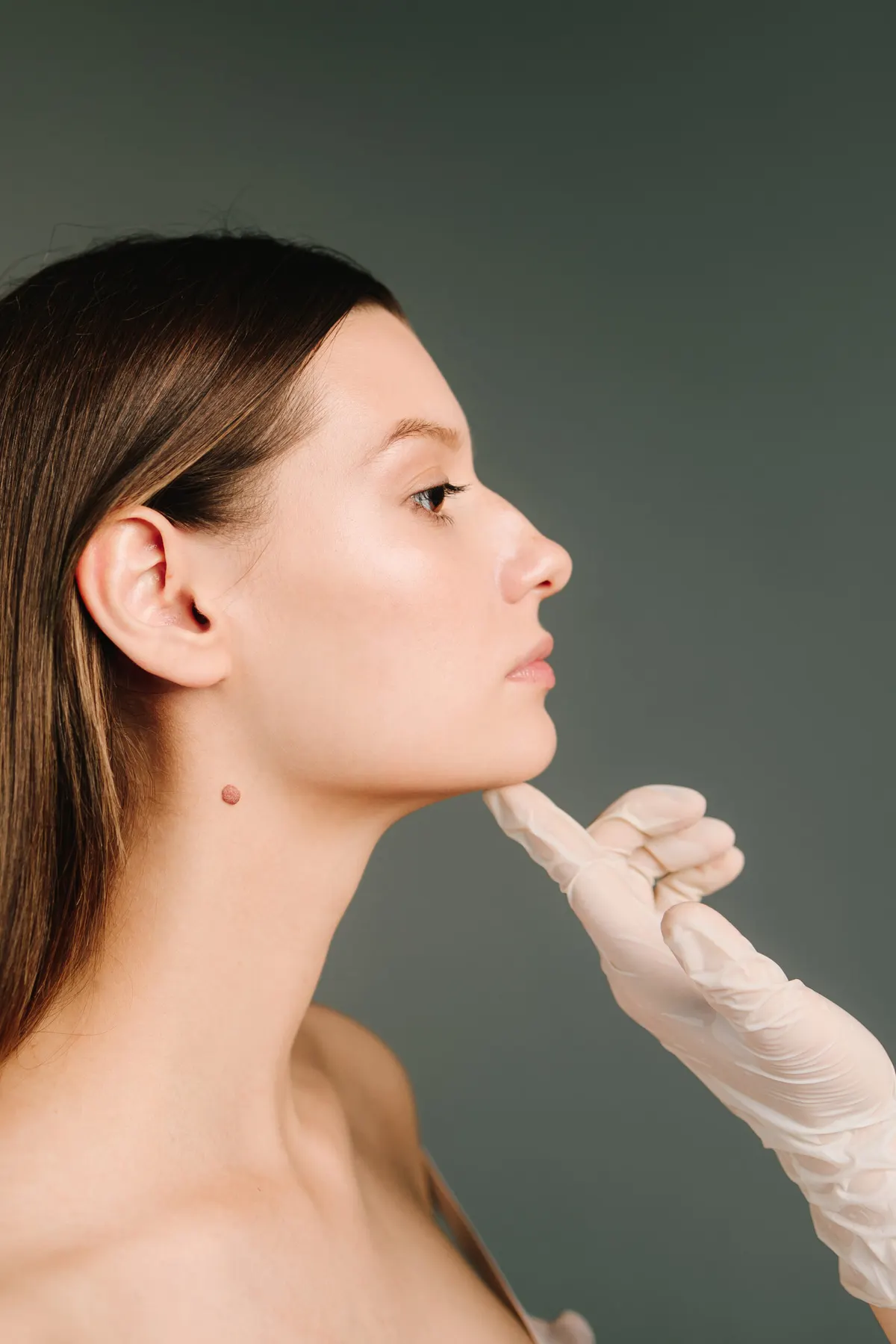
A skin tag, or acrochordon, is a small soft outgrowth consisting of loose collagen fibres and blood vessels wrapped in skin, attached to the body by a narrow stalk. Because of that stalk, a tag moves when you touch it and can be gently lifted away from the surrounding skin.
They appear most often where skin rubs against skin or clothing: the neck, the armpits, under the breasts, the groin and the eyelids. They are more common with age, they tend to run in families, and they are entirely benign.
What makes them worth removing is usually practical rather than aesthetic. Tags catch on necklaces, collars and razors, and a tag that is repeatedly caught can become sore, inflamed or bleed.
A milium is a tiny cyst, typically one to two millimetres across, containing keratin. It sits just beneath the surface of the skin and is fully enclosed, with no opening to the outside.
That last point is the whole story. It explains why milia are firm rather than soft, why they do not respond to exfoliation, and above all why squeezing them achieves nothing except bruising. There is no channel for the contents to come out of.
Primary milia occur spontaneously, most commonly around the eyes, on the cheeks and across the nose, where the skin is thin.
Secondary milia develop where skin has been damaged or occluded: after a burn, after a blistering skin condition, following prolonged use of heavy occlusive creams and rich eye products, or after aggressive skin treatments.
We say this on both counts, and we say it because we see the results.
Home skin tag removal, whether by cutting, tying off with thread or using a caustic kit bought online, risks infection, bleeding that is harder to stop than expected, incomplete removal and a scar that is more visible than the tag was. It also involves removing a lesion that nobody has examined.
Attempting to extract milia with a needle at home risks introducing infection into the skin and, around the eye area specifically, damaging tissue that is very thin and unforgiving. Milia around the eyes are the most common location and the least suitable place for improvisation.
Every removal starts with assessment. This is not a formality. Skin tags are benign, but a small number of other lesions can resemble them, and a pigmented, changing, bleeding or rapidly growing lesion is not something to remove cosmetically. If anything about a lesion is not clearly benign, we will refer you to a physician or dermatologist before touching it. That principle applies across our clinic and is covered in more detail on our page about moles.
Once a lesion is confirmed as suitable, skin tag removal is a quick in-clinic procedure. Milia removal involves creating a tiny controlled opening in the overlying skin and expressing the keratin cyst intact.
Plexr plasma treatment is also available at the clinic and is used for certain benign superficial lesions where a precise, controlled approach suits the site.
Treatments are performed by regulated clinicians within a nurse-practitioner-led practice, and you will be told what to expect, including realistic healing and any risk of a residual mark, before you agree to proceed.
03 · What we actually offer
These are the ones we use for skin tags & milia. Not every face needs all of them, and we will say so. The goal in every case is the same: treat the cause, not the photograph.
Skin & laser
In-clinic removal of benign skin tags, after assessment to confirm that what you have is actually a skin tag and not something that needs a doctor.
Skin & laser
Professional removal of milia, the small firm white bumps that are keratin cysts under the skin surface and cannot be squeezed out.
Skin & laser
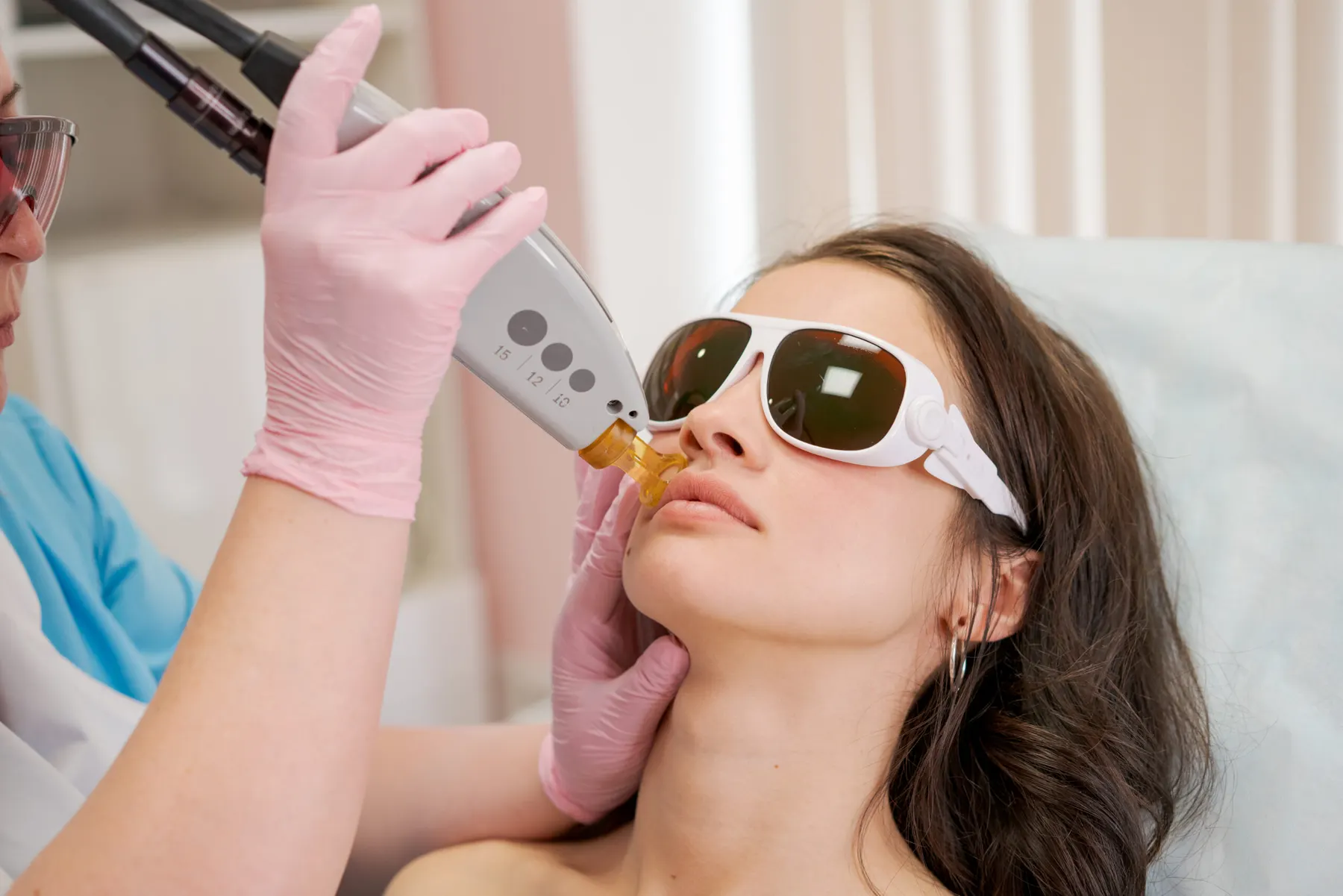
A plasma device used on loose eyelid skin, removing microscopic points of tissue so the skin between them contracts and the lid sits tighter.
Every plan is personalised. Which of these you need, in what order and how often, is decided after a nurse has looked at your skin - not before. We will also tell you when a treatment is wrong for you, and we say it before you book.
04 · What actually happens
If you have been putting this off, this section is for you. A consultation costs you nothing and commits you to nothing - you are allowed to walk out having booked absolutely nothing.
She is the one who answers the phone and the texts, so you will already have spoken to her. No clipboard interrogation in the waiting room.
In clinic light, up close, with your makeup off if you are wearing any. This is the part people dread and it takes about a minute.
When it happens, what you had noticed before it happened, what you have already tried and what made it worse. Bring your current products if it is easy.
What we would do, in what order, and what it costs - including the option of doing nothing yet. If a treatment is wrong for you, we say so here, not after.
Nothing is booked in the room unless you want it booked. No deposit, no pressure, no offer that expires on Friday.
Always so kind and personal. Took the extra time to make sure I was comfortable.
05 · Straight answers
The questions people actually ask us on the phone, answered the way we answer them on the phone.
Milia, with one L, is the medical spelling. Millia is the common misspelling and people mean the same thing: small, firm, white keratin cysts sitting just under the surface of the skin, most often around the eyes and on the cheeks.
They are completely different structures. A skin tag is a soft outgrowth of skin and connective tissue attached by a narrow stalk, so it moves and can be lifted away from the surface. A milium is a tiny hard cyst of keratin trapped beneath the top layer of skin, so it is firm, fixed and sits flush with or just above the surface. Because the structures differ, so does the removal technique.
Because there is no opening. A whitehead sits in a follicle that connects to the surface, whereas a milium is fully enclosed in a small sac with no exit. Squeezing it simply pushes on intact skin, which causes bruising and inflammation without releasing anything. Removal requires a tiny controlled opening to be made, which is a straightforward in-clinic procedure.
Skin tags are benign, and they are extremely common. That said, we assess every lesion before removing it, because other things can occasionally look similar. If a lesion is pigmented, changing, bleeding, growing quickly or otherwise not clearly a skin tag, we will not remove it cosmetically and will refer you to a physician or dermatologist for assessment first.
We would strongly advise against it. Home removal kits, thread-tying and cutting carry real risks of infection, bleeding, scarring and incomplete removal, and they involve treating a lesion that has never been properly examined. In clinic the lesion is assessed first, the area is prepared and the removal is done cleanly with an appropriate technique.
A skin tag that has been fully removed does not usually return in that exact spot, but new tags can form elsewhere, particularly in areas of friction and in people who are prone to them. Removing one does not cause more to appear, which is a persistent myth worth putting to rest.
Primary milia arise spontaneously, most often around the eyes and on the cheeks, where the skin is thin. Secondary milia develop after the skin has been damaged or occluded, for example following a burn, a blistering rash, prolonged use of heavy occlusive creams, or aggressive skin treatments. In both cases keratin becomes trapped rather than shedding normally.
Both procedures are quick and most people describe them as a brief sharp sensation rather than pain. There is usually a small amount of redness or a tiny crust afterwards that settles over the following days. Your clinician will explain aftercare, and any risk of a residual mark depends on the lesion, its location and your own healing, which will be discussed before you agree to anything.
Removal of benign skin tags and milia for cosmetic reasons is generally not covered, because they are not a medical problem. Where a lesion is causing genuine functional issues, such as repeated catching, bleeding or irritation, that is a conversation to have with your family doctor. We are happy to be clear with you about what we are and are not able to claim.
Where this comes from
We would rather you did not take our word for any of this. These are the sources behind what is written above, and none of them are ours.
06 · Often confused, often alongside
Concerns are regularly mistaken for one another - and they rarely turn up entirely alone. These are the ones that sit closest to it.
07 · The next step is small
A skin tags & milia consultation costs you nothing and commits you to nothing. You will leave knowing what your skin is doing, what we would do about it, and what it would cost - whether or not you book anything.
Bring three things. Whatever you are currently putting on your face, a rough idea of when it is at its worst, and any questions you have written down. That is genuinely all the preparation we need.
Makeup is fine either way. If it is easier to arrive with it on, arrive with it on - there is a mirror and a cleanser in the room.
We answer during clinic hours, usually within the hour.
647-333-6805 Open messagesOn a desktop? Save the number and text from your phone.