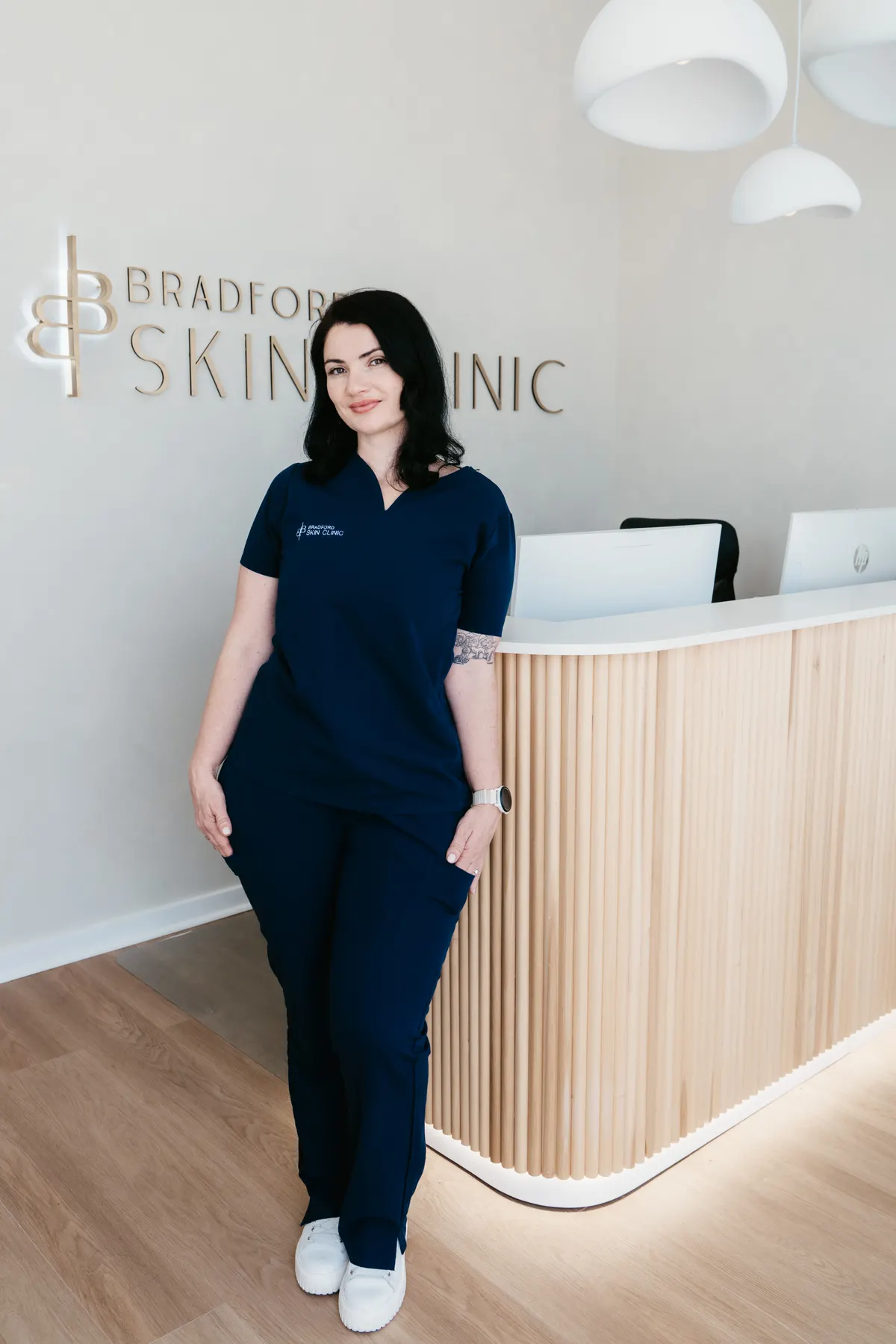
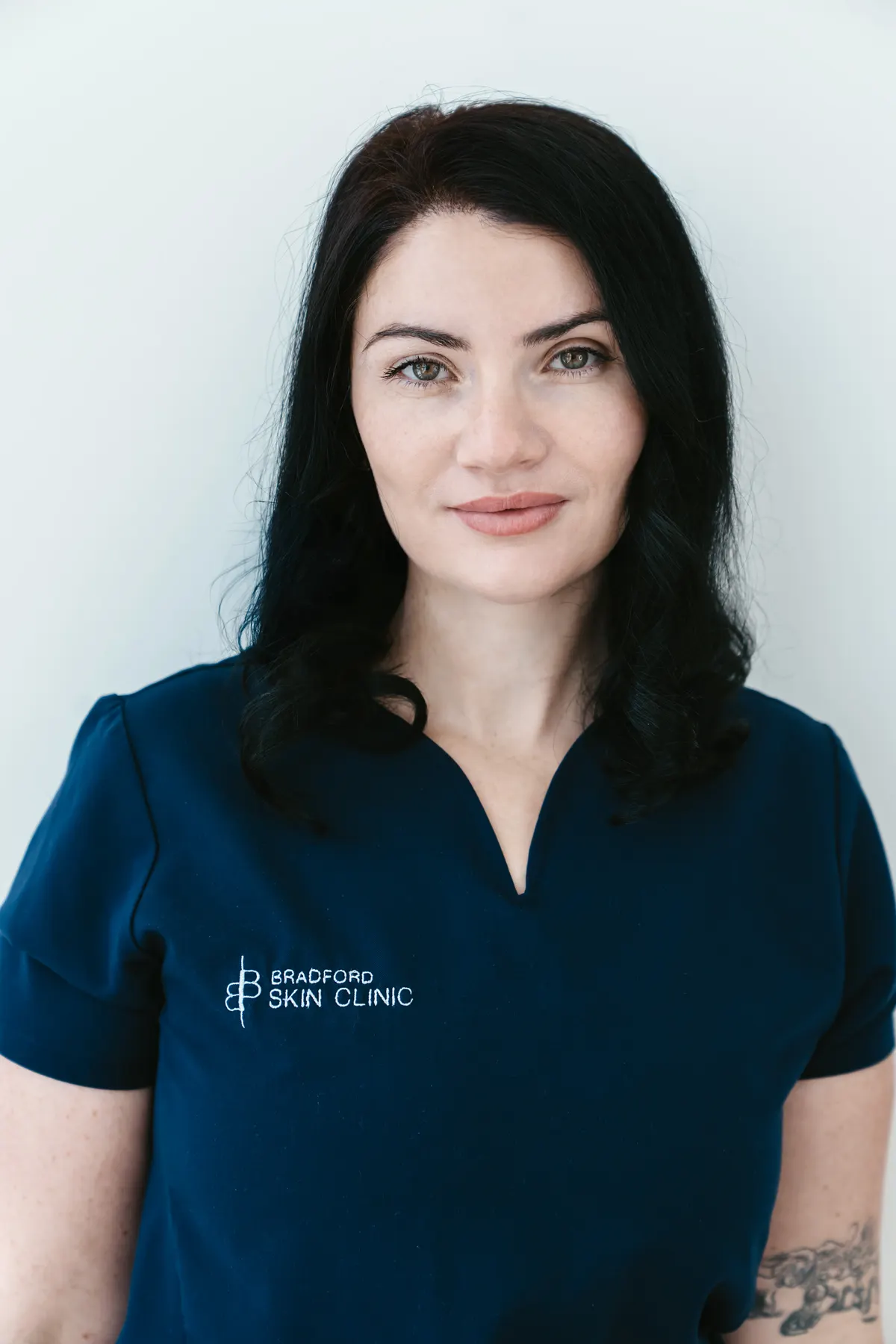
Alex Dinovich, Nurse Practitioner and Medical Director at Bradford Skin Clinic and Medical Spa, acts as medical director for Registered Nurses and Registered Practical Nurses injecting in Mississauga, Oakville and Milton. The authorizing mechanism an Ontario nurse needs to inject comes from an authorized provider under the Nursing Act, 1991, and is valid across the province.
Written and reviewed by Alex Dinovich, NP, Nurse Practitioner and Medical Director at Bradford Skin Clinic & Medical Spa.
College of Nurses of Ontario registration 13564840, verifiable on the
public Find a Nurse register.
Last reviewed .
At a glance
The short version.
InvestmentQuoted per arrangement. Scope, number of nurses and case review volume all move the figure
What the arrangement includes
Included in the arrangement
Directives authored for your practiceIncluding the interventions you perform now and a clear boundary at the ones you do not.
Documents that are yours to see and keepWhoever is paying for the arrangement, the mechanism authorizes you personally.
Prescribing for neuromodulatorsWhere that applies to what you do.
Case review by phone and videoWith a stated route and a realistic response expectation, written into the arrangement.
A complications plan naming your local escalation routePeel and Halton routes, not ours.
Revision when you change clinic, scope or productA change of circumstances is a change to the document.
Not included: training. Directorship gives you authority, not technique.
Who you would be working with
A person, not a signature.
Directorship is a professional relationship rather than a
location. You are choosing the person who authors your mechanism, reviews it as
your practice changes, and picks up when a client does not fit it.
Alex Dinovich is Nurse Practitioner and Medical Director here. She is registered with the College
of Nurses of Ontario as 13564840, verifiable on the
public register.
What a directive gives you
Authority to perform the controlled act it names.
A written mechanism you can show.
A named provider accountable for authoring it.
What it does not cover
Anything the directive does not say.
Competence, which comes from training and practice.
Your own accountability to the College for your own decisions.
A directive covers what it says it covers.
Accountability under an authorizing mechanism is specific and bounded.
You remain accountable to the College of Nurses of Ontario for your own practice.
Alex Dinovich, NP. The authorising provider, not a name on a certificate.
Where the authority comes from
An RN or an RPN cannot initiate the controlled acts involved in cosmetic injection. Injecting a substance and performing a procedure below the dermis both require an authorizing mechanism from an authorized provider: a direct order for a named client, or a directive covering a defined set of clients and circumstances.
That mechanism is a provincial instrument. A Nurse Practitioner registered with the College of Nurses of Ontario can author one for a nurse practising in Mississauga, Oakville, Milton or anywhere else in Ontario. Distance between the two of you is a practical question, not a legal one, and we deal with the practical part below.
The question Mississauga nurses should ask first
Peel has a lot of multi-injector clinics and a lot of nurses working under somebody else’s arrangement. That is normal and often fine. The failure we see is narrower and specific: the nurse has never read the document that authorizes them.
Three things follow from that, and all three are worth checking this week rather than eventually.
You are the one accountable. The mechanism authorizes you, personally, to initiate a controlled act. The College holds you to practising within it. You cannot practise within a document you have not read.
It has to name what you actually do. If the directive was written around the first injector’s scope and you have since added filler, or a new area, or a product nobody anticipated, the document has stopped covering your practice. That is not a technicality.
It ends when the arrangement ends. If the clinic’s relationship with its director stops, your authority to initiate stops at the same moment, including for clients already booked and courses already half delivered. Ask who holds the arrangement, what notice applies, and whether anything survives your leaving.
If the answer to any of those is uncomfortable, a separate arrangement in your own name is worth pricing, even if you stay exactly where you are.
What we would put in writing for a Peel practice
The directives themselves, authored from what you inject rather than issued from a template. Direct orders where a named client is the better route. Prescribing for neuromodulators where it applies. A stated route to reach the authorizing provider for the clients who do not fit the directive, with a realistic response time rather than a vague permission to call.
And a complications plan built around where you are. Ours names Peel and Halton escalation, because an emergency department near Bradford is irrelevant to a client in Port Credit. For filler emergencies in particular, the plan has to be something you can start without phoning anyone.
The travel question, briefly
Mississauga is about an hour and a quarter away, up the 410 or the 427 to the 407, east to the 400, north to Exit 64. Almost no part of a directorship arrangement requires that drive. Authorship is document work, review is a conversation, and case discussion is a phone call with photographs.
Come up once at the start if you want to see the clinic and meet the person whose registration number is going on your documents. Plenty of people never do, and the arrangement works the same.
Alex Dinovich, FNP-PHC, Nurse Practitioner and Medical Director, College of Nurses of Ontario registration 13564840. Verify it on the public register before you talk to us, not after. She assesses, diagnoses, prescribes, issues direct orders and authors directives in her own right, and injects daily in this clinic.
Starting the conversation
Tell us what you inject, where, and for whom. We will tell you what the documents need to cover, what availability looks like at this distance, and what it costs. If you already have an arrangement that is working, we will tell you that too.
Call 647-333-6805. Bradford Skin Clinic and Medical Spa, 444 Holland Street West, Unit 2, Bradford, Ontario.
Asked by nurses
Asked and answered.
How far is Bradford from Mississauga?
Around an hour and a quarter, usually Highway 410 or Highway 427 north to the 407, east to the 400, then north to Exit 64. Very few Mississauga arrangements involve the drive, because authorship, prescribing and case review are done by phone, video and email.
I work in a clinic that already has a medical director. Why would I need my own?
You might not. What you do need is to have read the mechanism that covers you, to know it names your interventions and your competence, and to be able to reach the author yourself. Nurses discover the gap at the worst possible moment, usually when the clinic relationship ends and the directive goes with it. If you cannot see the document, that is the problem to solve first.
What happens to my clients if I leave the clinic I work in?
If the mechanism belongs to the clinic's arrangement, your authority to initiate ends when that arrangement ends, and booked treatments cannot proceed on it. This is the single most useful thing to check before you need the answer. Ask who holds the arrangement, what notice applies, and whether anything follows you.
Do you cover injectors working in a spa or salon rather than a clinic?
It depends on the setting and on what you intend to inject. A directive states the circumstances in which it applies, and some settings cannot meet the conditions a safe directive would have to impose, particularly around drug storage, privacy, record keeping and managing an emergency. We would look at the actual room and tell you honestly whether it can be covered.
Is a Nurse Practitioner acceptable, or does it have to be a physician?
A Nurse Practitioner is an autonomous provider who can assess, diagnose, prescribe, issue direct orders and author directives, which covers everything an authorizing mechanism for cosmetic injection requires. Ontario clinics historically defaulted to physicians, but that is convention rather than a legal requirement.
What do you need from me to quote?
What you inject, where you inject it, how many sites and nurses are involved, how much case review your practice is likely to need, and what you are competent to manage yourself. A quote given before those answers is a template price for a template document.
Sources
Where this comes from.
Everything on this page is drawn from the regulator, not from a
competitor's marketing. Read the originals rather than taking our word for any of it.
General information about Ontario regulatory requirements. Not
legal or regulatory advice. Nurses remain accountable to the College of Nurses of Ontario
for their own practice decisions.
Talk to us
Ask before you commit to anything.
Leave four details and Alex will come back to you directly. If what
you need is not something we do, we will say so and point you at whoever does.

 Written and reviewed by Alex Dinovich, NP, Nurse Practitioner and Medical Director at Bradford Skin Clinic & Medical Spa.
College of Nurses of Ontario registration 13564840, verifiable on the
public Find a Nurse register.
Last reviewed .
Written and reviewed by Alex Dinovich, NP, Nurse Practitioner and Medical Director at Bradford Skin Clinic & Medical Spa.
College of Nurses of Ontario registration 13564840, verifiable on the
public Find a Nurse register.
Last reviewed .